
Equality, Diversity, and Inclusion (EDI) Policy at Universitas Indonesia
At Universitas Indonesia (UI), we are committed to fostering a welcoming, inclusive, and equitable environment for everyone in our community. On campus, we uphold this commitment through our EDI policies, which ensure that every individual is respected, supported, and valued regardless of background and identity. These policies empower our students, faculty, and staff to contribute fully to our shared educational mission. By embracing equality, diversity, and inclusion, we enrich our learning environment and strengthen the fabric of our institution, promoting fairness and opportunity for all.
Our policies and bylaws are grounded in nine core values that guide every aspect of campus life:
- Honesty
- Justice
- Trustworthiness
- Dignity
- Accountability
- Togetherness
- Transparency
- Academic Freedom
- Compliance to Laws
These values are fundamental to our identity as a community, shaping how we excel in education and how we make meaningful contributions to society. Upholding them is essential, as they provide the foundation for our collective growth and success. The implementation of these values can be seen in our policies and practices, which reflect UI’s dedication to advancing both academic excellence and social responsibility.
As an extension of these core values, UI also upholds EDI policies that safeguard our community from discrimination based on a wide range of characteristics, including age, gender, disability, race, religion or belief, sexual orientation, marital or civil partnership status, refugee or asylum seeker status, as well as pregnancy and maternity. Currently active EDI policies are as follows:
Additionally, in our effort to further strengthen our commitment to realizing an inclusive and disability-friendly campus and education, the Directorate of Campus Welfare is in the process of developing an updated Rectoral Decree on the matter. This Rectoral Decree is expected to accommodate not only students, but also all active members of the UI community, including those with disabilities or special needs/conditions, such as pregnancy, chronic illness, the elderly, etc.
Disability Support Services at Universitas Indonesia
At UI, accessibility and disability support are overseen by the Directorate of Operations, Facility Maintenance, and Asset Management, together with the Directorate of Campus Welfare. These offices serve as our dedicated disability support units, ensuring that the needs of disabled members of our community are met consistently and effectively.
Our commitment is formalized through Equality, Diversity, and Inclusion (EDI) policies, including UI Rectoral Decree No. 2816 on Technical Guidelines for Facilities and Accessibility for People with Disabilities. These policies guarantee that no disability should ever be a barrier to pursuing higher education or building a brighter future, and they provide the framework for adequate funding, reasonable adjustments, and inclusive practices across our campus.
Beyond regulating facilities and accessibility for people with disabilities, Universitas Indonesia (UI) established the Disabled Student Service Team through UI Rectoral Decree No. 1860. This team is tasked with managing comprehensive support services, including specialized training and providing policy recommendations to the Rector regarding disability inclusion.
Furthermore, UI formed the Task Force for Learning Technology Innovation Development under UI Rectoral Decree No. 1008. This team focuses on developing smart classrooms and inclusive learning innovations specifically designed to facilitate the educational needs of students with special requirements.
This commitment was further strengthened on October 17, 2025, when the Directorate of Campus Welfare, in collaboration with the UI Disability Community and various administrative units, began drafting a new Rectoral Regulation on Disability. This regulation is designed to be holistic, accommodating not only students and staff with permanent disabilities but also those with special conditions such as pregnancy, chronic illnesses, and the elderly.
We have made our campus physically accessible through a wide range of facilities. Accessible buildings are equipped with ramps, wheelchair lanes, elevators, priority parking, accessible bathrooms, and assistive technologies. Outdoor areas, including bus stops, feature guided paths and disability-friendly pedestrian access. These facilities are available across all faculties and schools, ensuring inclusivity throughout our campus environment.

UI also provides on-campus accommodation designed to meet the needs of students with disabilities, ensuring equal access to housing and campus life. Beyond physical infrastructure, we offer mentoring and specialized support services, including free mental healthcare through the Makara UI Satellite Clinic.
Beyond physical infrastructure and policy, UI provides systematic assistance during major university milestones, such as graduation ceremonies (Wisuda), where the Directorate of Campus Welfare manages data collection and on-site mentoring for participants with special needs.

Finally, our access schemes extend to academic pathways, where we provide accommodations for disabled applicants during entrance examinations. This ensures fairness and equal opportunity from the very beginning of their academic journey at UI. During the Computer-Based Written Exam for National Selection of New Student Admissions (UTBK SNBT) of 2025, UI provided two designated spaces in the Faculty of Computer Science and the Health Sciences Cluster buildings for our disabled applicants. Other than easy access to the testing centers, UI also provided the Non Visual Desktop Access (NVDA) application, along with headsets and riglets.

Universitas Indonesia Facilitates Training on Social Sustainability
At Universitas Indonesia, we recognize that social sustainability is integral to building a resilient, inclusive, and supportive academic community. To strengthen this commitment, we facilitate a wide range of training programs across faculties and units, ensuring that both students and staff are equipped with the knowledge and skills to address social challenges.
One of our programs is the Latihan Kepemimpinan dan Manajemen Mahasiswa (LKMM), which develops student leadership and management skills to prepare them for active roles in society (LKMM 2025). There have also been initiatives UI has launched to strengthen mental health literacy and prevent bullying within higher education environments. For example, the Mental Health and Anti-Bullying training for students conducted by the Vocational Education Program.

Various faculties also conduct counseling programs in which staff and volunteer students are first trained to be qualified counselors. At the Faculty of Mathematics and Natural Sciences, the counseling team (BKM) consists of both staff and student elements that regularly conduct meetings and training.

Throughout September and October 2025, the Faculty of Nursing’s Student Association also conducted peer counselor training for their students. Through this training, students were trained to be active listeners, provide emotional support, and create a safe space for their peers in order to act as sensitive, empathetic peer counselors and contribute to improving psychological well-being on campus.
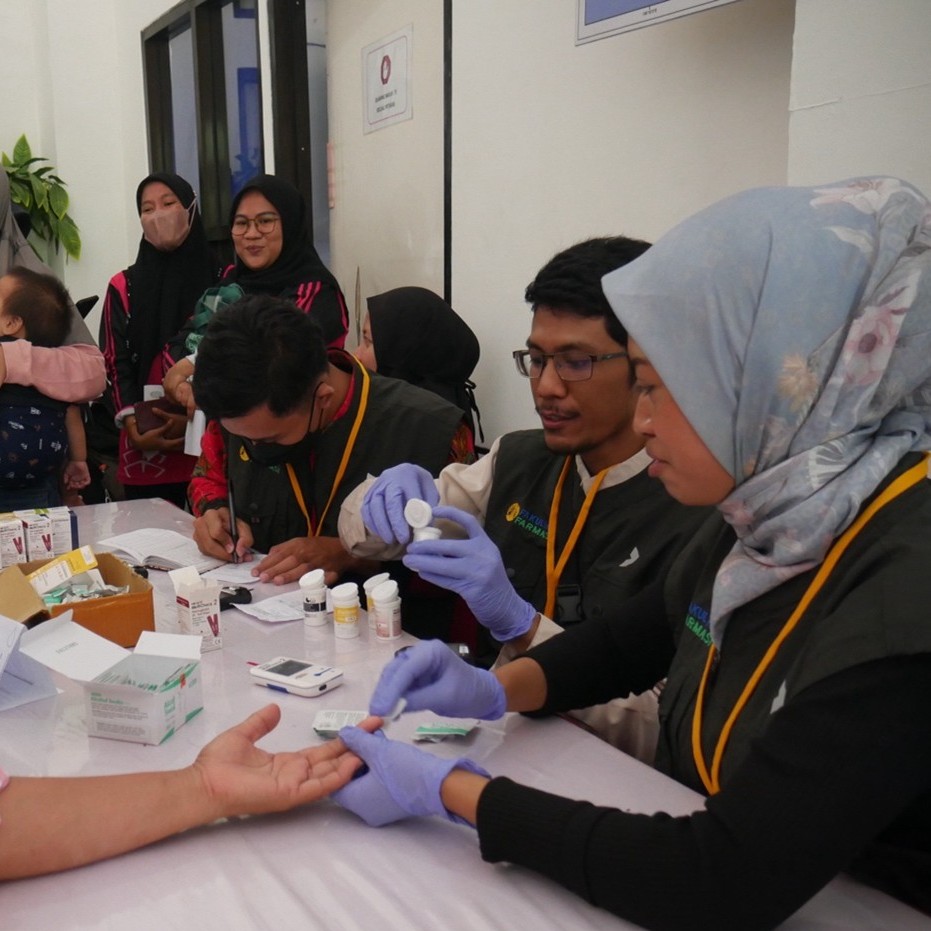
UI also prioritizes safety and wellbeing through practical training. UI’s Administration Center as well as faculties organize annual fire safety, disaster response, and first aid training.


Beyond these initiatives, UI also facilitates broader social awareness programs, such as campaigns against harmful behaviors such as the Anti-Gambling Socialization at the Faculty of Law.

These efforts are complemented by student-led initiatives and faculty collaborations, such as workshops and seminars on mental health, inclusivity, and community resilience. Through these diverse programs, UI ensures that social sustainability is not only a policy but a lived practice across our campus. By equipping our community with leadership skills, safety awareness, mental health literacy, and inclusive values, we strengthen our role as a university that is socially responsible and globally engaged.