Our actions and goals
Click the SDG Goals to read the initiatives


SDG 2: Zero Hunger
End hunger, achieve food security and improved nutrition and promote sustainable agriculture
Quantifying Food Waste and Source Reduction at UI
Universitas Indonesia (UI) maintains a systematic quantitative measurement framework to track and record food waste generated from all dining facilities, central administrative buildings, and faculty operational units across the campus. Where food provision is outsourced to third-party vendors and canteen tenants, UI mandates these contractors to record and report their organic food waste data as a mandatory condition of campus operational compliance.
According to UI’s official 2025 campus waste recapitulation, the measured organic food waste generation rate reached 0.089 metric tons per person per annum (89 kg/person/year). Extrapolated across UI’s total campus population of 55,007 individuals (students, faculty, and staff), the overall institutional organic food waste collected from canteens, faculties, and operational units amounted to 4,896 metric tons per annum. This measurement specifically isolates kitchen and plate food waste from general green yard waste (such as leaves and branches) to maintain strict reporting accuracy and support targeted source reduction initiatives.
Upstream Prevention & Integrated Organic Waste Processing
All collected food waste is managed through UI’s central integrated organic waste processing facility. To minimize waste at the source, UI complements quantitative tracking with targeted behavioural intervention initiatives.
A cornerstone of this preventative approach is the “Habiskan Makananmu” (Finish Your Food) campaign, which was actively promoted and launched in 2025. Pioneered at Kantin Sejiwa, Faculty of Psychology (FPsi UI), the campaign utilizes prominent banner displays and educational nudges to cultivate responsible consumption habits among students and staff prior to measurement, serving as a model for campus-wide food waste reduction.


Comprehensive Student Food Security, Anti-Hunger Framework, and Welfare Safety Nets at UI
UI enforces an institutional, multi-layered social safety net framework designed to eliminate student food insecurity, prevent campus hunger, and guarantee uninterrupted access to adequate daily nutrition for all students. Grounded in the principle that academic success requires fundamental nutritional security, UI integrates centralized university-level interventions with decentralized, faculty-specific food support programs.
These initiatives encompass routine meal distributions, emergency disaster relief, subsidized campus dining ecosystems, and targeted meal voucher programs funded through university operational budgets, alumni endowments, and parent-faculty associations.
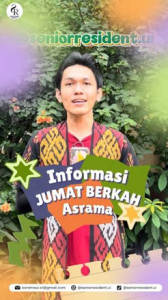
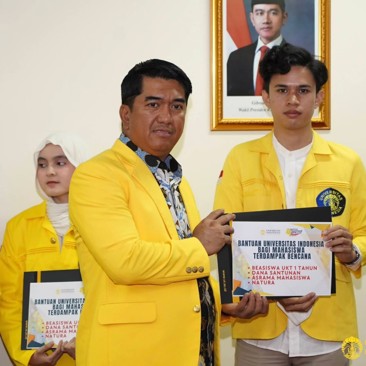
UI routinely implements the Dormitory Friday Blessing Programme (Program Jumat Berkah Asrama) to support the daily nutritional needs of UI students. In addition, UI provides emergency assistance schemes for students affected by natural disasters in Aceh, North Sumatra, and West Sumatra in 2025, which include living cost allowances of up to IDR 3 million per month for a specific period, a one-semester tuition fee waiver, dormitory fee subsidies, and in-kind assistance (natura, including dormitory meal vouchers).
At the institutional level, Universitas Indonesia directly manages centralized food distribution and welfare relief schemes to protect vulnerable student demographics:
- Central Dormitory “Friday Blessing” Meal Program (Jumat Berkah)
To support the baseline nutritional needs of campus residents, UI routinely executes the Dormitory Friday Blessing Program (Program Jumat Berkah Asrama). Managed by the University Housing and Student Affairs Directorate, this initiative provides free, nutritionally balanced ready-to-eat meals every Friday to students residing in the UI Depok dormitories, easing their weekly living expenses.
- Disaster Relief & Emergency Living Assistance
In response to natural disasters affecting students’ home regions (including events in Aceh, North Sumatra, and West Sumatra during 2025), UI established a comprehensive emergency financial and food assistance package to prevent crisis-induced food insecurity. Affected students received:- Emergency living cost allowances of up to IDR 3,000,000 per month for specified relief periods.
- Full one-semester tuition fee waivers (UKT) and campus dormitory fee subsidies.
- Direct in-kind support (natura), including dedicated dormitory food and grocery vouchers to ensure continuous daily sustenance.


To address specific academic demands and field conditions, UI delegates operational flexibility to its faculties. The meal voucher and assistance schemes operating within individual faculties represent a campus-wide model replicated across all UI faculties to ensure no student experiences hunger during their studies.
- Clinical & Shift-Based Food Provision
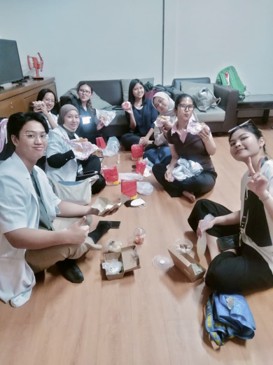
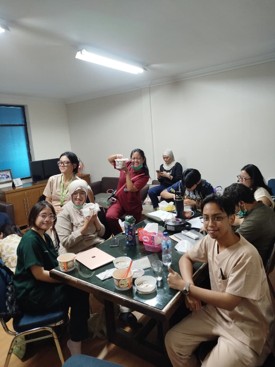
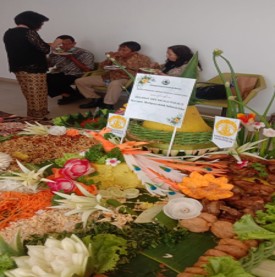
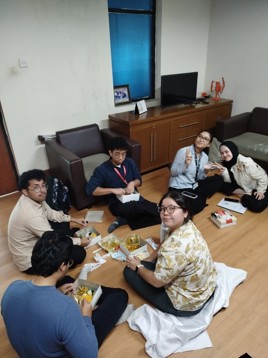
For students undergoing intensive clinical rotations and hospital shifts, food access requires tailored logistical support. This ensures that rigorous clinical training schedules do not compromise student health and nutritional intake. In collaboration with the Clinical Education Coordination Committee (PPKM), UI’s Faculty of Medicine (FK) provides:- Direct complimentary meals for medical students undertaking overnight on-call duties.
- Dedicated lunch and food vouchers usable across food outlets at Dr. Cipto Mangunkusumo National Central General Hospital (RSCM) and the Salemba campus ecosystem (including IMERI Sky Floor, Koperasi Salemba, and campus outlets).
- Parent-Alumni Synergies
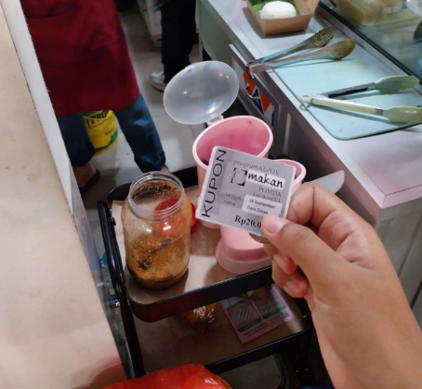
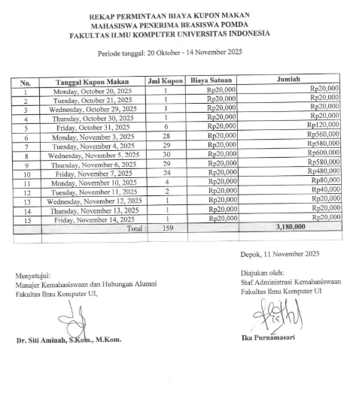
Demonstrating the integration of social safety nets, UI’s Faculty of Computer Science (FASILKOM) leverages their Parents, Faculty, and Alumni Association (POMDA Fasilkom UI) to fund student welfare:- Distribution of targeted canteen food vouchers to financially vulnerable undergraduate students.
- Direct financial subsidies to cover daily campus dining costs, preventing economic hardship from escalating into food insecurity.
- Healthy & Affordable Campus Dining Infrastructure
Complementing direct meal subsidies, UI ensures that campus dining environments offer affordable food choices across all price points:- Diverse Campus Outlets: Across both the Depok and Salemba campuses (such as the RIK Health Sciences Canteen, IMERI Outlets, and faculty canteens), UI maintains food options accessible to students, faculty, and staff at varied, student-friendly price levels.
- Continuous Safety Nets: The combination of subsidized food vendors and emergency meal vouchers ensures an inclusive campus ecosystem where financial constraints never restrict access to daily nourishment.
UI Implements Institutional Interventions and Facilities to Prevent Student Hunger
UI comprises 16 faculties and schools, each equipped with canteen facilities to ensure that members of the university community have convenient access to food and beverages within the campus. In addition to faculty and school canteens, food vendors are available in various campus buildings and public areas, including libraries, student dormitories, the Rectorate Building, student activity centers, and areas surrounding campus lakes. This widespread distribution of food outlets supports the accessibility and availability of food services across the university.
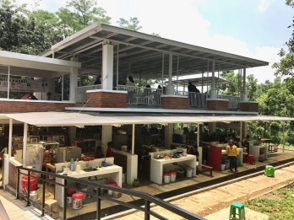
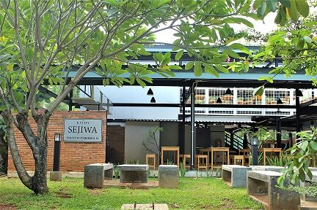
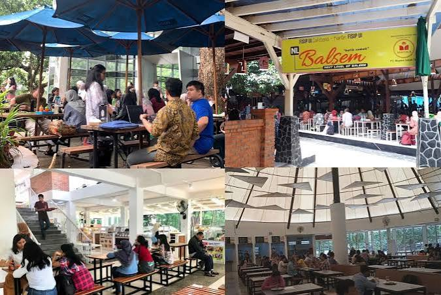
To complement campus-wide services, direct hunger mitigation infrastructure and essential supporting facilities are integrated within student dormitory premises pursuant to the UI Rector’s Regulation Number 32 of 2025 on the Governance of the UI Student Dormitory Occupancy (Article 12 paragraph (2) point b). Under this regulation, UI provides physical kitchen and mini-pantry facilities across designated dormitory blocks, enabling students to prepare their own meals independently. For residents seeking prepared meals, the Student Dormitory Canteen supplies a wide variety of low-cost daily meals. Additionally, banking and ATM facilities are accessible within the dormitory area to facilitate financial transactions and daily living needs for residents.
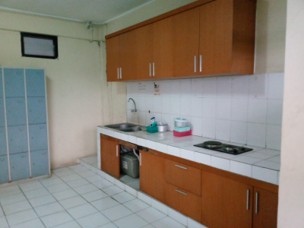
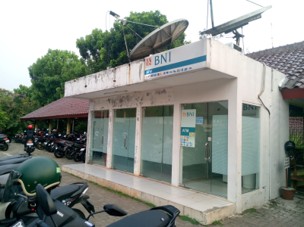
To ensure targeted support for underprivileged students, UI systematically channels its hunger mitigation programs—such as faculty food voucher initiatives, subsidized meal distributions, and accessible dormitory mini-pantries—specifically toward financially vulnerable individuals identified through student welfare assessment schemes. This targeted approach guarantees that students experiencing severe financial constraints receive direct, dignified access to daily nutritious food, effectively eliminating food insecurity barriers to their academic success.
Sustainable Food Infrastructure, Safety Standards, and Inclusive Dining Ecosystems at UI
UI is committed to providing an inclusive, safe, and environmentally sustainable dining ecosystem for our entire academic community. Across its 16 faculties, specialized schools, administrative hubs, and residential zones, UI ensures that food services offer balanced, healthy, and culturally relevant dietary choices—including dedicated plant-based, vegetarian, and vegan options.
This infrastructure is governed by stringent institutional health and safety regulations, regular food handler education, and laboratory-verified vendor certifications to ensure that sustainable food choices meet the highest standards of hygiene and quality.
Widespread Dining Infrastructure and Vendor Ecosystem
To ensure convenient access to food and beverages, UI maintains an extensive network of canteens and dining outlets strategically distributed across both the Depok and Salemba campuses:
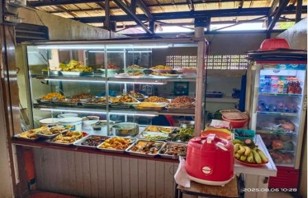
- Depok Main Campus: Houses an internal inventory of approximately 360 food stalls operating across 16 faculty canteens (such as Kantin Vokasi, Kantin Psikologi, Kantin FT, and Kantin FIB), central libraries, student dormitories, the Rectorate Building (PAU), student activity centers, and commercial hubs around the campus lakes.
- Salemba Campus Ecosystem: Serves students, faculty, and clinical staff through diverse food hubs, including the Health Sciences Cluster Canteen (RIK Depok connection), the Sky Floor dining area of the Indonesia Medical Education and Research Institute (IMERI) building, Koperasi Salemba, Bursa Kedokteran, and W Coffee.
Provision of Sustainable, Vegetarian, and Vegan Food Choices
To accommodate diverse dietary preferences, ethical choices, and health requirements, UI ensures the availability of plant-based and vegetarian/vegan-friendly meals across selected food outlets on campus:
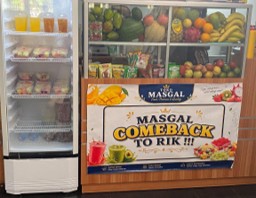
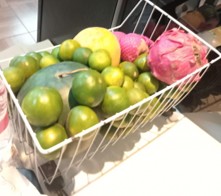
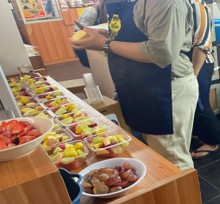
- Plant-Based Menu Variety: Canteen vendors offer traditional and contemporary plant-based options, including fresh fruit salads, steamed/raw vegetable assortments, pecel (Indonesian mixed vegetables with peanut sauce), and gado-gado (traditional vegetable salad with peanut dressing).
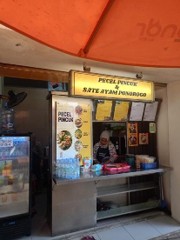
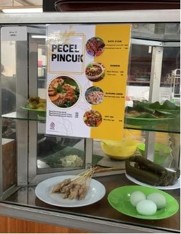
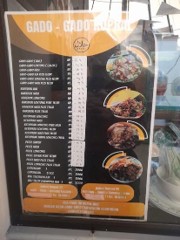
- Dietary Inclusivity: These options allow students, faculty members, and international visitors to seamlessly select nutritious vegetarian and vegan meals according to their personal preferences, religious diets, or health needs without leaving the campus premises.
Governance, Safety Regulations, and K3L Canteen Certification
Sustainable food provision at UI is systematically bound to rigorous food safety and environmental protection protocols:
- Institutional Regulatory Framework (Rector Regulation No. 57 of 2017)
Pursuant to Rector Regulation Number 57 of 2017 concerning the Implementation of Occupational Safety, Health, and Environmental Protection (K3L) in Canteens, UI enforces mandatory operational standards designed to prevent foodborne illness outbreaks, ensure sanitation, and protect campus consumers.
- Capacity Building & Annual Workshop Initiatives
The Directorate for Campus Welfare conducts mandatory annual workshops and training sessions for canteen food handlers. This curriculum covers:
- Food hygiene and sanitary handling procedures.
- Cross-contamination prevention and safe storage.
- Occupational health and safety (K3L) in kitchen settings, including basic first aid and fire extinguisher usage.
- Inspection, Lab Testing, and Certification
Following training completion, all campus food vendors undergo formal multi-stage evaluations:
- Physical & Operational Inspection: Audits covering building conditions, sanitation facilities, kitchen equipment cleanliness, food preparation practices, ingredient selection, and food handler personal hygiene.
- Laboratory Safety Testing: Random sampling of food and beverage items subjected to lab analysis to verify chemical and microbiological safety.
- Canteen K3L Certificate: Awarded exclusively to vendors that pass both physical inspections and laboratory safety thresholds, ensuring that sustainable food outlets operate with guaranteed hygiene.
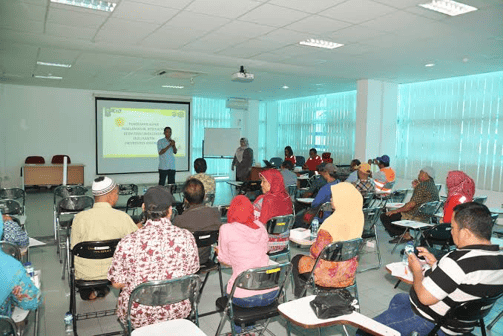
UI Ensures Healthy and Affordable Food Choices Across Campus Canteens
Recognizing that access to healthy, safe, and affordable food is essential to the well-being of the university community, UI promotes food safety and hygiene across campus canteens through the UI Rector’s Regulation No. 57 of 2017 concerning the Implementation of Occupational Safety, Health, and Environmental Protection (K3L) in Canteens. The regulation establishes food safety and hygiene requirements, supported by annual training for food handlers, inspections of sanitation facilities and food preparation practices, and laboratory testing of food and beverage samples. Vendors that meet the required criteria receive a Canteen K3L Certificate.
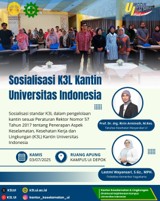
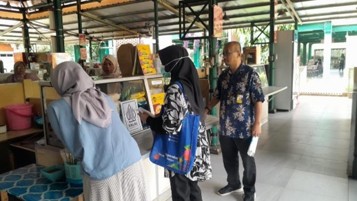
At the faculty level, units conduct regular hygiene testing, inspections, and safety evaluations of food stalls, covering food handling practices, equipment sanitation, and food samples. Campus canteens are also expected to comply with food safety and halal standards to support the health and well-being of the university community. Affordability is another key aspect of UI’s campus food services, with meal prices across faculty canteens controlled within the range of IDR 8,000 to IDR 28,000 (approximately USD 0.50–1.80), helping maintain access to affordable meals, particularly for students from lower-income backgrounds.
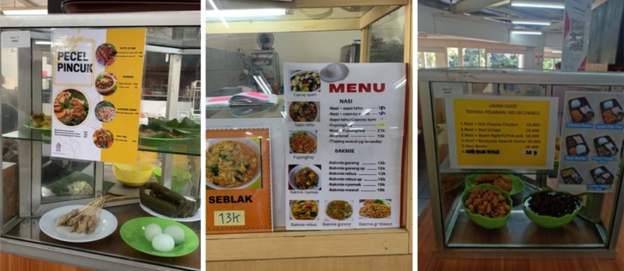
By keeping prices low without compromising quality, UI ensures that our community and the surrounding public can access balanced, nutritious meals at pocket-friendly prices. Additionally, to further cement our commitment to alleviating hunger and food insecurity for our students, UI also offers free meal vouchers for dormitory residents.
Comprehensive Staff Food Security Framework and Welfare Interventions at UI
UI recognizes that food security and adequate daily nutrition are fundamental rights for our entire workforce, encompassing academic faculty, administrative staff, outsourced personnel, and operational support workers. To address economic pressures and mitigate potential staff food insecurity, UI enforces a dual-layered institutional support model.
This framework combines centralized, policy-backed daily meal allowance regulations with decentralized, faculty-level targeted food interventions (such as heavily subsidized basic food packages and alumni-driven food distributions) to guarantee holistic welfare safety nets for all campus staff.
Centralized Institutional Framework: Daily Meal Allowances
At the university level, UI maintains a systematic financial mechanism to support the daily food and nutritional needs of its workforce through structured meal benefits:
- Regulatory Mandate (UI Rector’s Decree No. 19 of 2021): UI enforces an attendance-based meal allowance framework (tunjangan makan) stipulated under Rector’s Decree No. 19 of 2021, which is further operationalized across individual academic units via specific Dean’s Decrees.
- National Alignment: This policy is aligned with national standards set by Ministry of Finance Regulation No. 72 of 2016 regarding meal allowances for public sector employees, ensuring that daily work-related nutritional benefits are systematically budgeted, disbursed, and protected for university staff and their households.
Targeted Faculty Interventions: Subsidized Food Packages & Social Safety Nets
Complementing daily institutional meal allowances, UI faculties regularly deploy targeted, direct-food-relief programs during times of economic need or seasonal spikes in living costs. The initiatives executed at FEB UI and FT UI represent concrete examples of the broader food welfare schemes implemented across UI units to protect staff against food insecurity.
- FEB UI Subsidized Basic Food Package Program
In 2025, the Faculty of Economics and Business (FEB UI) executed a large-scale food affordability intervention by providing 1,300 affordable basic food packages (paket sembako). Each package was offered at a heavily subsidized price of IDR 25,000 (approx. USD 1.60), containing essential staple foods to directly reduce household grocery expenses for campus employees. - FT UI & Alumni Relief Initiatives
Similarly, at FT UI, synergy between the university and its alumni networks strengthened staff welfare. The Electrical Engineering Alumni Association (KAGATRIK FT UI) organized a direct distribution of 400 basic food supply packages to alleviate economic burdens for operational personnel.
- Inclusive Beneficiary Coverage
These faculty-level interventions were purposefully structured to reach all tiers of the campus ecosystem, ensuring that lower-income and vulnerable staff groups received priority support. Beneficiaries across these initiatives included:
- Academic faculty members and permanent administrative staff.
- Campus security personnel (PLK UI) and environmental cleaning staff.
- Outsourced workers, maintenance crews, and operational support personnel.

Empowering Local Farmers and Food Producers Through Free Access to Sustainable Agriculture, Aquaculture, and Food Security Knowledge
UI provides free access to actionable knowledge, practical skills, and innovative technologies in sustainable agriculture, aquaculture, and food security to local farmers, micro-food producers, and community members.
Sustainable Aquaculture & Circular Biowaste Technology Transfer
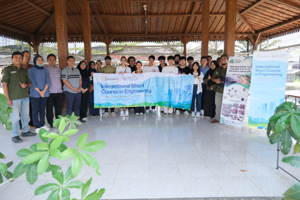
In collaboration with Hong Kong University of Science and Technology (HKUST), FT UI conducted an international short course and field workshop focused on sustainable biowaste management and bio-feed production at PT Maggot Indonesia Lestari (MIL) in Parung, Bogor Regency, West Java. The initiative provided direct knowledge transfer on Black Soldier Fly (Hermetia illucens, BSF) cultivation technology, demonstrating how insect larvae serve as a high-protein, cost-effective alternative feed for local aquaculture and poultry farming while converting organic waste into eco-friendly agricultural fertilizer.
Beyond field training, FT UI advances sustainable agricultural technologies by engineering biomass-based planting media, biochar systems, and soil-enrichment solutions designed to rehabilitate degraded land and enhance crop productivity for local agricultural ecosystems.
Community Empowerment & Local Herbal Food Processing
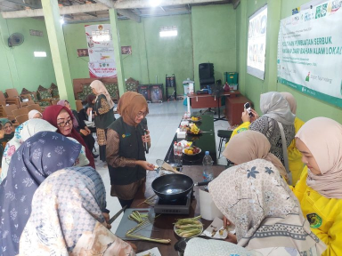
Demonstrating direct skills transfer for local food producers, FF UI—in collaboration with Tokio Marine Indonesia (TIKA)—conducted a community empowerment initiative in Sasak Panjang Village, Tajurhalang District, Bogor Regency, West Java. Led by Prof. Dr. apt. Anton Bahtiar, M.Biomed., the team provided hands-on training to local residents, micro-entrepreneurs, and food producers on harvesting and processing local herbal ingredients into healthy, safe, and commercially viable natural beverages, directly strengthening community resilience and local food security.
UI Hosts Knowledge-Transfer Events for Sustainable Mangrove Products and Urban Farming
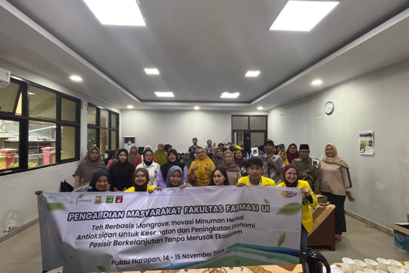
UI facilitates knowledge transfer and capacity building for local communities and food-related entrepreneurs through community engagement initiatives. One such initiative was organized by FF UI on November 14–15, 2025, on Harapan Island, Thousand Islands, introducing mangrove tea as a herbal product derived from local mangrove resources. The free training equipped community members with practical skills in tea production, from leaf selection and drying to processing and hygienic packaging. Participants also received guidance on branding, packaging design, and digital marketing to enhance product appeal and economic value.
UI also supports local food production and community food security through urban farming training organized by FT UI The initiative involved 50 participants across two sessions, including UI employees and retirees, community groups, homemakers, youth, and MSME entrepreneurs. Participants received practical training in cultivating grapes, eggplants, and melons in limited spaces, alongside instruction in small-scale farm management, production cost calculations, and digital marketing.
Through these initiatives, UI facilitates the exchange of practical knowledge and skills that can help communities develop local food products, strengthen small-scale agricultural activities, and explore additional economic opportunities.
UI Provides Access to Advanced Laboratories, Agricultural Technologies, and Research Facilities
UI provides access to university laboratory testing services through UI Solution, an integrated platform for booking and accessing laboratory facilities. The platform features a catalog of 86 laboratory services to support research, product development, and material analysis. Available services include various types of material testing and characterization using advanced laboratory equipment, including:
- XPS (X-ray Photoelectron Spectroscopy) is an instrument based on the photoelectric effect used to analyze material surfaces at the nanometer scale.
- FE-SEM-EDX (Field Emission Scanning Electron Microscopy with Energy-Dispersive X-ray Spectroscopy) is used for high-resolution imaging and analysis of material morphology and surface composition.
- XRD (X-ray Diffraction) is used to identify the crystal structures and phases of materials.
- PSA (Particle Size Analyzer) is used to measure particle size distribution.
- Other available techniques include thermal analysis (TGA/DSC), organic elemental analysis (CHNS/O), specific surface area and porosity measurement (BET), and material characterization using Raman spectroscopy.
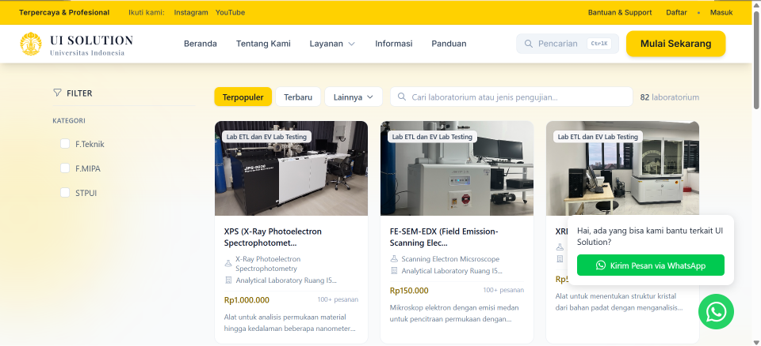
Overall, these services support the testing, analysis, characterization, and validation of products and materials through laboratory facilities managed by various units and research centers at Universitas Indonesia. In addition to laboratory testing, the UI Solution platform also offers room booking, training programs, training center facilities, and selected technology production services.
Other laboratory facilities and services available at Universitas Indonesia include the following:
- The Bioprocess Technology Laboratory supports research and education in chemical engineering and bioprocess engineering. It facilitates the development of technologies that convert biological materials into useful products at various scales, ranging from laboratory to industrial scale. Its research facilities and equipment support research activities, practical laboratory sessions, and the development of technologies based on biological resources. Laboratory services are also commercially available to external parties.
- The Research Center of Biomass Valorization (RCBV) focuses on processing and valorizing agricultural waste, including lignocellulosic waste, lipids, and organic and inorganic materials, into value-added chemical products that can be used as feedstocks for agriculture-based industries.
- The Chemical Engineering Community Service Unit (UPPM), Universitas Indonesia, provides standardized technical laboratory testing services to support industry, research, micro, small, and medium enterprises (MSMEs), and technology development. Its testing services cover biodiesel, natural gas, biogas, syngas, lubricants, polymers, and herbal products such as honey and propolis. These services are supported by modern, calibrated instruments, including FTIR-ATR, GC-FID, GC-MS, UV-Vis spectrometers, and pycnometers, to provide analytical results that support material quality assessment and product development.
Beyond laboratory facilities, UI has also supported the application of agricultural technologies in local communities. Through the Faculty of Mathematics and Natural Sciences, UI installed two Si-Cuhal (Local Rainfall Information System) units in Wonokitri Village, Pasuruan, East Java, to help local farmers monitor rainfall and determine optimal planting and watering schedules. UI has also developed FERGEL, a cassava gum-based nanocellulose hydrogel slow-release fertilizer designed to improve water and nutrient delivery in agriculture. These initiatives demonstrate UI’s contribution to advancing agricultural technologies and sustainable farming practices, complementing its laboratory and research capabilities.
UI Prioritizes Procurement of Sustainable Local Products Through Binding Institutional Policies
UI prioritizes the procurement of locally sourced and sustainable products through the policy framework established by UI Rector Regulation No. 20 of 2026. This regulation explicitly requires the procurement of goods and services to prioritize Domestic Products (Produk Dalam Negeri/PDN), products from Micro and Small Enterprises (UMK) and cooperatives, products certified under the Indonesian National Standard (SNI), and environmentally friendly products when developing technical specifications. In addition, UI implements the three pillars of Sustainable Procurement—economic, social, and environmental—and provides price preference incentives of up to 25% for local products with a Domestic Component Level (Tingkat Komponen Dalam Negeri/TKDN) of at least 25%.
The implementation of this policy has been actively carried out through various initiatives at both the university and faculty levels. These include the participation of FF UI in introducing Jamu Kadeudeuh ti Lembur (ginger herbal drink) and Jamu Koneng Ayu (turmeric herbal drink), products developed by the Baduy Indigenous community.
This program is a collaboration between FF UI and the Turkish Cooperation and Coordination Agency (TİKA), held from September 27–28, 2025, under the initiative titled “Development of Jamu Café in the Framework of Developing Tourism Villages to Improve the Health and Economy of the Baduy Tribe.” Through this program, the Baduy community is encouraged to leverage their local potential—specifically traditional jamu (herbal medicine)—to improve health while simultaneously strengthening their economy through village-based tourism. These jamu products serve as a symbol of synergy between scientific knowledge, local wisdom, and international collaboration, supporting both cultural sustainability and the well-being of the Baduy people.
Furthermore, FF UI has introduced Racik Badui—a signature Baduy culinary seasoning blend crafted from natural ingredients such as turmeric, ginger, lime leaves, and red chili. This product emerged from the same community engagement initiative as the Jamu Café development program. Racik Badui not only showcases the richness of traditional culinary heritage but also offers natural health benefits, serving as a concrete effort to bolster the Baduy community’s creative economy by preserving Indonesia’s culinary legacy.
Beyond their work with inland communities, FF UI has also extended their contributions to coastal areas through two community engagement programs on Panggang Island, Thousand Islands, led by apt. Tri Wahyuni, M.Biomed., Ph.D., and apt. Nisa Maria, M.Farm. These initiatives include “Screening and Education on Toddler Nutritional Status as Part of the GASING (Anti-Stunting Movement)” and “Development of Educational Materials on Tuberculosis and Its Treatment.” Both projects aim to enhance public awareness regarding child nutrition and infectious diseases, while empowering local residents to safeguard their families’ health
Furthermore, FF UI also showcased the results of a community service project in Ketungau Hulu, Sintang Regency, West Kalimantan, led by Tri Wahyuni, M.Biomed., Ph.D. (a licensed pharmacist). The project, titled “Technical Assessment and Evaluation Recommendations for the Ketungau Hulu Transmigration Area, Sintang, West Kalimantan,” focused on analyzing the social, economic, and health conditions of transmigrant communities in the border region, while providing technical recommendations for the area’s sustainable development. The initiative was supported by funding from the “Ekspedisi Patriot” (Patriot Expedition), which enabled the FF UI team to conduct fieldwork, engage directly with the local community, and formulate recommendations based on empirical data.

Other than faculties, communities at UI also take part. Through the UI Family Women’s Association (IWK), UI provides a dedicated platform to support micro, small, and medium enterprises (MSMEs) in promoting local products to the general public.
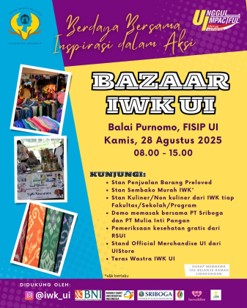
Through regulatory commitments and operational practices at various levels, UI actively promotes local economic resilience, supports sustainable agriculture, and advances sustainable supply chain management.
UI's SDG 2 Report