Sustainability at Universitas Indonesia

Our actions and goals

Click the SDG Goals to read the initiatives

SDG 11: Sustainable Cities and Communities

Make cities and human settlements inclusive, safe, resilient and sustainable

UI Opens Access to Cultural Heritage Buildings, Museums, and Arts Centers for Public Engagement

Universitas Indonesia (UI) provides public access to various cultural spaces and facilities that promote engagement with the arts, cultural heritage performances, and the preservation of historical heritage.

One of these facilities is Makara Art Centrum (MAC), established as a venue for arts and cultural performances for both the UI academic community and the general public. Throughout 2025, MAC hosted various cultural activities, including Syiar Ramadhan Kampus UI, held from March 10 to 16, 2025, in collaboration with the UI Student Dormitory. Open to the public, the event featured exhibitions of ancient manuscripts and Nusantara Qur’anic manuscripts, cultural discussions, Ramadan art recitations, as well as calligraphy and videography workshops. Other activities, including Kidung Nusantara, a Cultural Arts Performance commemorating National Children’s Day, and Majelis Nyala Purnama, also provided opportunities for the public to appreciate Indonesia’s rich artistic and cultural heritage.

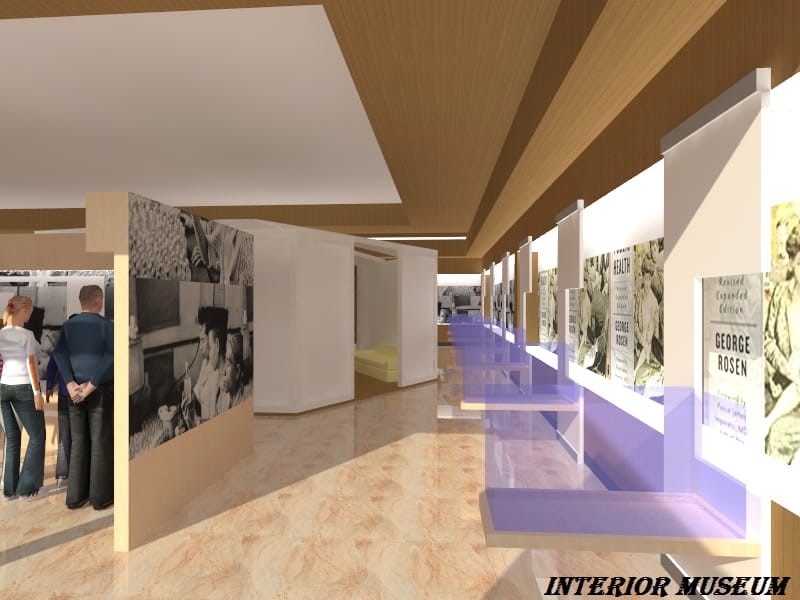
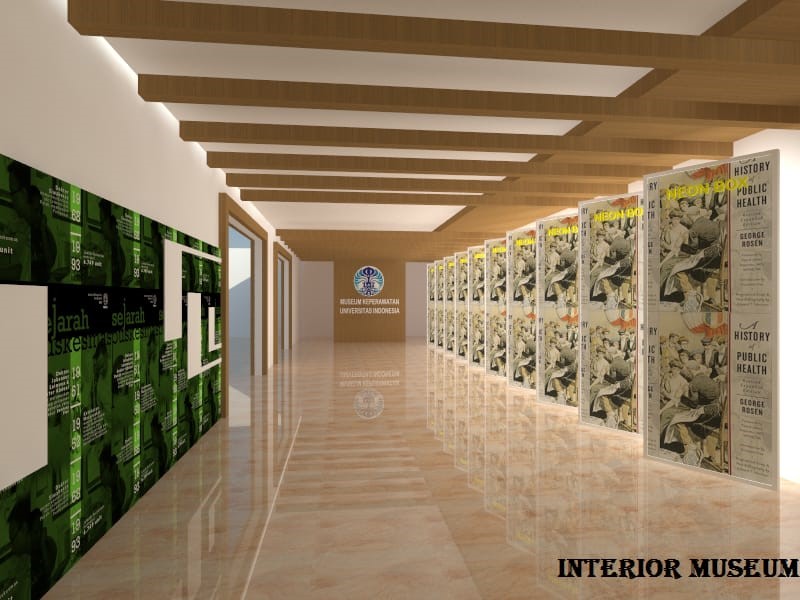
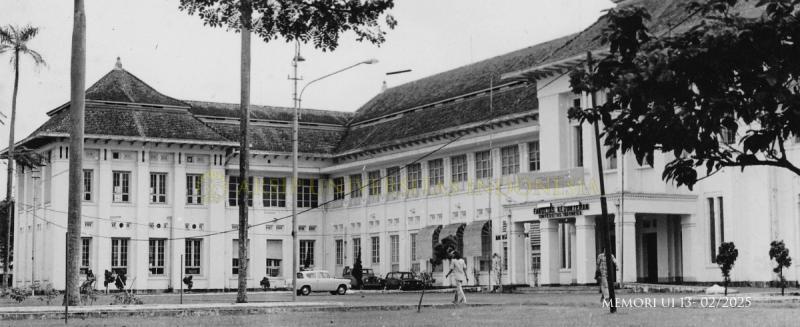
UI also preserves historically significant buildings, including the Faculty of Medicine (FK) building at UI’s Salemba Campus. Constructed between 1916 and 1920, the building has been designated as a cultural heritage site. It represents an important part of the history of medical education in Indonesia as well as the country’s colonial-era architectural heritage. The building is also complemented by the Indonesia Museum of Health and Medicine (iMuseum), located at IMERI FKUI, which is open to the general public and provides an opportunity to learn about the history of medical education in Indonesia.

In addition, UI facilitates student participation in arts and cultural activities through our Student Activity Center (Pusgiwa). In 2025, Pusgiwa hosted UI ArtX, an arts event that provided a platform for students to explore their interests in arts and culture and showcase the creativity of the younger generation through music performances, orchestral performances, drama, workshops, talk shows, special screenings, and other activities.

Furthermore, the UI Library also serves as a space for public engagement in activities related to cultural heritage and its preservation. On September 15, 2025, the UI Library hosted the EWAP Workshop 2025, which featured a public exhibition documenting endangered vernacular wooden architecture in Indonesia. The exhibition presented documentation in the form of photographs, architectural drawings, videos, and three-dimensional models. Subsequently, on October 20, 2025, UI held a national seminar entitled “Community Archives: Preserving Memories through Crowdsourcing”, which was open to the public. The event also featured archival exhibitions organized by the UI Archives Office and the National Archives of the Republic of Indonesia (ANRI), as well as poetry performances accompanied by music and musical performances by students.

UI Provides Public Access to Physical and Digital Library Collections at The Crystal of Knowledge

UI demonstrates our commitment to knowledge dissemination and community empowerment by providing public access to our extensive library collections. Through the UI Library, also widely known as The Crystal of Knowledge, UI enables external visitors, researchers, and the broader public to utilize our print and digital informational resources.

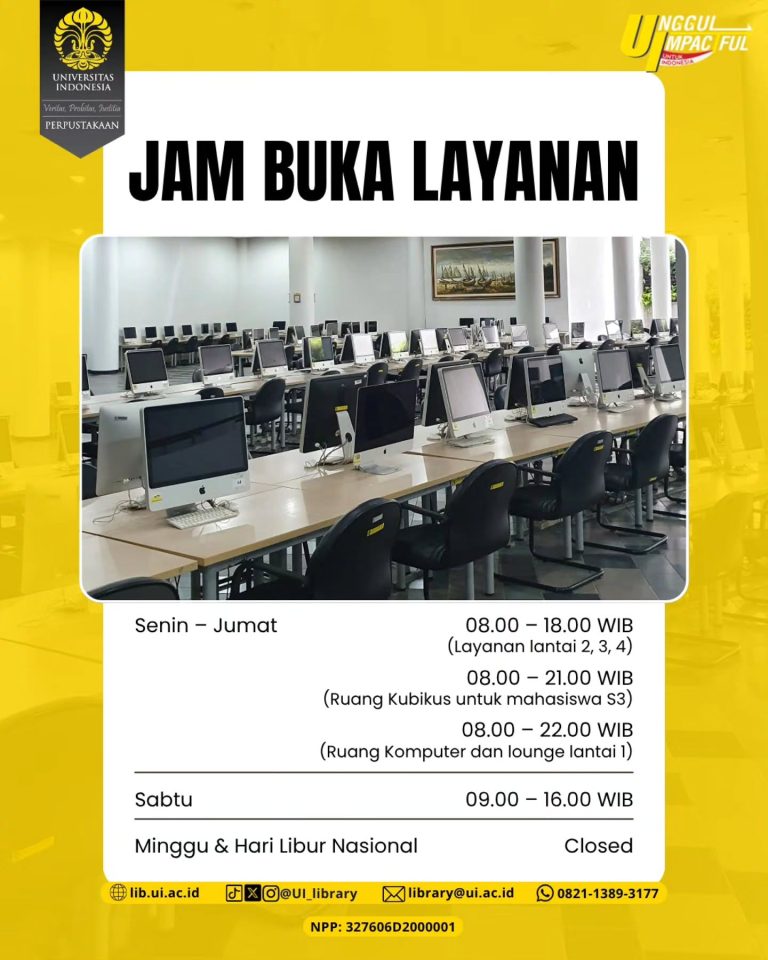
The UI Library's operating hours
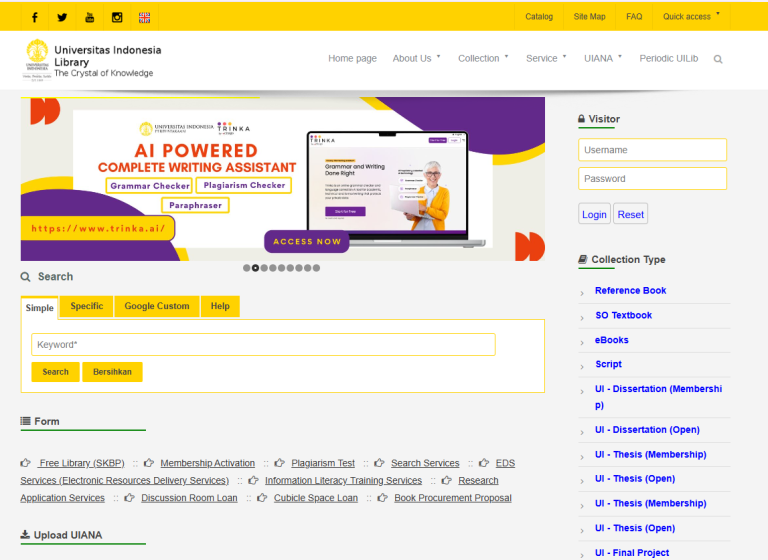
Online public access to resources from the UI Library

On-Site Access Protocols and Administrative Registration

Public access to the physical collections of the UI Library is regulated through a transparent application and registration process:

  • On-Site Registration:
    Members of the public can visit the library building in Depok and register as external visitors upon arrival.
  • Regulatory Compliance:
    As stipulated in the UI Rector’s Decree No. 85 of 2019, public access is provided upon payment of an administrative entrance fee of IDR 10,000, granting access to reading rooms, book collections, and reference materials.
  • Public Visitor Facilities:
    Registered external visitors are granted access to designated study areas and facilities outside floors 1–4, managed and maintained by the Directorate of Operations, Facility Maintenance, and Asset Management (DOPFMA).

Digital Catalogues and Online Publication Access

To broaden knowledge sharing beyond physical campus boundaries, UI facilitates digital access to its repository and electronic collections:

  • Campus & Public Repository: The public can explore repository materials and bibliographic data through lib.ui.ac.id.
  • Remote Digital Access: External researchers and members of the public can utilize digital publication portals via remote-lib.ui.ac.id in accordance with established access guidelines and institutional authorization mechanisms.

Through these combined physical registration procedures and digital repository services, UI ensures that our library resources remain accessible to support lifelong learning for the wider community.

UI Expands Public Access to Museums, Digital Galleries, Cultural Artifacts, and Outdoor Archaeological Heritage Sites

UI demonstrates our commitment to preserving cultural heritage, historical artifacts, and academic history by granting public access to our museums and galleries, digital exhibition spaces, outdoor heritage sites, and art galleries. Through physical museum tours, digital platforms, open-air heritage parks, and public exhibitions, UI enables the broader community to engage with Indonesia’s rich educational, archaeological, and artistic legacy.

Physical Museums and Open-Air Archaeological Heritage Parks

UI operates specialized physical museums and open-access heritage landscapes documenting a variety of topics, including the evolution of medical education, legal history, and Nusantara archaeology. The following are several of these facilities among others:

FH UI Museum

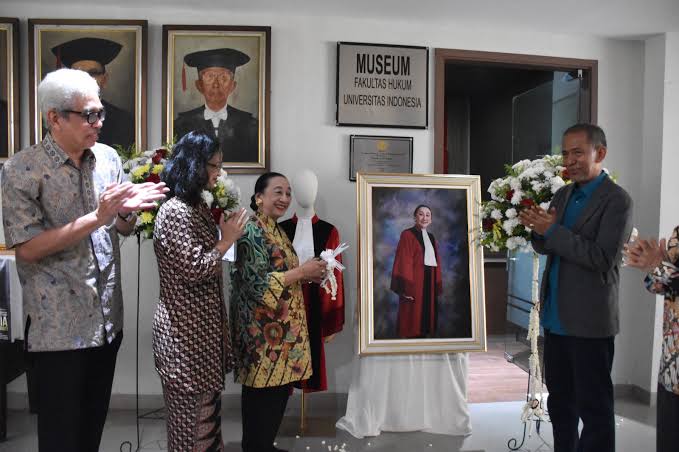
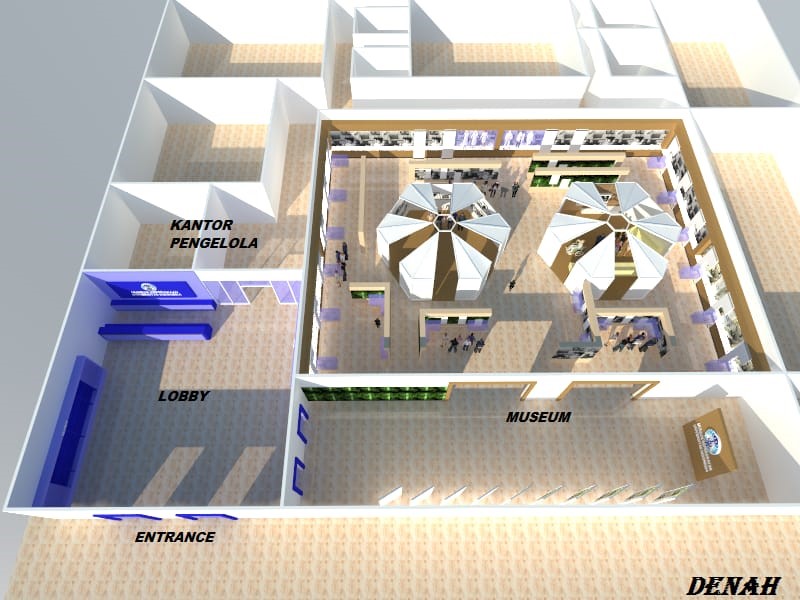
Preserving legal archives, rare manuscripts, and historical memorabilia dating back to the 1909 Rechtschool and 1924 Rechts Hogeschool, the FH UI Museum welcomes national archivist tours and public academic visits through an official application procedure.

Indonesia Museum of Health and Medicine (iMuseum) IMERI FK UI

Located at UI's Salemba campus, iMuseum offers an immersive educational experience showcasing medical history and anatomy exhibits. It is open to the public from Tuesday to Friday (09:00–15:00 WIB) via structured admission fees and guided tour packages.

FIB UI Archaeological Park

Located in front of FIB UI's Building V, this park houses miniatures and authentic replicas of Indonesian cultural heritage monuments—including the Jawi Temple replica, historical statues, yoni, and artifacts akin to the Gondosuli site. It is freely accessible to the general public for leisure, documentation, and workshops.

Additionally, UI’s Faculty of Nursing (FIK) has launched plans for a Nursing Museum. The establishment of the UI Nursing Museum is expected to educate the wider community that nurses have an important role in the history and prevention and control of infections in hospitals. In the meantime, the UI Nursing Museum is accessible virtually.

Digital Museums and Art Exhibition Spaces

To ensure widespread accessibility beyond geographic limitations, UI integrates digital museum platforms and public cultural spaces. Beyond our museums, UI also provides public access to cultural exhibitions and artistic performances through Makara Art Centrum (MAC), a venue dedicated to hosting arts and cultural events. Throughout 2025, several activities were held at MAC, including: 

  • Painting, Qur’anic Manuscripts, and Nusantara Manuscripts Exhibition, held from March 10 to 16, 2025. The event featured ancient manuscripts and Nusantara Qur’anic manuscripts from the UI Library’s collection, as well as works produced during calligraphy and writing workshops.
  • Cultural Gathering (Sarasehan Budaya), held on July 23, 2025, featuring Nusantara wayang kulit (traditional shadow puppet) performances and a talk show with the Minister of Women’s Empowerment and Child Protection.
  • The New Colombo Plan, a collaborative programme between UI and the University of Queensland that introduces international students to Indonesian arts and cultural heritage through workshops on traditional Indonesian musical practices and dance. The programme also includes the Traditional Dance Workshop, which provides international students with further opportunities to explore Indonesian traditional culture.

UI Provides Public Access to Campus Green Spaces for Recreation, Education, and Environmental Engagement

UI provides free public access to various open spaces and green spaces across the UI campus. These facilities are not exclusively intended for the UI academic community but are also accessible to the general public. These include, among others, the following locations:

UI Urban Forest is a green open space and nature conservation area located within the UI Depok campus. Spanning approximately 90 hectares, the area is surrounded by six major lakes and is home to diverse biodiversity. The UI Urban Forest is divided into three zones: West Wales, East Wales, and the Natural Vegetation Area. In 2025, the area was included in the route of the Jalan Sehat Indonesia UI (UI Healthy Walk), held on July 27, 2025. It also served as the venue for the 2025 Biodiversity Conservation and Protection Training, organized by the Faculty of Mathematics and Natural Sciences (FMIPA UI) in collaboration with PT Pertamina Gas on July 15–17, 2025. Beyond university-organized activities, members of the public also make free use of the area for jogging, cycling, walking, picnics, and other recreational activities.

UI Urban Forest
Jalan Sehat Indonesia UI 2025

Within the UI Urban Forest area is the UI Forest Arboretum. This area is a green open space conservation area that serves as a habitat for various flora and fauna, while also supporting education, research, and learning activities related to biodiversity. This facility expands the use of the campus forest area while preserving its ecological functions and providing benefits to the academic community and surrounding residents. The area serves not only as a learning space for the academic community but also as an environmental education space for the general public and schools in the vicinity of UI. One example was a visit by children from Natureland School to the UI Forest Arboretum on November 9, 2025, where they learned about various native Indonesian plant species and developed environmental awareness from an early age. This initiative represents UI’s efforts to make green spaces accessible and beneficial to the wider community.

Visit by Children from Natureland School to the UI Forest Arboretum

Green Open Spaces in Faculties

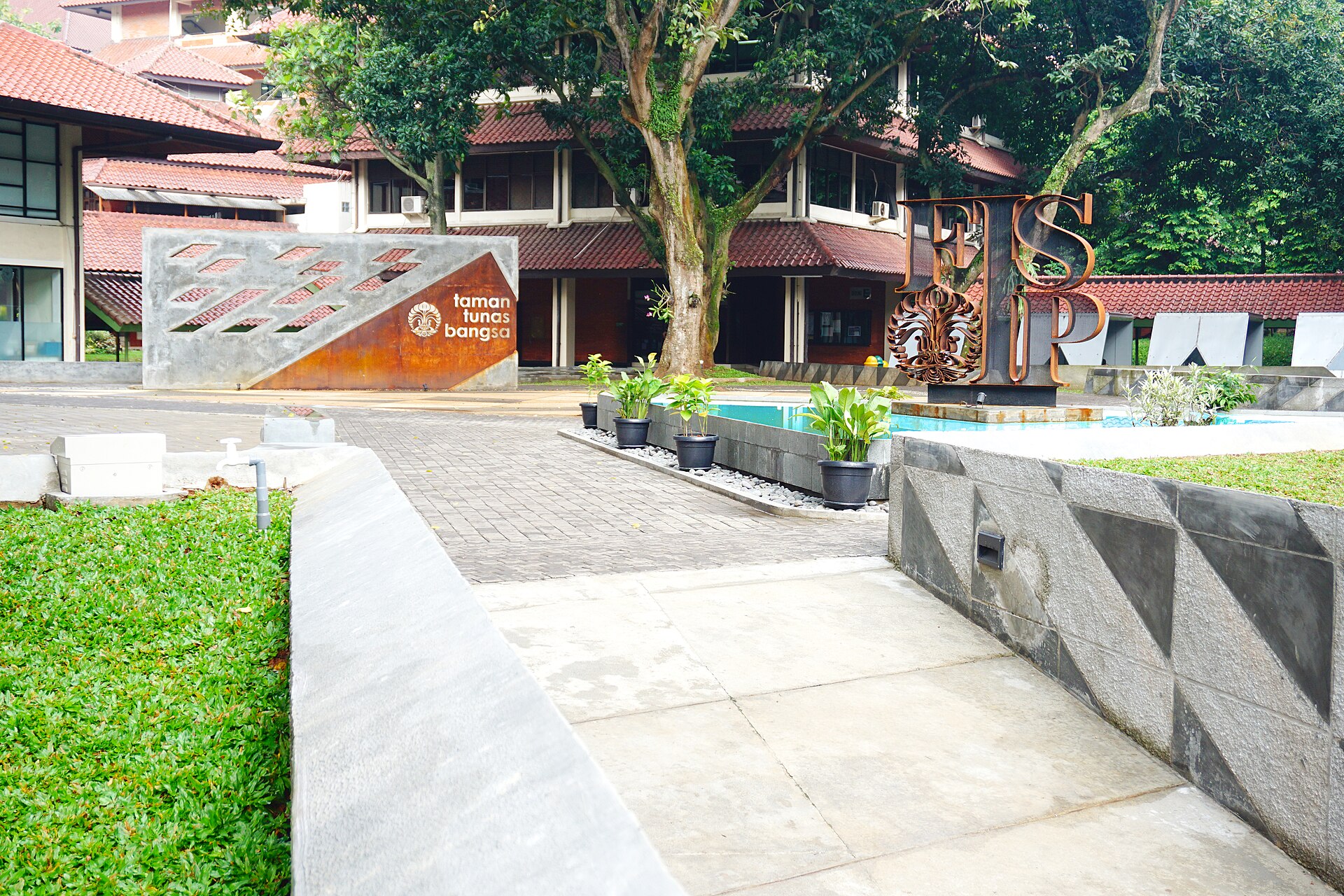
In addition to the aforementioned areas as well as UI’s public parks and gardens, faculties also maintain their own green open spaces for the health and well-being of their students and staff. Examples include Taman Tunas Bangsa, Taman Bhinneka Tunggal Ika, and Teater Kolam at UI’s Faculty of Social and Political Sciences (FISIP), green open spaces at FK UI in UI’s Salemba campus.

Gardens and Green Open Spaces Across Faculties 

The provision of open spaces and green open spaces across UI is also supported by UI Rector’s Decree No. 438 of 2024 concerning the Sustainable Green Campus of Universitas Indonesia. This policy serves as an institutional foundation for supporting the provision and management of green open spaces throughout UI. Through these initiatives, UI not only provides green areas to maintain the campus’s ecological functions but also supports their accessibility and use as public spaces that benefit the surrounding community.

UI Contributes to Local Arts and Cultural Preservation Through Public Performances

UI, through our Directorate of Culture and Makara Art Center (MAC), faculties, and student activity units, contributes to the preservation and development of local arts and culture by organizing artistic performances involving students, lecturers, alumni, arts communities, and external partners. Throughout 2025, UI organized and supported more than 30 arts and cultural performances, encompassing various forms of local art.

On July 23, 2025, the UI Directorate of Culture, together with Makara Art Center UI and with the support of Komunitas Makara, organized “Pagelaran Wayang Kulit Dalang Bocah Remaja (Shadow Puppet Performance by Young and Adolescent Puppeteers)” as an effort to preserve traditional local art. In addition, UI’s Directorate of Culture collaborated with the Theater Studies Department of UI’s Faculty of Humanities (FIB) to organize an artistic performance featuring angklung music and a musical poetry monologue. The event was also attended by the Minister of Culture of the Republic of Indonesia.

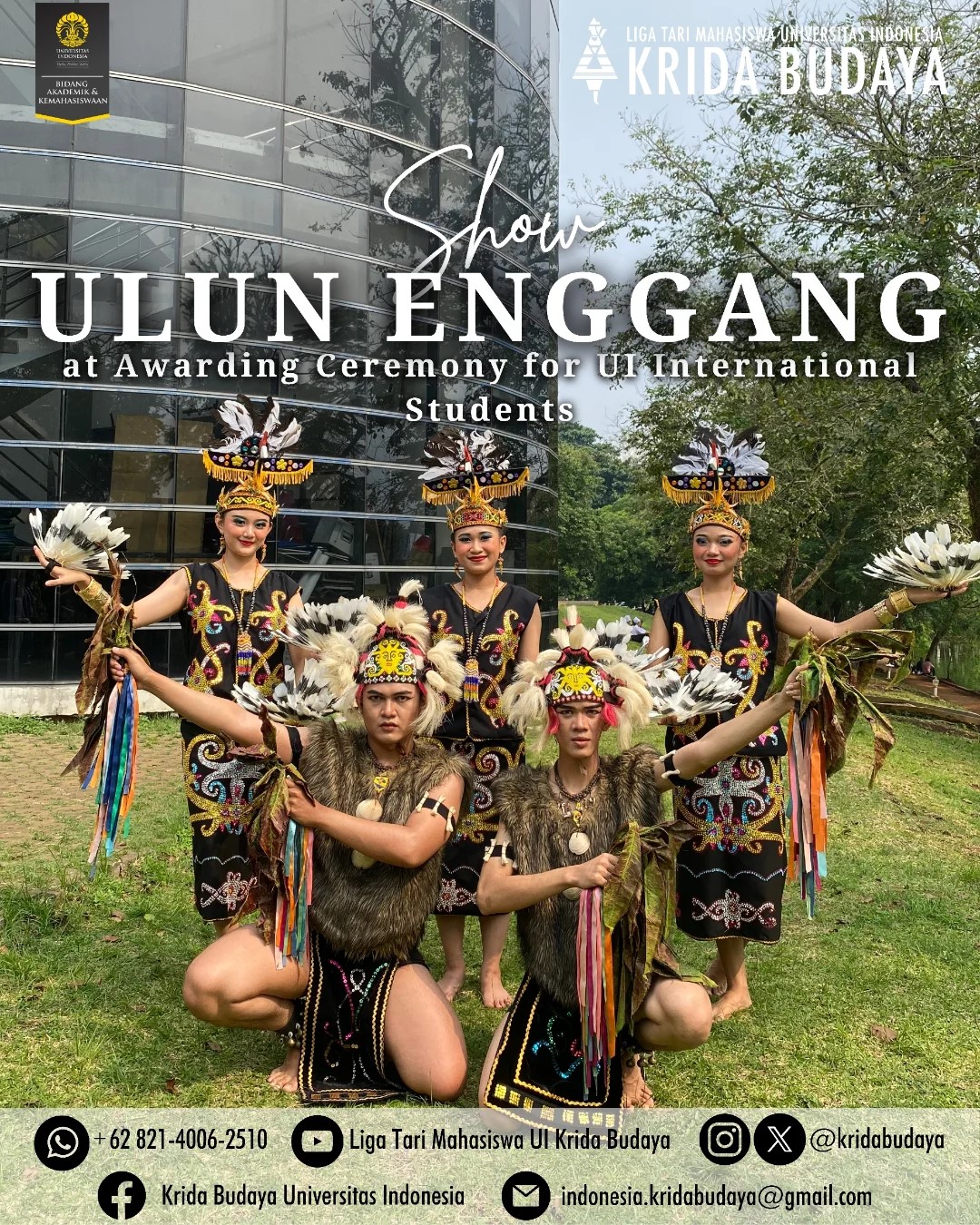
Student clubs (UKM) at UI also play an important role in preserving and developing traditional arts through various performances. Orkes Simfoni UI Mahawaditra presents symphonic arrangements of regional folk songs at various events, both within and outside the university. Meanwhile, Liga Tari Mahasiswa UI Krida Budaya (Krida Budaya Student Dance League of UI) contributes to university-wide and faculty events through traditional dance performances, including a traditional dance from East Kalimantan at the Awarding Ceremony for UI International Students 2025. At the faculty level, Komunitas Tari FISIP UI also organized Radha Sarisha 2025, a performance that combines traditional dance, traditional music, and contemporary choreography.

Beyond student activity units, faculties contribute to the preservation of local arts and culture by organizing artistic activities and establishing arts groups within their respective environments. At the main celebration of the 75th Anniversary of FK UI, a wayang performance was presented as part of the commemorative events. FK UI also established “Vidya Nirmala”, an arts group comprising lecturers, students, and alumni, as a platform for preserving karawitan, a traditional Indonesian musical art form. Meanwhile, UI’s Vocational School organized Tourism Fest UI 2025 to promote regional cultural heritage through traditional dance performances, musical theatre, and a fashion show featuring Wastra Sumatera (traditional textiles from Sumatra). This annual event is open to the UI academic community, the general public, and cultural communities.

UI Executes Institutional Projects to Record and Preserve Local, National, and Displaced Community Heritage

UI actively conducts academic research, community archiving, and digital documentation projects dedicated to recording and preserving intangible cultural heritage under Sustainable Development Goal 11 (Sustainable Cities and Communities). UI’s preservation initiatives span local and regional traditions, national cultural assets, as well as the endangered heritage of displaced or marginalized communities.

Preserving Local, Regional, and Indigenous Knowledge

UI implements targeted research and field recording projects to safeguard regional identity and traditional knowledge:

  • Regional Performing Arts Preservation: Faculty units—including FKUI’s “Vidya Nirmala” ensemble—actively record and document traditional karawitan (gamelan) arrangements and Javanese performing arts to ensure the transmission of local cultural knowledge to future generations.
  • FF UI Indigenous Herbal Knowledge Transmission Project: On November 29, 2025, the Faculty of Pharmacy UI (FF UI), led by Dr. apt. Rissyelly, M.Farm., and Prof. Dr. Abdul Mun’im, conducted a community engagement project in Cikidang Village, West Bandung, focused on “Self-Medication Education, Identification, and Processing of Herbal Plants”. The project documented, preserved, and transmitted traditional Indonesian herbal medicine (jamu) knowledge and Family Medicinal Plants (TOGA) processing techniques to local communities, empowering health self-reliance based on local natural heritage.
Vidya Nirmala Group Performs Karawitan Songs

Documenting National Cultural Heritage

UI preserves national-level intangible heritage through digital repositories and architectural documentation:

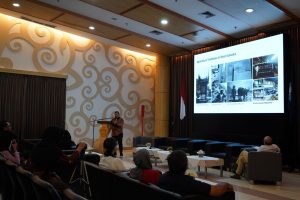
  • Nusantara Folklore Transmedia Project: The Faculty of Humanities (FIB UI) executes academic projects documenting regional folklore from across the archipelago, transforming traditional storytelling into digital transmedia formats (“Membawa Folklore Nusantara di Era Transmedia”).
  • EWAP Workshop 2025 (Vernacular Architectural Preservation Project): On September 15, 2025, the Faculty of Engineering UI (FTUI), in collaboration with Vernadoc Indonesia and Oxford Brookes University, hosted the international EWAP Workshop 2025: Documentation of Endangered Vernacular Wooden Architecture in Indonesia at the UI Central Library. The project documented threatened wooden architecture across West Sumatra, Wae Rebo (NTT), Aceh, and Timor using 3D LiDAR scanning, architectural drawings, and oral history interviews with local communities to create an open-access digital archive.
EWAP Workshop 2025
Nusantara Folklore Transmedia Project

Safeguarding Heritage of Displaced Communities

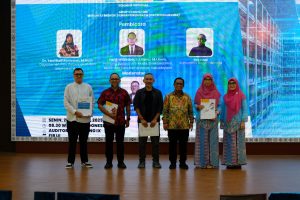
On October 20, 2025, the Department of Library and Information Science (DIPI) of FIB UI celebrated its 73rd Anniversary by hosting the National Seminar “Community Archives: Preserving Memory through Crowdsourcing.” This event aimed to capture vulnerable local histories and prevent cultural loss among migrating or displaced populations Supported by the UI Archives Office, UI Library, and the National Archives of the Republic of Indonesia (ANRI), the event featured key initiatives:

  • Film & Audiovisual Restoration: Cultural stewards from the Ministry of Culture addressed film restoration and media conversion to preserve intangible cultural assets.
  • Local & Displaced Community Archiving: The Bogor Historia Community highlighted community-driven documentation of local historical memories.
  • Manuscript Activation: Practices by the Sraddha Community (Surakarta) in crowdsourcing and activating ancient manuscripts to return knowledge to the public.
National Seminar "Community Archives: Preserving Memory through Crowdsourcing"

Through these projects, UI ensures that local, national, and displaced community heritage remains safeguarded for future generations.

UI’s Initiatives for the Documentation, Preservation, and Transmission of Intangible Cultural Heritage

UI contributes to the preservation and transmission of intangible cultural heritage through our educational activities, academic studies, and efforts to facilitate public participation in recognizing and developing the cultural traditions of the Indonesian archipelago. These efforts are carried out through various initiatives focusing on folklore, traditional arts, and local cultural knowledge.

To strengthen our commitment to cultural heritage preservation, UI established a collaboration with Yayasan Mangkunegara Surakarta through the signing of a Joint Memorandum of Understanding (MoU). This collaboration encompasses the development of educational activities, research, community engagement, and training to support the preservation of Javanese culture. The agreement serves as a foundation for UI and Yayasan Mangkunegara to develop studies and cultural heritage preservation initiatives that benefit the community.

UI’s contribution is also reflected in the organization of The 19th National Folklore Festival (NFF) 2025 by our Faculty of Economics and Business. This annual competition features traditional dance and choir categories, providing a platform for participants from various universities and the general public to introduce and preserve the cultural traditions of the Indonesian archipelago.

Cultural preservation efforts are also carried out through the organization of Kirab Budaya FTUI 2025 on July 26, 2025. The event showcases cultural diversity from various regions across Indonesia through traditional attire, dances, music, and theatrical performances. This cultural parade represents our efforts to preserve intangible cultural heritage while providing a platform for our academic community to appreciate the diversity of local cultural expressions.

Kirab Budaya FT UI 2025

In addition, UI facilitates the development of knowledge about cultural heritage through academic studies. This is reflected in a webinar entitled “Membawa Folklore Nusantara di Era Transmedia” (Bringing Indonesian Folklore into the Transmedia Era), organized by our Faculty of Humanities. The webinar discusses the continuity of Indonesian folklore amid the development of digital media and provides a platform for discussion on introducing and transmitting the diversity of Indonesian folklore to the wider community.

UI Enacts Policy Framework to Measure and Target Sustainable Campus Commuting

UI reinforces our commitment to green mobility and carbon footprint reduction by establishing comprehensive measures, institutional targets, and eco-friendly infrastructure. Through strategic policy enforcement, electric mass transit, and micro-mobility integration, UI actively tracks and accelerates the transition toward sustainable campus commuting for its academic community and public visitors.

Policy Foundation, Commuting Measurement, and Sustainability Targets

UI’s sustainable transit strategy is anchored in formal governance and rigorous environmental target-setting:

  • Regulatory Policy Framework: Governed by the UI Rector’s Decree No. 1214 of 2024 concerning Transportation Policy within Universitas Indonesia, the university mandates the prioritization of non-motorized transport, low-emission vehicles, and regulated parking management.
  • Measuring & Setting Targets: UI systematically measures campus commuting patterns and vehicular carbon footprints in alignment with UI GreenMetric data collection standards. Under its broader zero-waste and environmental sustainability commitments, UI has set targets to progressively diminish reliance on private fossil-fuel vehicles, expand electric fleet ratios, and increase the share of non-motorized and public transit commuting across its campuses.

Electric Mass Transit and Shared Micro-Mobility Services

To operationalize our commuting targets, UI provides accessible, low-carbon transportation alternatives:

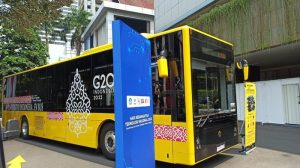
  • UI Electric Buses & Transjakarta Partnership: UI deployed homegrown UI Electric Buses integrated with Transjakarta routes, providing zero-emission public transportation options for commuters traveling across campus and connecting to greater Jakarta’s transit network.
UI Electric Buses
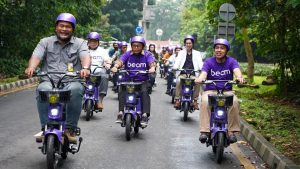
  • BEAM Rover Electric Micro-Mobility: To support seamless first-and-last-mile connectivity within the 320-hectare Depok campus, UI partnered with BEAM to deploy a fleet of BEAM Rover electric bikes/scooters. Accessible to students, faculty, staff, and general public visitors, this shared service reduces internal combustion engine usage and encourages active, zero-emission travel.
Beam UI

Through continuous measurement, clear institutional targets, and expanding electric transit options, Universitas Indonesia ensures a cleaner, healthier, and highly accessible campus environment.

UI Promotes Sustainable Commuting Through Environmentally Friendly Transportation Infrastructure and Mobility Facilities

UI promotes sustainable transportation through the provision of environmentally friendly infrastructure and mobility facilities across the campus. These efforts are supported by the UI Rector’s Decree No. 1304 of 2011 concerning the Policy on Bicycle Use and Pedestrian Pathways at Universitas Indonesia. The implementation of this policy is reflected in the provision of bicycle lanes, pedestrian pathways, bicycle parking facilities, free bus services, and Beam electric bicycles.

Provision of Electric Vehicles Within the UI Campus

To support the mobility of our academic community, UI provides Beam Rover electric bicycle services across 42 parking points throughout the campus and 442 Beam Bicycle units are available, operating daily from 5:00 a.m. to 11:00 p.m. In addition, UI operates electric buses to facilitate mobility within the Depok Campus. These shuttle bus services are supported by designated bus stops where passengers can wait and board. Both facilities provide alternative mobility options for our academic community, helping reduce dependence on private vehicles.

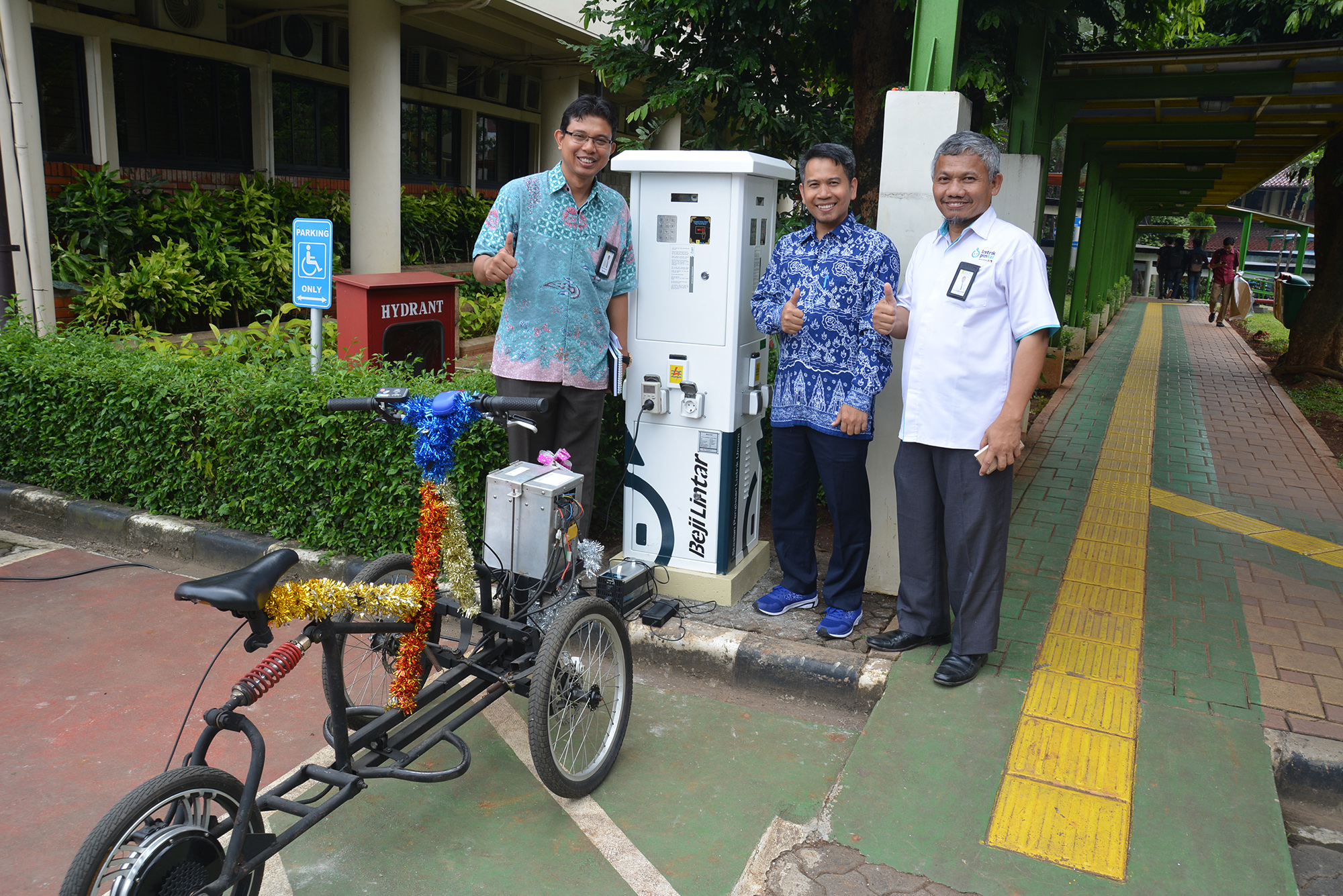
UI also supports the use of electric vehicles through the provision of a Public Electric Vehicle Charging Station (Stasiun Pengisian Listrik Umum/SPLU) next to the Dean’s Office Building of FT UI. This facility can be used by our academic community to charge electric bicycles, electric cars, and electric motorcycles, as well as to provide electricity for outdoor activities. The provision of this charging station is one of our efforts to encourage the use of electric vehicles across the campus.

Provision of Campus Bicycles

UI has bicycle lanes encircling the campus, which are available as free public facilities for the community. A total of 100 yellow bicycles (Sepeda UI) are provided for specific activities, such as special campus events, upon request by UI students or members of the academic community. These bicycles are available outside regular working days (Saturdays and Sundays, from 8:00 a.m. to 1:00 p.m.).

Regulated Parking Areas 

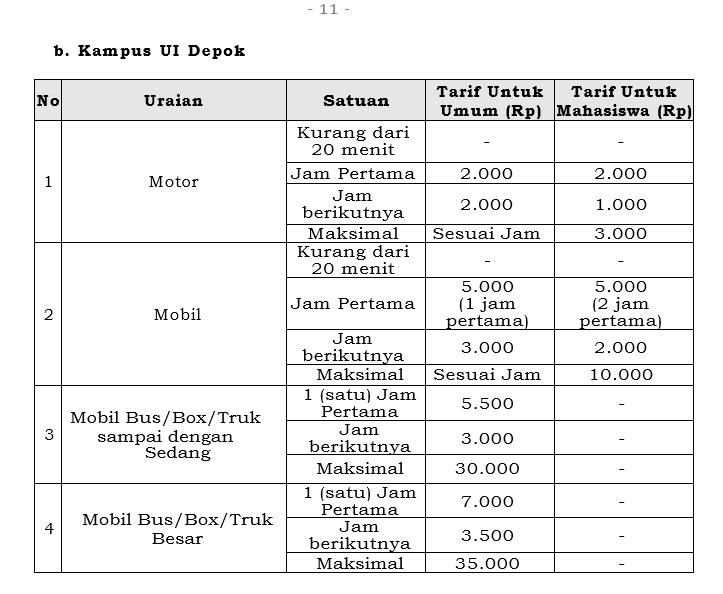
To providing transportation facilities, UI regulates campus access and parking area use through Universitas Indonesia Rector Regulation No. 20 of 2021 concerning Campus Entry Permits and Parking for Four-Wheeled and Larger Vehicles within UI. This regulation forms part of our efforts to manage campus mobility and vehicle parking.This regulation also regulates the subscription rates for entry permits to the UI Depok Campus and the UI Salemba Campus.

UI Parking Fee Regulations

UI Enacts Institutional Policy Framework to Support Remote Working and Flexible Work Arrangements

UI officially regulates and promotes telecommuting, remote working (Working from Home/WFH), and Work from Anywhere (WFA) practices for its employees under Sustainable Development Goal 11 (Sustainable Cities and Communities). Designed as an institutional standard practice, these flexible work arrangements aim to optimize digital-based administrative services, enhance energy efficiency, and directly reduce employee commuting frequencies across the Greater Jakarta metropolitan area.

Structured Hybrid Working Schedule (WFO and WFH Integration)

UI’s remote working policy is anchored in formal executive directives that establish a clear weekly hybrid schedule:

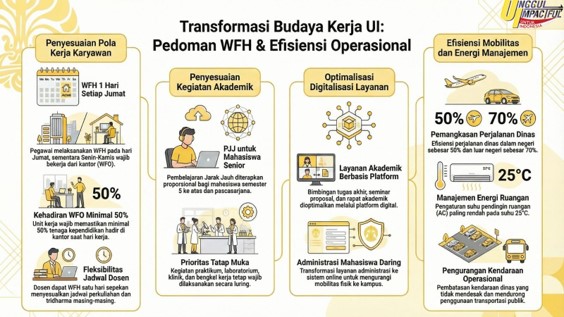
  • Hybrid Working Mandate: Enacted under Rector’s Circular Letter No. SE-1391/UN2.R4/SDM.03.00/2024 and updated by Circular Letter No. SE-1069/UN2.R/SDM.05/2026, UI stipulates a structured work schedule requiring four days of Work from Office (WFO) from Monday to Thursday (maintaining a minimum 50% office presence per unit) and one dedicated day of Work from Home (WFH) every Friday.
  • Commuting Reduction: By implementing mandatory Friday telecommuting, UI systematically cuts employee transit trips by 20% weekly, alleviating traffic congestion and reducing vehicular carbon emissions associated with daily commutes to campus.
UI Guidelines for WFH and Operational Efficiency

Work from Anywhere (WFA) and Employee Welfare Safeguards

Beyond regular weekly WFH schedules, UI implements targeted flexible work policies during seasonal periods while safeguarding employee rights:

  • Seasonal WFA Policy: Governed by Circular Letter No. SE-5265/UN2.R/SDM.05/2025, UI implemented Work from Anywhere (WFA) schemes during the 2025 Christmas and 2026 New Year holiday periods to optimize operational flexibility and campus energy savings.
  • Full Compensation Protection: The institutional policy explicitly mandates that remote working and WFA arrangements do not impair employees’ rights to meal allowances or statutory benefits, ensuring seamless operational continuity alongside employee well-being.


Through these formal directives, UI demonstrates active leadership in promoting sustainable workplace practices and reduced employee commuting.

Circular Letter No. SE-5265/UN2.R/SDM.05/2025

UI Provides Direct Housing Assets and Facilitates Subsidized Financing Programs for Employees

UI demonstrates an institutional commitment to employee welfare by providing direct residential assets and facilitating affordable homeownership programs. By managing university-owned housing complexes and partnering with national housing authorities, UI evaluates affordability and provides financial pathways for lecturers, educational staff, and supporting personnel to access secure housing.

Direct Provision of University Residential Assets

UI directly manages dedicated residential properties designated for its academic and administrative staff:

  • Lecturer Housing Assets: UI maintains the Lecturer Housing Complex in Ciputat, covering a total area of 42,730 m², providing long-term residential accommodation for university personnel.
  • Urban Staff Dormitories: In Jakarta, UI operates the Lecturer and Staff Dormitory on Jalan Kimia, spanning 571 m², offering accessible housing options close to urban health and administrative centers.
UI Lecturer's Housing in Ciputat

Evaluating Affordability and Facilitating Financial Support

Recognizing the economic challenges of urban housing, UI proactively evaluates affordability and facilitates state-subsidized housing financing:

  • Strategic Ministry Partnership: In September 2025, UI partnered with the Ministry of Housing and Settlement Areas (Kementerian PKP RI) to deliver outreach on the Housing Financing Liquidity Facility (Fasilitas Likuiditas Pembiayaan Perumahan / FLPP) under the KPR Sejahtera scheme.
  • Tailored Subsidized Terms: Designed specifically for UI lecturers and staff who do not yet own homes, the program guarantees highly affordable financing terms: a 1% down payment, an explicit IDR 4 million down-payment subsidy, a fixed 5% interest rate until full mortgage repayment, and low monthly installments of approximately IDR 1.0 to 1.2 million.
Information Session on the 'KPR Sejahtera FLPP' (Prosperous Housing Ownership Credit with Housing Financing Liquidity Facility) for UI Employees

Through direct residential asset provision and targeted financial support programs, Universitas Indonesia ensures that our workforce has access to stable, affordable, and quality housing.

UI Provides Directly Managed Affordable Housing and Financial Assistance for Students

The UI Dormitory website (residence.ui.ac.id)

UI demonstrates our commitment to educational equity and student welfare by providing affordable campus housing and financial accommodation support under Sustainable Development Goal 11 (Sustainable Cities and Communities). Supervised by the Directorate for Supporting Educational Facilities Management via the UI Dormitory Office, UI manages dedicated residential complexes while evaluating affordability and offering financial aid for students from low-income backgrounds and remote regions.

Direct Provision of Student Housing and Comprehensive Facilities

UI directly operates and manages dedicated residential dormitories to create an inclusive and supportive academic environment:

  • Strategic Residential Asset: Located near UI’s main gate (Gerbatama) and the Health Sciences Cluster (RIK), the UI Student Dormitory complex provides secure accommodation for approximately 2,000 resident students, prioritizing those from outside the Greater Jakarta area (Jabodetabek).
  • Comprehensive Amenities: Dormitory facilities include fully furnished bedrooms, high-speed Wi-Fi access, communal kitchens, study lounges, laundry services, prayer rooms, and 24-hour security, supporting holistic student development.


Evaluating Affordability and Providing Financial Aid

To ensure accommodation remains accessible to all economic background levels, UI systematically evaluates rates and provides targeted financial assistance:

  • Below-Market Rental Pricing: UI evaluates and sets monthly dormitory fees between IDR 200,000 and IDR 500,000 (approx. USD 12 to USD 30 per month) depending on room types. These institutional rates are significantly below commercial rental prices in the Depok area.
  • Financial Aid & Housing Subsidies: Recognizing the economic constraints of underprivileged students, UI provides housing financial assistance, fee reductions, and full dormitory subsidies for students from low-income families, including beneficiaries of state and university scholarship schemes (e.g., KIP-Kuliah).

Through direct housing management, below-market pricing, and financial aid mechanisms, Universitas Indonesia ensures every student has access to safe, supportive, and affordable housing.

Provision of Integrated Pedestrian Pathways and Bicycle Lanes

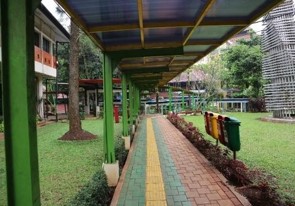
UI demonstrates the existence of prioritisation for pedestrian access on campus, aligning with its Green Campus concept. UI provides interconnected pedestrian pathways and bicycle lanes to support safe and convenient mobility for pedestrians and cyclists. These facilities connect faculty buildings, public facilities, and public transportation points, including the UI and Pondok Cina Commuter Line Stations with various areas across the campus. In total, the combined area of pedestrian pathways and bicycle lanes covers 49,558.8 m² across the Depok and Salemba campuses. Each faculty also has interconnected pedestrian routes to facilitate mobility for our academic community and visitors.

Pedestrian Paths at UI 2025

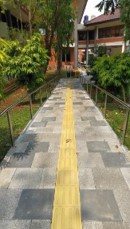
To support the safety and comfort of pedestrians and cyclists, UI provides supporting facilities such as lighting, covered pathways, and regular maintenance to ensure cleanliness. UI also provides disability-friendly pedestrian facilities to improve campus accessibility. These include guiding blocks for persons with visual impairments, ramps as step-free access alternatives, and pedestrian crossings. Such facilities are available across various faculty buildings and public facilities, including the Student Activity Center (Pusgiwa), UI Mosque, Makara Art Center building, Rectorate Building, and Sports Facilities (SOR).

This prioritisation is functionally supported by UI’s policies promoting low-emission transportation, such as the campus bus and Sepeda Kuning (Yellow Bicycle) program, which actively limits private motorized vehicles and, consequently, allocates more space and safety for pedestrian movement. 

Pedestrian Paths at UI.

UI Partners with Local and National Authorities on Urban Planning and Affordable Public Housing

UI collaborates with government institutions to support housing planning and development, as well as expand public access to affordable housing. These efforts are carried out through partnerships with the Ministry of Housing and Settlement Areas (Kementerian Perumahan dan Kawasan Permukiman/PKP) and the Depok City Government to address housing challenges through academic research, data integration, and policy development.

One such collaboration was initiated by the Demographic Institute of the Faculty of Economics and Business UI (LD FEB UI), together with the Ministry of PKP and the Depok City Government, in August 2025. The collaboration was explored to integrate social data with housing programs as part of efforts to improve residential area planning and break the cycle of poverty. Through this initiative, UI contributes research and data-driven insights to help identify community housing needs, improve the targeting of social and housing programs, and explore the potential development of vertical housing and areas that can support local economic growth.

UI and Ministry of Housing and Settlement Areas, and the Depok City Government Explore Collaboration on Integrating Social and Housing Data

At the national level, UI also collaborates with the Ministry of PKP to support the evaluation and development of public housing policies for low-income communities. This collaboration includes research and the formulation of policy recommendations concerning housing programs, particularly the Housing Financing Liquidity Facility (Fasilitas Likuiditas Pembiayaan Perumahan/FLPP) and the Self-Help Housing Stimulant Assistance Program (Bantuan Stimulan Perumahan Swadaya/BSPS). The collaboration was further strengthened through the signing of a Memorandum of Understanding (MoU) between UI and the Ministry of PKP in October 2025 to support research and technical assistance for public housing programs.

Signing of a Memorandum of Understanding (MoU) between UI and the Ministry of PKP

In addition, UI also undertakes the planning and operation of crossings in areas surrounding the UI Depok Campus that intersect with public road infrastructure. These planning efforts involve collaboration with various government agencies, including the Ministry of Public Works, particularly regarding access to and from the Cinere–Jagorawi Toll Road, as well as the review of PT Pertamina Gas pipeline projects and plans for the Juanda–RSUI connecting underpass road.

UI Builds New Infrastructure to Certified Green Building Standards Across Campuses

UI strictly mandates sustainable construction and green building standards for all new campus infrastructure projects under Sustainable Development Goal 11 (Sustainable Cities and Communities). Guided by master planning, national green building regulations, and third-party certification bodies—specifically the Green Building Council Indonesia (GBCI) under the international EDGE (Excellence in Design for Greater Efficiencies) standard—UI embeds high energy efficiency, water conservation, and eco-friendly materials into new major facilities across multiple faculties and central complexes.

Institutional Framework and Green Campus Master Plan

UI’s sustainable building strategy is rooted in formal executive policy and national regulatory alignment:

  • Governance & Regulatory Alignment: Governed by UI Rector Decree No. 2446/SK/R/UI/2016 on the Depok Campus Master Plan (2016–2026) and Rector Decree No. 438/SK/R/UI/2024 on Sustainable Green Campus, UI’s infrastructure standards strictly align with Minister of Public Works and Housing (PUPR) Regulation No. 21 of 2021 on Green Building Performance.

Portfolio of GBCI / EDGE Certified Campus Buildings

UI systematically submits new construction projects for external green building certification through GBCI:

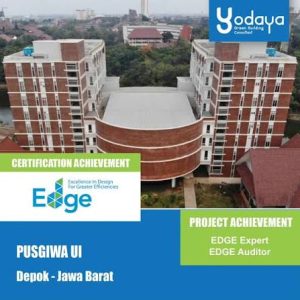
  1. Student Activity Center Building (PUSGIWA UI):
    • Certification Pioneer: In 2019, the PUSGIWA UI building became the first building in Universitas Indonesia to achieve EDGE Green Building Certification from GBCI.
    • Eco-Design Features: Key sustainable features include maximized natural cross-ventilation, dual-purpose outdoor corridors acting as sunshades, light-colored auditorium roofing to mitigate the heat island effect, rainwater harvesting systems fed into fishponds, and lower-carbon perforated bricks.
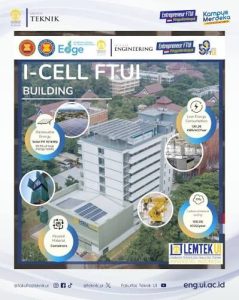
  2. Integrated Creative Engineering Learning Laboratory (i-CELL FTUI):
    • EDGE Advanced Certification: On March 2, 2022, i-CELL FTUI received EDGE Advanced certification from GBCI/IFC.
    • Verified Metrics: Achieved 70% energy savings, 42% water savings, and a 48% reduction in embodied energy from construction materials.
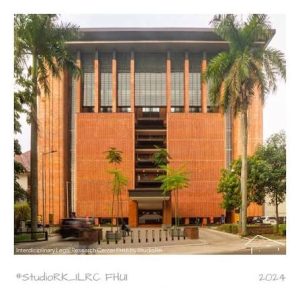
  3. Integrated Law Research Center (ILRC FHUI):
    • EDGE Advanced Certification: ILRC FHUI earned EDGE Advanced certification in line with UI GreenMetric criteria.
    • Vernacular & Passive Design: Incorporates Indonesian tropical vernacular architecture (head-body-leg structure with sloped roofs), hollow exposed brick walls on the western facade to shield heat while optimizing daylighting, and an open communal amphitheater ground floor.
ILRC FHUI Building
Pusgiwa Building
I-CELL Building at FTUI Receives EDGE Advanced Certification

Through certified multi-building portfolios, PUPR alignment, and GBCI validation, UI demonstrates measurable leadership in sustainable academic construction.

UI Prioritizes Sustainable Campus Infrastructure Through Brownfield Site Redevelopment

UI demonstrates its commitment to sustainable land management and resource efficiency by prioritizing the redevelopment and optimization of existing developed land (brownfield sites) under Sustainable Development Goal 11 (Sustainable Cities and Communities). Executed by the Directorate of Operations and Maintenance of Facilities (DOPF UI), UI focuses on restoring, renovating, and upgrading existing university-owned assets to expand functional space and energy efficiency without developing undisturbed greenfield areas.

Brownfield Redevelopment: Rawamangun Official Housing Renovation Project

UI operationalizes its brownfield construction strategy through targeted asset restoration:

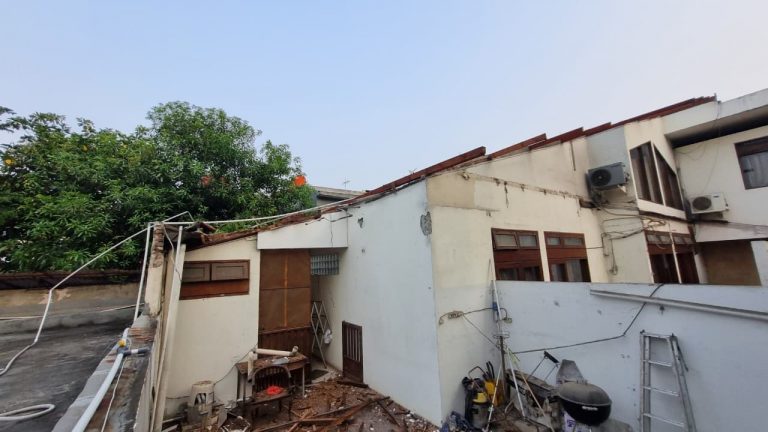
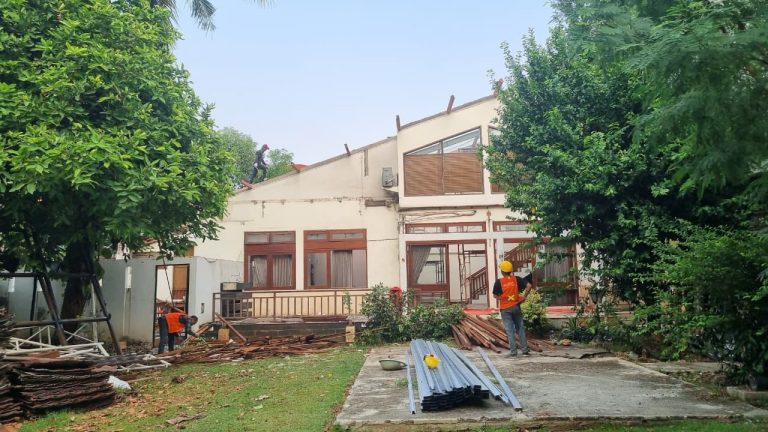
  • Asset Optimization over Greenfield Expansion: UI executed the comprehensive renovation of university-owned official housing in the Rawamangun area, Jakarta. The project focused on repurposing previously developed land (brownfield sites), enhancing structural integrity, safety, and operational longevity without encroaching on new land.
  • Structural Preservation & Sustainable Materials: The project preserved the primary building footprint while upgrading the roofing system with 100% recyclable lightweight steel and aluminum trimdek materials. This choice eliminated hazardous asbestos, reduced raw material extraction, provided corrosion resistance against extreme weather, and incorporated efficient rainwater drainage systems.

Institutional Commitment to Resource Efficiency

Through DOPFMA UI’s land management framework, Universitas Indonesia establishes brownfield redevelopment as a core institutional standard:

  • Targeted Resource Efficiency: UI mandates that existing assets be continuously evaluated and upgraded to meet modern environmental, structural, and user-comfort standards.
  • Preventing Land Sprawl: By maximizing the lifecycle and utility of existing urban assets in Rawamangun and across campus nodes, UI sets a benchmark for creating high-utility, eco-friendly infrastructure while preserving natural ecosystems.

UI's SDG 11 Report

PubHTML5 LightBox Embed Demo