Our actions and goals
Click the SDG Goals to read the initiatives

End poverty in all its forms everywhere

At Universitas Indonesia(UI), our admissions target students from underdeveloped regions, as defined by the Presidential Regulation Number 63 of 2020 concerning the Determination of Underdeveloped Regions for 2020-2024 based on the criteria outlined in the Regulation of the Minister of Villages, Development of Underdeveloped Regions, and Transmigration Number 11 of 2020 concerning Indicators for Determining Underdeveloped Regions.
This target is in line with the Government Regulation of the Republic of Indonesia Number 75 of 2021 on the University of Indonesia Statute, Article 13 Paragraph (4) in which UI is obligated to identify and recruit prospective Indonesian students who demonstrate high academic potential but are economically disadvantaged, as well as prospective students from frontier, outermost, and underdeveloped regions, to be admitted in no less than 20% of the total number of new students admitted through the national admission scheme. This regulation is reinforced by the issuance of UI Rector Regulation Number 21 of 2023 concerning Amendments to UI Rector Regulation Number 2 of 2023 regarding the Admission of New Undergraduate Students at the University of Indonesia, specifically in Article 8.
In these two regulations, the narrative is as follows:
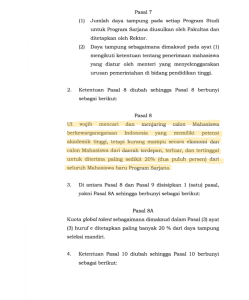

“Universitas Indonesia wajib mencari dan menjaring calon Mahasiswa berkewarganegaraan Indonesia yang memiliki potensi akademik tinggi, tetapi kurang mampu secara ekonomi dan calon Mahasiswa dari daerah terdepan, terluar, dan tertinggal untuk diterima paling sedikit 20% (dua puluh persen) dari seluruh Mahasiswa baru yang diterima melalui pola penerimaan secara nasional.”
which means:
“Universitas Indonesia is obliged to seek out and recruit prospective Indonesian students who have high academic potential but are economically disadvantaged, and prospective students from the outermost, most remote, and least developed regions, to accept at least 20% (twenty percent) of all new students accepted through the national admissions system.”
As proof of our commitment to regional equity and access to higher education, in the 2025/2026 academic year, UI accommodated 1,391 new students originating from 275 underdeveloped regencies/cities across Indonesia. This group accounts for 25.63% of the university’s total 5,427 new undergraduate (S1) students, demonstrating UI’s active role in empowering underrepresented communities nationwide.
UI maintains an official, institutionalized commitment to ensuring high completion rates and equal academic success for all students, with particular emphasis on those from low-income households (bottom 20% household income bracket) and equity groups, such as students from 3T regions (Tertinggal, Terdepan, dan Terluar/ Underdeveloped, Frontier, and Outermost regions).
To operationalize this commitment, UI establishes a mandatory on-time graduation performance target that applies universally across all degree programs. As officially published in the Universitas Indonesia Annual Report 2025 (Page 76) under the Directorate of Education Performance Indicators, the official statement and performance metrics are documented as follows:

The first of six indicators in the Performance Agreement of the Director of Education measure the effectiveness of educational services and governance. The achievement of each indicator throughout 2025 is described below.
The binding 70% on-time graduation target set in the Performance Agreement of the Director of Education is calculated across the total student body, ensuring direct accountability and retention support for low-income and underrepresented students through an integrated implementation framework. Because this target covers all enrolled students without exception, individuals admitted through financial affirmative schemes—such as national equity scholarships (KIP-Kuliah), internal university hardship grants, and the lowest subsidized tuition bands (UKT Category 1 & 2)—as well as regional equity tracks like the ADik scheme for 3T regions, are fully embedded into the completion framework.
UI actively holds ourself accountable for achieving this benchmark across every cohort by enforcing continuous tracking via Academic Advisors (Dosen Pembimbing Akademik), allowing for early identification of academic distress and prompt delivery of targeted mentoring, tutoring, and remediation before delays occur. Furthermore, to eliminate non-completion risks arising from financial strain or socio-cultural adjustment challenges, UI pairs these academic targets with comprehensive financial aid—including full tuition waivers and living cost stipends—alongside dedicated campus integration and psychosocial counseling programs specifically tailored for 3T students. Through this holistic approach, UI successfully achieved a 76.46% completion rate in 2025, providing clear, verified evidence of structured targets and active support mechanisms that systematically guarantee degree completion for students from the lowest income quintile and 3T regions.
UI maintains a comprehensive social safety net designed to fulfill the essential basic needs of students from low-income families, ensuring that financial and non-academic barriers do not hinder their academic progress and degree completion. This holistic support framework integrates free (100% covered) and heavily subsidized services across accommodation, daily nutrition, campus mobility, legal assistance, and student welfare advocacy, directly addressing poverty alleviation within the academic community. All support programs detailed below remain fully operational and actively served students throughout 2025.
Free Meal Programs
Residents of the Wisma Prestasi (translate: Achievement Residence) scholarship dormitory—a dedicated housing scheme for students of UI’s Health Sciences Cluster (RIK) established in 2018 in partnership with the Biman Foundation, LAZ Zakat Sukses, and Formula Hati—receive complimentary daily full-board meals. This structured catering service is built directly into the zero-cost housing scholarship to cover daily nutritional needs alongside academic and leadership development.


At the faculty level, UI’s Faculty of Computer Science (FASILKOM)—through their alumni association (ILUNI FASILKOM) and student-parent organization under the Kakak Super Adik Tangguh (KSAT) initiative—regularly distributes targeted free canteen meal vouchers. Since 2013, this program handed out vouchers that allow financially vulnerable students to obtain free lunches directly at faculty canteens, ensuring immediate nutritional support between classes without out-of-pocket expenses.


Meanwhile at UI’s Student Dormitory, the Jumat Berkah program is organized regularly in collaboration with campus partners and donor organizations. The Jumat Berkah program distributes packaged meals free of charge to dormitory residents and economically disadvantaged students, providing an additional layer of recurring community support on campus.

Affordable and Healthy Food Options
UI regulates campus-wide food facilities through the Safety Office based on Rector’s Regulation No. 57 of 2017 concerning Occupational Safety, Health, and Environment (K3L) for Canteens. All official faculty canteens are mandated to adhere to healthy, hygienic, and affordable standards, strictly capping meal prices between IDR 8,000 and IDR 28,000 (approx. USD 0.50 to USD 1.75) per portion to match students’ purchasing power and significantly reduce daily living expenses for low-income families.


UI Dormitory and Free Student Accommodation
Managed under the Directorate for the Management of Educational Support Facilities (DPFPP), the UI Student Dormitory complex provides strategic, safe, and inclusive accommodation. Through close institutional coordination, the Directorate of Student and Alumni Affairs (DITMAHALUM) reviews and recommends low-income students under financial aid schemes—such as KIP-Kuliah, BOP Berkeadilan (equity tuition rates), and regional 3T affirmative tracks—to receive complete dormitory fee waivers. This free housing framework is further expanded by specialized scholarship housing initiatives, including the Wisma Prestasi RIK dormitory for Health Sciences Cluster students and faculty-level housing grants under the Kakak Super Adik Tangguh (KSAT) scholarship at FASILKOM UI, both of which provide fully free residential facilities to low-income students. For other residents, the university offers heavily Subsidised Housing accommodating over 2,000 students at rates far below commercial market prices, start from IDR 500,000 per month (USD 31.25 per month), fully inclusive of water, electricity, and Wi-Fi access.


Free Shuttle Bus on Campus
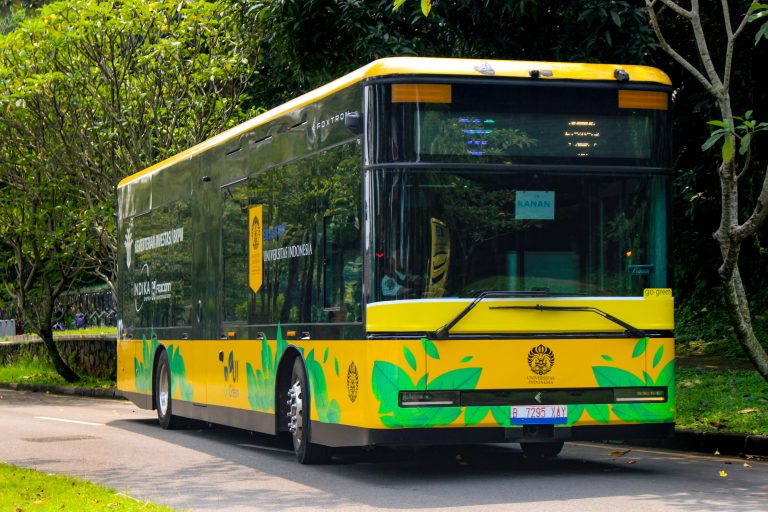
UI provides a 100% free internal campus shuttle service known as the Yellow Bus (Bus Kuning/Bikun) alongside an internal bike-sharing program. Operated by the Transportation Technical Implementation Unit with a fleet of approximately 30 buses serving a 300-hectare campus, the service requires no fares, tickets, or access cards. Students can monitor bus locations in real-time via a web-based tracking application (https://bikun.ui.ac.id/), allowing low-income students and dormitory residents to commute daily across faculties and facilities without incurring any transportation costs.
Public Transportation Integration
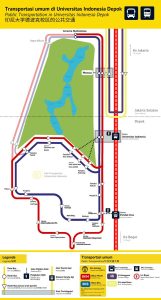
Bikun routes are strategically designed as a loop system connecting all internal faculty hubs, libraries, and dormitories directly to major public transportation nodes surrounding the university. This includes seamless integration with commuter rail stations (Universitas Indonesia Station and Pondok Cina Station) and regional bus terminals at the university’s main entrance (Gerbatama), facilitating safe, cost-effective, and transit-oriented mobility for students traveling to and from the Greater Jakarta (Jabodetabek) area.

Department of Advocacy and Student Welfare in UI’s Student Executive Board and Faculty-Level Student Executive Boards
Operating under the Student Executive Board at both university (BEM UI) and faculty levels (BEM Fakultas), the Department of Advocacy and Student Welfare (Adkesma) serves as an essential bureaucratic bridge and non-legal support network for low-income students. Adkesma provides active guidance and channels appeals for students seeking tuition fee adjustments and band reductions, assists with academic distress, supports students with disabilities, and coordinates student welfare programs.

For formal legal matters (criminal, civil, administrative, or labor law), Adkesma directs students to the Faculty of Law’s Legal Consultation and Aid Institute (LKBH-PPS FH UI), which offers free initial consultations (up to 45 minutes) and full Pro Bono legal representation for economically disadvantaged individuals.

UI maintains a robust and multi-layered social safety net designed to assist students from low-income families (including the national bottom 20% household income bracket and 3T affirmative regions), ensuring that financial constraints never prevent a student from completing their degree. Guided by Article 2 of The UI Rector ‘s Regulation No. 2 of 2025, UI operates under a strict institutional mandate ensuring that no student is dismissed or forced to drop out due to economic limitations.
To uphold this commitment, UI implements a highly adaptive support mechanism, offering diverse, tailored solution schemes to address the unique individual needs and specific challenges faced by each student. All support programs detailed below remain fully operational, serving student cohorts actively through the 2025 academic year and continuing into 2026.
Centralized Financial Aid Framework & Strategic Partner Scholarships
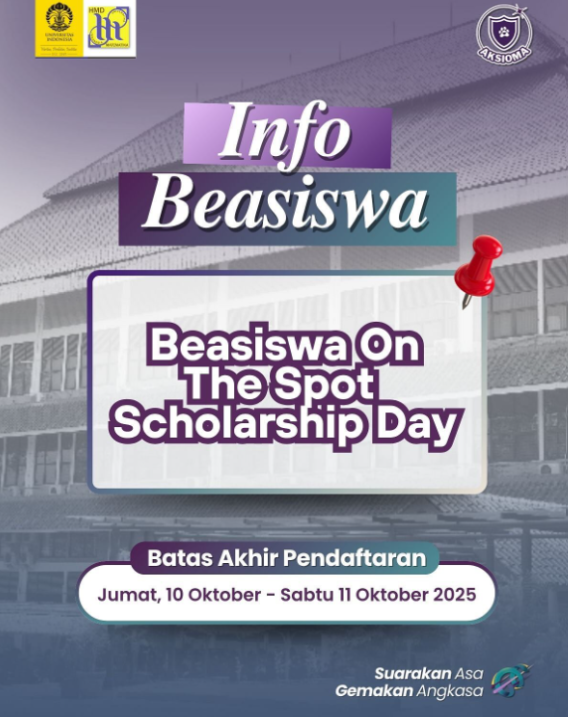
DITMAHALUM centrally administers a diverse ecosystem of financial support programs tailored to low-income students via dedicated portals (previously beasiswa.ui.ac.id, and now satu.ui.ac.id). Targeted financial support schemes managed under DITMAHALUM include among others:

Digital Equity, Academic Mentorship, and Capacity Building Programs
Recognizing that academic success requires more than financial support, UI equips low-income and affirmative students with digital tools and dedicated mentorship:


Tuition Adjustments and Retention Protections
UI implements systemic financial retention mechanisms managed through centralized digital portals (ukt.ui.ac.id).

Faculty-Level Financial Support & Alumni Endowment Networks
Faculties across UI actively supplement central financial aid through specialized internal schemes, corporate partnerships, and alumni foster networks.


Dormitory Empowerment, Income Generation, and Student Entrepreneurship
To foster long-term self-reliance and supplement living costs, DPFPP UI integrates student empowerment into residential life:
As a leading higher education institution operating in an upper-middle-income country, UI is dedicated to fostering global educational equity by systematically expanding financial support schemes for students hailing from low and lower-middle-income countries. Applicable to both full-degree and semester-based exchange programs, UI ensures that financial limitations never prevent talented international candidates from developing nations from pursuing higher education.
In 2025, UI distributed over IDR 812 billion in scholarship funding to 75,691 students across 104 schemes. For international students, UI combines internally funded full-tuition waivers and living stipends with strategic government-backed grant partnerships to provide comprehensive, zero-cost access to higher education.
Demonstrating the tangible impact and global reach of these institutional schemes, UI’s international scholarship enrollment is heavily concentrated on candidates from developing economies. Applying the World Bank income-group classification—encompassing low-income, lower-middle-income, and upper-middle-income economies—89.7% originate from 31 developing economies across Africa, Asia, and the Pacific. Timor-Leste represents the largest single source nation with 21.3%, followed by Tanzania with 10.3% and Zimbabwe around 9.8%. Together, these top three origin countries account for 41.4% of UI’s developing-nation cohort. Additional recipient populations span nations such as The Gambia, Nigeria, Madagascar, Pakistan,, Papua New Guinea, Egypt, Kenya, Malawi, South Sudan, and Yemen, alongside beneficiaries from Bangladesh, Ghana, Guinea, India, Rwanda, Cambodia, Ethiopia, Honduras, Laos, Mozambique, Myanmar, the Philippines, Syria, Uzbekistan, and Vietnam.

Internally Funded Full-Degree Support: The NEW UI GREAT Scholarship
The UI Global Research Engagement Award for Talents (GREAT) is a fully university-funded financial assistance program designed to support outstanding foreign candidates from developing and lower-income nations pursuing full-time Master’s degrees across 15 faculties and graduate schools.
Under the Full Scholarship scheme of the NEW UI GREAT program, UI provides a comprehensive financial package that ensures a complete full-ride education for up to four academic semesters. This includes a 100% tuition fee waiver, a monthly living allowance of IDR 3,500,000 to support daily expenses, and a one-time initial settlement allowance of IDR 1,500,000 upon arrival. To safeguard student well-being and meet administrative requirements, the scholarship covers comprehensive health insurance valued at IDR 400,000 per month, as well as all application fees for student visas and stay permits (KITAS). Furthermore, the award incorporates international mobility and academic readiness support by offering round-trip economy airfare reimbursement of up to IDR 10,000,000 and full funding for the Indonesian Language (BIPA) preparatory course for students enrolled in programs taught in Bahasa Indonesia. In addition to the full scholarship, UI maintains a Partial UI GREAT scheme that provides eligible international applicants with complete 100% tuition fee waivers.

Mobility & Exchange Support: UI-GLOBES Inbound Financial Assistance
To support international students from partner universities joining non-degree semester mobility or study abroad programs, UI administers the UI-GLOBES Inbound Financial Support Scheme. This scheme specifically prioritizes international students who lack financial backing or scholarships from their home universities, national governments, or external donor organizations.
UI-GLOBES provides financial grants of up to IDR 15,000,000 per student (disbursed as IDR 3,000,000 per month for 5 months) to cover accommodation and living costs during their study period at UI.

Government Partnership Grants for Developing Nations: KNB Scholarship
UI provides comprehensive financial support schemes for students from low and lower-middle-income countries through its participation in the Kemitraan Negara Berkembang (KNB) Scholarship program. Designed specifically to broaden access to higher education for international candidates from developing nations, the program supports students pursuing Master’s and Doctoral degrees across 53 study options, comprising 40 Master’s and 13 Doctoral programs in fields such as Engineering, Computer Science, Economics, Law, Public Health, and Biomedical Sciences.
Since 2017, UI has consistently acted as an official host university, removing financial barriers to foster an inclusive and globally engaged academic environment. UI removes financial barriers by offering complete educational support through 100% tuition fee waivers that cover both the mandatory Indonesian Language (BIPA) preparatory track and the entire academic degree program. Beyond full tuition coverage, the scheme provides extensive living grants and financial stipends, including an initial settlement allowance, a monthly living stipend, dedicated book and research allowances, graduate publication support, international round-trip airfare, and comprehensive health insurance. The entire application and administration process is officially managed through the national KNB portal and UI’s International Office to guarantee transparent, direct, and zero-cost access for eligible applicants from developing countries.

International Development Cooperation: The Indonesian AID Scholarship (TIAS)
UI actively collaborates with the Indonesian Official Development Assistance agency under the Foreign Affairs Ministerial Decree to host international recipients under the Indonesian AID Scholarship (TIAS). Targeted at public servants, civil officials, and promising young leaders from priority developing partner countries, the program addresses Sustainable Development Goal 4 (Quality Education) by funding degree studies across Bachelor’s, Master’s, and Doctoral levels.
UI offers 22 specialized Bachelor’s programs (including Engineering, Computer Science, Economics, Law, Public Administration, International Relations, and Psychology), alongside advanced Master’s programs in Management and International Relations, and Doctoral programs in Nursing—fully funding tuition, accommodation, and living allowances to empower future public leaders from lower-income nations.
Building upon these established scholarship frameworks, UI actively expands our international outreach and scholarship quotas through strategic bilateral collaborations. Demonstrating this commitment, UI met with representatives from the Embassy of Zimbabwe to establish enhanced educational partnerships (Antara News Reference). Through this cooperation, UI officially expanded our scholarship allocation quota, enabling more students and public servants from Zimbabwe and developing partner nations to enroll across UI’s diverse funding tracks, including the UI GREAT Scholarship, KNB Scholarship, and TIAS.

In alignment with our commitment to SDG 1 and educational inclusiveness, UI provides fully funded and subsidized scholarship initiatives—such as the UI GREAT Scholarship and the Developing Countries Partnership (KNB) Scholarship in collaboration with the ministry—offering full tuition waivers, monthly living stipends, settlement allowances, health insurance, and language preparation for outstanding international candidates from low and lower-middle-income nations, all complemented by comprehensive administrative, housing, and social integration support from the UI International Office to ensure these scholars successfully complete their studies.
UI demonstrates a comprehensive institutional commitment to fostering a sustainable entrepreneurship ecosystem by supporting local startups and micro-enterprises through education, mentorship, and direct resource allocation.
Managed centrally by UI’s Directorate for Innovation and High Impact Research (DIRBT), UI’s business development ecosystem initiates our comprehensive startup support cycle through the DIRBT Roadshow. This roadshow serves as an essential outreach and engagement initiative designed to foster an entrepreneurial mindset, demystify intellectual property rights, and identify promising research-based innovations directly. By bridging central innovation management with faculty researchers and student innovators, the roadshow creates a robust talent pipeline for UI’s broader commercialization and incubation channels.
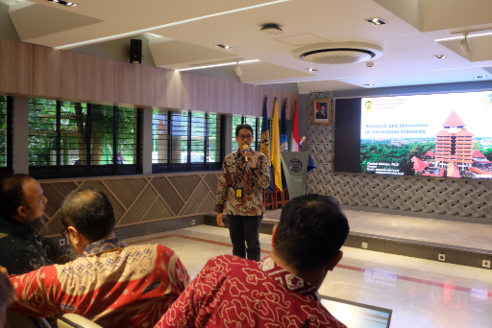
Following this initial outreach, selected innovators enter the UI Incubate Program, a flagship, zero-cost business incubator for tech-based and socially impactful early-stage enterprises, focusing particularly on strategic sectors such as food security, health, energy, and sustainable agriculture. This gathering serves as an intensive onboarding, alignment, and capacity-building forum designed to prepare incubated startup teams for their final monitoring and evaluation stage while unlocking new external funding pathways. During the session, participating entrepreneurs receive comprehensive briefings on progress tracking, financial governance, intellectual property readiness, and commercialization milestones. The gathering acts as a strategic bridge that connects young innovators directly with venture capital networks, angel investors, and industry partners to explore follow-on investment opportunities, ensuring that business ventures maintain sustainable momentum beyond campus incubation.

In accordance with Rector’s Regulation No. 16 of 2024 on UI Cost Standards (p. 39)—which provides the legal foundation for university-funded student entrepreneurship grants—UI awarded direct seed funding to 23 selected startups divided across two business maturity tiers:
Crucially, The UI Incubate Hackathon Pathway serves as an end-to-end bridge connecting these 23 selected startups directly to a broader commercialization network. The university actively facilitates strategic business-matching sessions, invention auctions, and investment showcases that connect startup founders with prospective venture capital firms, angel investors, corporate partners, and key industry stakeholders. This comprehensive matchmaking ecosystem ensures that academic innovations transition smoothly into commercially viable and socially sustainable local enterprises. To guarantee formal execution and institutional governance, UI formalizes these grants through Cooperation Agreements (PKS) for Innovation Grants, backed by sustained mentorship and progress tracking.

To support the growth of financially and socially sustainable ventures, UI provides a comprehensive suite of resources for selected startups and innovation teams. The university allocates direct funding and seed grants tailored to business maturity levels, backed by zero-cost business incubation facilities and structured mentorship programs led by industry experts. Entrepreneurs also benefit from specialized business development workshops and seminars covering essential topics such as intellectual property rights, financial governance, and commercialization strategies. Furthermore, UI enhances market visibility by creating opportunities for startups to showcase their innovations at national and international exhibitions, while facilitating strategic business-matching sessions to connect young founders directly with prospective venture capital firms, angel investors, and key industry partners.
In accordance with Rector’s Regulation No. 16 of 2024 on UI Cost Standards (p. 39)—which provides the legal framework for university-funded student entrepreneurship grants—UI allocates specialized advanced funding tailored to business maturity levels. Teams reaching the Problem–Solution Fit (PSF) stage receive IDR 50 million (~USD 3,125), while mature teams reaching the Product–Market Fit (PMF) stage receive IDR 100 million (~USD 6,250) to ensure commercial viability and long-term financial sustainability.
To guarantee the execution and legal backing of these grants, UI formalizes these commitments through the signing of Cooperation Agreements (PKS) for Innovation Grants, establishing strict monitoring, evaluation, and institutional support mechanisms. Furthermore, DIRBT UI ensures long-term sustainability by hosting events like the Startup Gathering UI Incubate, which provides continuous coaching, final monitoring and evaluation (Monev) preparation, and access to follow-on funding opportunities. To actively build an entrepreneurial mindset across all faculties, DIRBT conducts the DIRBT Roadshow across campus units, such as the Faculty of Engineering (FTUI), embracing innovation and guiding young innovators into the incubator pipeline.
Beyond these university-wide incubation initiatives, UI’s support for entrepreneurship also contributes to the development of local businesses through ventures that address their specific needs. One example is Saalih Express, a digital logistics startup that received incubation funding from UI in 2025. Through integrated export services, including door-to-door international shipping, export-standard packaging, real-time shipment tracking, export training, and guidance on export documentation and legal requirements, Saalih Express helps local MSMEs overcome logistical and regulatory barriers to accessing international markets.
Faculty-Led Community Mentorship and Local MSME Empowerment
Complementing university-wide incubator frameworks, individual faculties at the University of Indonesia extend specialized training, legal advocacy, and technical assistance directly to local communities and micro, small, and medium enterprises (MSMEs):
UI expands community access to essential services through a range of community engagement programmes, training initiatives, and educational activities. These initiatives address key dimensions of basic services, including healthcare, education, clean water and sanitation, and legal protection, with a focus on reaching underserved and vulnerable communities.
Improving Access to Healthcare Services
UI expands access to healthcare services through community-based health screenings, preventive health education, and early detection initiatives, as follows:
Improving Access to Education
Improving Access to Clean Water and Sanitation
Promoting Access to Legal Protection

UI, through the Demographic Institute (LD) of FEB UI, actively engages with local and national governments to support the development of more targeted poverty alleviation policies. On August 20, 2025, LD FEB UI initiated discussions with the Ministry of Housing and Settlement Areas and the Mayor of Depok to explore collaboration on integrating socioeconomic data with housing programmes. The discussion emphasized the importance of accurate and integrated beneficiary data to improve the targeting of social assistance and housing programmes. Depok was proposed as a pilot area for this initiative, with LD FEB UI supporting the plan through comprehensive, data-based assessments of potential housing locations. The proposed integration also considers connecting housing programmes with access to social services, education, and economic opportunities to help low-income communities break the cycle of poverty.
Furthermore, UI, through the School of Environmental Science and the National Resilience Studies Programme, collaborates with the National Poverty Alleviation Acceleration Agency (BP Taskin) in promoting policy discussions on food security as a pillar of poverty alleviation. On November 21, 2025, UI and BP Taskin held a national seminar titled “Food Security as a Pillar of Poverty Alleviation Based on Local Wisdom” at UI’s Salemba Campus. The forum brought together government representatives, regional leaders, and UI academics to discuss strategies for addressing poverty through food security and community empowerment. Discussions highlighted a four-pillar approach encompassing access to basic services, income generation, empowerment, and increased savings and investment. The seminar also examined local practices, including the Subak irrigation system in Bali and traditional farming practices in Solok, as examples of how local wisdom can strengthen food security and support poverty alleviation strategies.
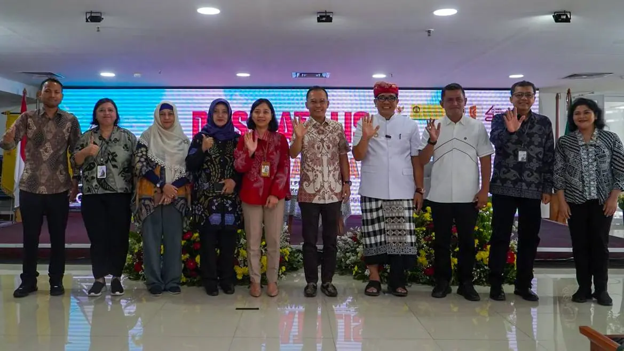
Through this engagement, UI provides an academic platform for dialogue and collaboration between policymakers, regional governments, and researchers to inform more inclusive and sustainable poverty alleviation strategies.