Our actions and goals
Click the SDG Goals to read the initiatives


SDG 14: Life Below Water
Conserve and sustainably use the oceans, seas and marine resources for sustainable development
Community Education Programmes on Freshwater Ecosystem Conservation
-
Rainwater Harvesting Education and Training in Grobogan Regency
In 24 July 2025, UI collaborated with PT Kereta Api Indonesia (KAI) to deliver rainwater harvesting education and training in Depok and Kradenan villages, Grobogan Regency, Central Java. The programme provided hands-on training for local communities on rainwater harvesting techniques, hygienic water storage, and the use of harvested rainwater for household and agricultural needs. UI also constructed a Rainwater Harvesting System (SPAH) by installing three water tanks, each with a capacity of 6,000 litres, to help address seasonal water shortages and improve access to clean water.
-
Integrated Agricultural Water Management and Drip Irrigation Training at Embung Bendo
The Disaster Risk Reduction Center UI (DRRC UI), supported water conservation in Embung Bendo, Kulon Progo, Yogyakarta, through an integrated agricultural water management system combining a water storage reservoir, Internet of Things (IoT)-based monitoring devices, automatic water flow controls, and drip irrigation. The system regulates water distribution according to crop needs to minimise water waste. DRRC UI also provided training for local residents on operating and maintaining the technology to support more efficient and sustainable water management.
-
Project Aquinas: Groundwater Quality Monitoring and Community Education in Cipayung
In July 2025, students from the Faculty of Mathematics and Natural Sciences at Universitas Indonesia (FMIPA UI), through the SEG UI Student Chapter, initiated efforts to address groundwater quality issues in Cipayung District, Depok. Geochemical analyses were also conducted on 20 groundwater samples collected from residents’ homes, of which 13 were found unsuitable for consumption based on applicable water quality standards. As an initial intervention, the team installed water filters in the homes of affected residents to help mitigate health risks.
-
Community Education on River Basin Conservation in Muaragembong, Bekasi
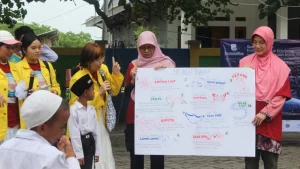
In September 2025, Universitas Indonesia (UI) conducted a community engagement programme in Muaragembong, Bekasi, focusing on public awareness and community participation in the conservation of the downstream Citarum River Basin. The programme provided education on the importance of maintaining river ecosystems, managing domestic and vessel waste, and protecting vegetation along riverbanks. Through this initiative, local residents were encouraged to understand their role in maintaining water quality, preventing river pollution, and supporting the sustainable management of freshwater resources.
UI Promotes Sustainable Marine Resource Management
UI promotes sustainable marine resource management through educational programmes and community engagement, particularly by raising awareness of marine pollution, responsible fishing-related practices, and marine ecosystem conservation. These initiatives engage coastal communities and younger generations in supporting the sustainability of marine resources.
Through its SustainaBlue team, FMIPA UI conducted a Blue Economy Workshop on 3 November 2025 in Pantai Bahagia Village, Muara Gembong, involving 52 local fishers. The programme provided education on microplastic pollution and its impacts on marine ecosystems and food chains, highlighting the contribution of discarded fishing nets and lines to marine pollution and the importance of responsible waste management in fishing activities. The initiative also included follow-up assistance for fishers in processing and managing fishery products, such as shrimp paste, salted fish, fish flour, and fresh shrimp and crab, as well as developing distribution channels. These activities support awareness of environmentally responsible fishing-related practices and the development of more sustainable coastal livelihoods.

Furthermore, through FMIPA UI’s SustainaBlue project team, offers free educational programmes and digital outreach on the sustainable management of marine biotechnology, fisheries, and aquaculture. Launched on August 15, 2025, UI introduced an open-access online course and educational module titled “Marine Technology and Coastal Biological Potential.” Developed in an EU-funded consortium involving the Malaysia Aquaculture Development Association and international universities, the platform (https://sustainablue-project.eu/id/) provides nationwide training on sustainable fisheries management, coastal resource mapping using GIS, aquaculture innovations, and blue economy transitions. Free of charge for local communities, NGOs, industry stakeholders, and national academics, this educational initiative enhances public capacity to utilize marine biological resources responsibly while ensuring long-term coastal ecosystem conservation.

UI Supports Awareness and Monitoring of Illegal Fishing by Innovation
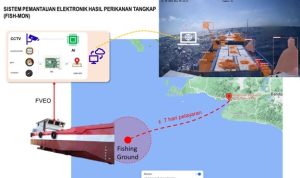
UI, through its research team at the Faculty of Engineering, developed Fish Mon, an artificial intelligence-based fish catch identification system using edge computing technology installed on fishing vessels. Introduced in October 2025, the system uses cameras and AI algorithms to automatically identify fish species, count catches, and record their weight and fishing locations. By improving the accuracy and transparency of catch records, Fish Mon supports fisheries monitoring, catch quota oversight, and efforts to prevent overfishing and bycatch. Its potential integration with electronic logbooks and seafood traceability systems further strengthens the monitoring of fishing activities and supports more accountable fisheries management.
In addition, through the Shell of Hope programme, UI organised a marine ecosystem education roadshow on 18–19 September 2025 in Pulau Harapan, Kepulauan Seribu, involving 540 elementary and junior high school students and 40 teachers. Organised by the Department of Biology, FMIPA UI, and SustainaBlue, the programme introduced marine ecosystems, coral reefs, fish, and marine biodiversity through interactive learning activities. A community workshop held on 19 September 2025 also introduced local residents to the processing of discarded shells into useful products and helped them identify protected shellfish species that must not be harvested. These activities foster marine conservation awareness, biodiversity protection, and the responsible utilisation of coastal resources among younger generations and local communities
UI Promotes Marine Conservation and Sustainable Resource Use
UI promotes the conservation and sustainable utilisation of marine and coastal resources through educational programmes, public campaigns, international seminars, and community engagement. These initiatives involve students, academics, coastal communities, government institutions, and other stakeholders in raising awareness of marine ecosystem preservation, responsible resource utilisation, and sustainable maritime development.
- Blue Economy Workshop in Pulau Harapan
Through the Department of Biology, FMIPA UI, in collaboration with SustainaBlue UI, the university organised a Blue Economy Workshop entitled “Opportunities and Benefits of the Blue Economy, and the Sustainable Use of Marine Resources” on 18 September 2025 in Pulau Harapan, Thousand Islands. Attended by 40 members of the local fishing community, the workshop introduced the economic potential of marine ecosystem services and opportunities to develop sustainable coastal livelihoods. Discussions addressed the responsible utilisation of marine resources, including nature-based tourism activities and the processing of marine-derived products, encouraging participants to balance economic opportunities with the preservation of marine ecosystems.
- PRAction 2025: Public Campaign for Ocean Conservation
The Vocational Education Programme at UI organised PRAction 2025, a national public relations competition held from April to May 2025 under the theme “The Power of Communication: Preserving the Ocean, Eliminate Exploitation.” The programme engaged more than 100 participants from universities and senior high schools across Indonesia through public speaking, short-video, and public relations campaign activities. By integrating environmental advocacy with strategic communication, PRAction encouraged participants to develop and disseminate messages about ocean conservation and the impacts of excessive exploitation of marine resources.
- NESS 2025: Advancing Environmentally Friendly Marine Technologies
FTUI, actively hosts and organizes events aimed at promoting the conservation and sustainable utilization of oceans and marine resources. On December 11–12, 2025, UI hosted the Norway-ASEAN Consortium Seminar on Risk Management for Safer and Sustainable Ocean (NESS 2025), themed “Advancing Eco-Friendly Marine Technologies through Risk Management.” The international event gathered global researchers, experts, and academic partners from Norway and ASEAN to collaborate on green marine technologies, eco-friendly vessel design, alternative maritime fuels, and environmental risk mitigation. By organizing NESS 2025, UI demonstrates its institutional commitment to fostering international dialogue, research, and actionable solutions for sustainable ocean management and marine resource preservation.
- Public Discussion on Sustainable Coastal Economies in Banda Neira
On 21 October 2025, the Faculty of Humanities (FIB UI), in collaboration with the Ministry of Marine Affairs and Fisheries (KKP), organised a public discussion entitled “Pillars of a Sustainable Economy for the Coastal Communities of Banda Neira: Integrating Archaeology and Maritime Culture.” The forum brought together stakeholders to explore the role of maritime heritage, local knowledge, and coastal resources in strengthening sustainable community economies. Discussions also highlighted opportunities for community-based tourism and the importance of preserving the marine and cultural heritage of coastal areas as part of long-term regional development.
- Marine Technology and Coastal Biological Potential: Expanding Access to Marine Education
On 15 August 2025, FMIPA UI, through SustainaBlue, launched an online learning module on marine technology and coastal biological potential. Attended by 57 participants from academic institutions, the private sector, and the general public, the launch introduced educational materials on biotechnology, Geographic Information Systems (GIS), and omics applications for understanding and utilising marine and coastal resources. Designed for wider access by universities in Indonesia and Malaysia, as well as private-sector organisations and non-governmental organisations, the module supports knowledge-sharing and capacity development in sustainable marine resource management.
UI Integrates Sustainability Principles into Campus Food Procurement Policies
To ensure that food on campus, particularly those that come from aquatic ecosystems, is sustainably harvested, UI has established the UI Rector’s Regulation No. 4 of 2022 on the Procedures for the Procurement of Goods and Services. This regulation emphasizes sustainable procurement principles in alignment with government regulations, namely Presidential Regulation No. 16 of 2018 (which was amended by Presidential Regulation No. 12 of 2021). Based on Circular Letter No. 16 of 2020, procurement officials are also instructed to prioritize green products.
Article 3, paragraph (1), point h of the UI Rector’s Regulation No. 4 of 2022 establishes the objective of promoting sustainable procurement, which is reinforced in Article 4, point h, regarding the policy to implement sustainable procurement. Furthermore, Article 23, paragraph (1), point d mandates that the preparation of technical specifications or Terms of Reference (ToR) must include the use of environmentally friendly products. These requirements ensure that food products purchased for consumption at UI are sustainably harvested from aquatic ecosystems.
This regulation serves as a review of previous procurement policies while confirming the legal validity of all existing campus operational provisions, including UI Rector Regulation No. 57 of 2017 on Occupational Health, Safety, and Environment (OHSE) for UI canteens. Furthermore, this entire regulatory framework is actively reviewed and implemented through periodic OHSE audits of canteens, the issuance of hygiene compliance certifications, and annual sustainability reporting.
Research and Collaboration to Maintain Existing Ecosystems and Biodiversity
UI, through FMIPA researchers, works directly via international collaborative research to maintain and protect threatened deep-sea ecosystems and marine biodiversity. From August 10–26, 2025, UI participated in an oceanographic research expedition in the southern waters of Sumba Island and the Java Trench alongside BRIN, SIO China, ITB, and UGM aboard the R/V Tan Kah Kee. Supported by the LPDP RIIM program, the research team conducted deep-sea sediment coring at depths of 2,000 meters to assess deep-sea biodiversity and examine heavy metal (mercury) pollution distribution in tropical benthic environments. By evaluating chemical contamination threats to marine food webs and deep-sea organisms, UI contributes direct scientific research to monitor, maintain, and safeguard vulnerable marine ecosystems under threat.
Furthermore, UI through its Wildlife Biology Research Group in collaboration with the Research Center for Climate Change (RCCC UI), conducts biodiversity research to support the recovery of threatened ecosystems in the Batang Toru Landscape, North Sumatra. Following flash floods and landslides triggered by Tropical Cyclone Senyar in late 2025, the research team combined rapid biodiversity surveys and spatial modelling to assess ecological damage and habitat conditions. The study documented 6 mammal species and 72 bird species, including evidence of Tapanuli orangutan nests, and identified approximately 6,947 hectares of land affected by the disaster, including 4,782 hectares of natural forest. The findings were presented to the South Tapanuli Regency Government to support ecosystem-based habitat restoration, particularly in riparian corridors, and inform post-disaster recovery planning. Through this research, UI contributes scientific evidence to assess biodiversity loss and support the conservation and restoration of threatened habitats.
UI Develops Underwater Technology to Support Marine Exploration and Monitoring
UI, through the Faculty of Engineering (FTUI), works directly on marine technologies enabling the marine industry to minimize aquatic ecosystem damage. Led by Dr. Eng. Muhammad Arif Budiyanto, FTUI developed a leak-proof, pressure-resistant acrylic electronic enclosure for small-to-medium Remotely Operated Vehicles (ROVs). Engineered with butyl rubber seals and epoxy-coated fittings to withstand underwater pressures up to 10 meters, the technology provides a non-corrosive, leak-safe housing for electronic components and environmental sensors. This innovation directly enables the marine survey industry to perform non-invasive underwater monitoring, structural inspections of offshore pipelines, and marine research without risking toxic chemical leaks, heavy metal corrosion, or physical destruction to sensitive coral reefs and benthic habitats.
UI Enforces Mandatory Water Quality Standards and Wastewater Discharge Guidelines
UI strictly enforces comprehensive water quality standards and wastewater discharge guidelines under Sustainable Development Goal 14 (Life Below Water). Codified under executive institutional policy, UI regulates liquid waste management, mandates pollution control technologies, and conducts systematic water testing to protect aquatic ecosystems, local wildlife, and campus public health.
Institutional Framework for Wastewater Control and Conservation
UI operationalizes its wastewater management and conservation standards through clear institutional mandates:
- Executive Decree Governance: Enacted on July 22, 2024, Rector Decree No. 1215/SK/R/UI/2024 concerning the Water Conservation Policy establishes the baseline standards for water quality preservation across all faculties and operational units.
- Wastewater Discharge Standards (Point Eight): The decree explicitly directs pollution control measures through appropriate treatment technologies, mandating that all liquid waste generated from laboratory research, educational activities, and campus residential operations undergo systematic processing prior to environmental discharge.
Periodic Water Quality Audits and Ecosystem Protection
UI enforces continuous monitoring across campus water resources to guarantee environmental compliance:
- Mandatory Quality Inspections (Point Five): UI mandates periodic monitoring and physical/chemical/biological audits of surface water systems, clean water networks, and drinking water sources across campus.
- Ecosystem and Health Protection: By controlling effluent discharge quality, UI prevents land-based chemical and biological pollutants from contaminating the six campus lakes and regional river basins, safeguarding surrounding aquatic wildlife and human welfare.
Through formal policy mandates, wastewater treatment protocols, and periodic water quality audits, Universitas Indonesia upholds standard discharge practices for ecosystem protection.
UI Enforces Enacted and Reviewed Policies to Reduce Plastic Waste and Prevent Land-Based Marine Pollution
UI demonstrates comprehensive environmental leadership under Sustainable Development Goal 14 (Life Below Water) by enforcing policy-backed action plans to eliminate plastic waste and halt land-based marine pollution. Spanning over a decade of continuous policy creation and formal review—most recently updated through executive decrees in 2024—UI mandates single-use plastic bans, eco-packaging practices, and community marine conservation initiatives.
Policy Creation and Periodic Review for Plastic Waste Reduction
UI codifies plastic minimization into binding campus governance through successive regulations and formal reviews:
- Initial Policy Creation: UI established its baseline plastic and paper reduction framework under Rector Decree No. 1308/R/UI/SK/2011, subsequently expanding it into the Zero Plastic Program via UI Rector Regulation No. 4 of 2019. The policy explicitly bans single-use plastics—including plastic carrier bags, straws, disposable tableware, and bottled drinking water—for all students, faculty, vendors, contractors, and campus visitors.
- Formal Policy Reviews (2024 Updates): UI formally reviewed and updated its pollution frameworks in 2024 through two milestone executive decrees:
- Rector Decree No. 438 of 2024 (Sustainable Green Campus Policy): Strengthened source segregation, recycling protocols, and residual waste reduction to prevent land-based pollutants from entering regional water bodies.
- Rector Decree No. 439 of 2024 (Eco-Packaging & Recycling Mandate): Promotes environmentally friendly, biodegradable food and beverage packaging and mandates packaging recycling across campus facilities.
Ocean Conservation and Public Advocacy: PRAction 2025
To complement internal policy enforcement, UI drives external public awareness and coastal community outreach:
- PRAction 2025 & Makaravox UI PR Awards: On May 20, 2025, UI’s Vocational Education Program hosted PRAction 2025, launching a three-month nationwide public relations campaign focused on ocean governance and marine ecosystem protection.
- Coastal Outreach: The campaign mobilized participants across Indonesia, delivering educational workshops to coastal communities to reinforce land-based waste prevention and ocean stewardship.
Through continuous policy review, source waste reduction, and public advocacy, Universitas Indonesia effectively mitigates marine pollution at its origin.
UI Implements Strategic Plan to Prevent Physical, Chemical, and Biological Alterations in Aquatic Ecosystems
UI strictly enforces an institutional framework to protect surrounding aquatic ecosystems and prevent physical, chemical, and biological alterations under Sustainable Development Goal 14 (Life Below Water). Governed by university master plans and executive decrees, UI systematically manages its six campus lakes, urban forest watersheds, and toxic waste operational workflows to ensure that water discharged into public waterways meets stringent environmental standards.
Aquatic Ecosystem Management and Biological/Physical Monitoring
UI integrates physical and biological ecosystem preservation into its campus-wide environmental governance:
- Joint Lake & Watershed Management: Formally codified under Rector Decree No. 3487 of 1999, UI collaborates with the Provincial Government of DKI Jakarta to manage the campus reservoir lakes and urban forest complex.
- Biotic and Abiotic Water Quality Monitoring: UI conducts routine monitoring and empirical research assessing the physical, chemical, and biological health of its aquatic ecosystems. These water bodies serve as a natural retention and filtration system, controlling water quality before it flows into external river basins.

Chemical Contamination Control and Hazardous Waste Protocols
To prevent severe chemical alterations to water bodies, UI enforces comprehensive hazardous and toxic waste (B3) management:
- Institutional B3 Policy Framework: Enacted via Rector Decree No. 2446/SK/R/UI/2016 (UI Master Plan 2016–2026), UI mandates rigorous containment of heavy chemical pollutants generated from laboratories and operational activities across all faculties.
- Standardized Operational Handling: Chemical waste must undergo precise source segregation, placement in secure and watertight containers, hazard symbol labeling, and temporary storage at licensed Hazardous Waste Storage Facilities (TPS LB3). Final disposal and off-site treatment are conducted by certified third-party vendors, guaranteeing zero hazardous chemical discharge into aquatic ecosystems.
Through continuous lake monitoring, watershed protection, and strict B3 waste containment, Universitas Indonesia preserves the ecological integrity of related aquatic environments.
UI Enforces Institutional Plan and Semesterly Audits to Minimize Alterations of Aquatic Ecosystems
UI demonstrates dedicated environmental stewardship under Sustainable Development Goal 14 (Life Below Water) by maintaining a comprehensive monitoring and evaluation plan designed to minimize physical, chemical, and biological alterations across campus aquatic ecosystems. Validated by official environmental permits and government-mandated Environmental Evaluation Documents, UI conducts semesterly water quality audits in partnership with certified independent testing laboratories.
Semesterly Monitoring Scope across Physical, Chemical, and Biological Parameters
UI operationalizes its ecosystem protection plan through bi-annual water quality testing across three primary domains:
- Surface Water & Watershed Ecosystems: Systematic monitoring is executed across all six campus lakes (Situ Kenanga, Agathis, Mahoni, Puspa, Ulin, and Salam), major campus drainage networks, and strategic upstream and downstream segments of the adjacent Ciliwung River.


Sampling and monitoring of surface water quality at UI
- Drinking Water Safety Infrastructure: Testing covers groundwater systems and public drinking water fountains across central academic complexes and student housing facilities to guarantee public health safety.
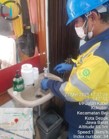
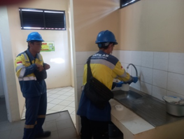
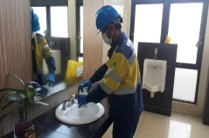
Water Quality Checks in Several Buildings at UI
- Sensitive Facility Discharge Control: Specialized effluent testing is enforced at high-risk facilities—including the Faculty of Mathematics and Natural Sciences (FMIPA) laboratories, the Health Sciences Cluster (RIK), and Universitas Indonesia Hospital (RSUI)—preventing chemical and biological pollutants from reaching public water bodies.


The Process of Sampling and Monitoring the Quality Water Sources at the UI Chem Chemistry Lab of Faculty of Mathematics and Natural Science (FMIPA)
Academic Innovation for Water Purification and Ecological Resilience
In 2025, UI augmented its aquatic ecosystem mitigation plan with technological innovation:
- Development of “AROFAH” Purification Technology: UI researchers engineered “AROFAH,” a portable water purification system capable of treating raw water sources—including rainwater, lake water, river water, AC condensation, and floodwater—into usable clean water.
- Health and Disaster Risk Reduction: The AROFAH system provides a scalable solution to mitigate waterborne disease transmission and manage water quality during environmental contamination events.

Through mandatory bi-annual audits, certified laboratory validations, and technology-driven water treatment, Universitas Indonesia safeguards the ecological integrity of its surrounding water bodies.
UI Develops and Supports Programs to Promote Responsible Aquatic Stewardship Practices
UI strictly adheres to Government Regulation No. 82 of 2001 concerning Water Quality Management and Water Pollution Control. To ensure compliance and relevance, UI has established or reviewed several key policies within the 2021–2025 period:
- Green Campus Policy (Rector’s Decree No. 438/SK/R/UI/2024): This policy, enacted in 2024, generally mandates the implementation of programs to achieve the 17 Sustainable Development Goals (SDGs), including Life Below Water (Marine Ecosystems).
- Water Conservation Policy (Rector’s Decree No. 1215/SK/R/UI/2024): Enacted in 2024, this policy specifically promotes pollution control and water quality maintenance, primarily through the processing of liquid waste generated by the campus. Liquid waste control is UI’s main mechanism for reducing land-based pollution.
- Zero Plastic Program (Rector’s Decree No. 4/SK/R/UI/2019): This earlier policy remains a vital framework for reducing plastic waste (physical pollutants) that could potentially enter the water and marine systems.
As a tangible demonstration of our commitment to responsible aquatic ecosystem management, Universitas Indonesia (UI) supports environmental stewardship initiatives both within and beyond the campus. In collaboration with UI GreenMetric and 45 other universities, UI participated in the Eco Enzyme Festival on August 17, 2024, setting a MURI record for the largest number of higher education institutions participating in eco-enzyme pouring activities in Indonesia. UI produced 1,764 liters of eco-enzyme from fruit and vegetable waste collected across its faculties, schools, and vocational program, which were subsequently applied to all six campus lakes as a natural water filtration measure to support water quality improvement and aquatic ecosystem sustainability.
Beyond the campus, UI’s commitment also extends to coastal ecosystem conservation through the Triwarna Peduli Pesisir (TRIPSIR) 2025, a community service initiative supported by UI’s Vocational Education Program and held on October 10–12, 2025, in Muara Bungin, Bekasi. Involving 120 students, the program encouraged responsible coastal environmental practices through mangrove planting to protect shorelines, coastal clean-up activities involving local residents, and the introduction of an innovative waste management tool. Through these initiatives, UI demonstrates its institutional commitment to promoting water quality management, coastal ecosystem conservation, waste reduction, and community participation in maintaining environmental sustainability.
UI Partners with Traditional Fishing Communities to Protect Shared Marine Ecosystems at UN Ocean Conference 2025
UI demonstrates dedicated environmental leadership under Sustainable Development Goal 14 (Life Below Water) by partnering with local coastal communities to safeguard shared marine ecosystems. Represented by the Faculty of Economics and Business (FEB UI), UI collaborated with the Indonesian Traditional Fisherfolk Union (Kesatuan Nelayan Tradisional Indonesia / KNTI) to advocate for sustainable marine governance and the protection of small-scale fishing grounds at the 2025 United Nations Ocean Conference (UNOC) in Nice, France.
Empowering Local Fishing Communities and Advocacy Against Destructive Fishing
UI translates academic expertise into community-driven action by amplifying the voices of local fisherfolk on international platforms:
- Strategic Partnership with KNTI: Facilitated by FEB UI lecturer and researcher Agung Nugroho, UI joined forces with KNTI and the global Transform Bottom Trawling (TBT) Coalition to highlight the socio-ecological threats faced by traditional fishing communities.
- Preserving Aquatic Ecosystems: The joint delegation presented evidence on the damaging impacts of bottom trawling on marine biodiversity, advocating for strict bans on destructive fishing gear within traditional fishing zones, stronger law enforcement, and inclusive coastal resource management.
Promoting Sustainable Marine Governance and Coastal Livelihoods
By bridging academic research with local community knowledge, UI advances long-term protection for shared aquatic habitats:
- Academic & Community Synergy: UI contributed rigorous policy insights and academic evidence while ensuring that the lived experiences of small-scale fishers and coastal women directly informed high-level UN policy discussions.
- Long-Term Impact: The collaboration establishes a model for multi-stakeholder partnerships aimed at protecting marine biodiversity, restoring coastal fisheries, and securing the livelihoods of vulnerable coastal populations.
Through direct partnerships with local fishing unions, international advocacy, and shared policy development, Universitas Indonesia active maintains shared marine and aquatic ecosystems.

UI Sustains Good Aquatic Stewardship Programs and Endemic Species Restoration Across Local Watersheds
Universitas Indonesia (UI) demonstrates long-term commitment to Sustainable Development Goal 14 (Life Below Water) by supporting ongoing programs and community initiatives that foster good aquatic stewardship. Governed by long-standing institutional mandates and operationalized through partnerships with municipal bodies and environmental groups, UI combines ongoing watershed management with active biodiversity restoration across the campus lake network and the Ciliwung River.
Ongoing Campus Lake and Watershed Management Framework
UI enforces a continuous, institutional aquatic ecosystem monitoring strategy across its facilities:
- Institutional Mandate & Joint Governance: Enacted under Rector Decree No. 3487 of 1999, UI executes joint watershed management of its campus lakes and urban forest complex alongside the Provincial Government of DKI Jakarta.
- Continuous Biotic and Abiotic Monitoring: UI conducts routine monitoring across critical water bodies, including all six campus lakes (Situ Kenanga, Agathis, Mahoni, Puspa, Ulin, and Salam), campus drainage networks, and strategic upstream and downstream points of the Ciliwung River. This ongoing program ensures that water quality standards are met prior to environmental discharge.
Community-Led Stewardship: The 2025 SAIL Programme and Biodiversity Restoration
To extend aquatic stewardship downstream, UI collaborates with local environmental organizations to incentivize public participation:
- Partnership with Ciliwung Depok Community: Through the 2025 SAIL Programme, UI engaged local community members and researchers to assess river health and evaluate human impacts on aquatic ecosystems.
- Restoration of Endemic Fish Species: As part of the program’s aquatic stewardship initiative, UI released native/endemic Ciliwung fish species into the river system. This initiative combines ecological restoration with public education, reinforcing community commitment to river conservation and aquatic biodiversity.
Through ongoing watershed monitoring and collaborative species reintroduction programs, Universitas Indonesia sets standard practices for regional aquatic stewardship.
UI's SDG 14 Report