Our actions and goals
Click the SDG Goals to read the initiatives


SDG 7: Affordable and Clean Energy
Ensure access to affordable, reliable, sustainable and modern energy for all
Policies for Energy Efficiency Standards in New Builds and Renovations
As a large campus with 16 faculties and schools independently managing their own areas, UI ensures all renovations and new builds are appropriately energy efficient by establishing the UI Rector’s Decree No. 2446 of 2016 on the New Universitas Indonesia Depok Campus for the 2016-2026 Period. This campus development plan outlines regulations regarding architecture and landscaping, structure and infrastructure, water management, electrical power system plans, telecommunication network systems, waste management, network information system plans, occupational health, safety, and environment, as well as campus security plans.
In regards to energy efficiency, the 2016-2026 Master Plan has outlined obligations for new builds and renovations to consider tropical climate architecture; use the ground floor as communal open spaces; optimalize room usage in buildings; and implement green building concepts. Green building concepts include energy efficiency, usage of locally-sourced materials, consideration of zero run-off, implementation of water harvesting, and minimum footprint.
These regulations are further supported by the UI Rector’s Decree Number 1212 of 2024 on the Policy on Energy Conservation at Universitas Indonesia which outlines UI’s commitment to implement energy-efficient behaviors in any and all activities on campus, including the usage and management of energy systems in buildings.
Several buildings at UI have also taken these standards a step further and received EDGE Green Building Certification. As outlined by EDGE, a project may earn their EDGE certification by achieving a minimum of 20% savings in energy, water, and embodied carbon in materials compared to a local baseline. Four of UI’s newer buildings have fulfilled these requirements and became EDGE-certified, with one more building in the process of being certified.
- Pusat Kegiatan Mahasiswa (Pusgiwa) UI received the EDGE certification on May 1, 2021 by achieving 22% energy savings, 34% water savings, and 42% less embodied carbon in materials.
- Integrated Creative Learning Lab (i-CELL) FT UI received the EDGE Advanced certification on March 1, 2022 by achieving 70% energy savings, 42% water savings, and 48% less embodied carbon in materials.
- Science Techno Park (STP) UI received the EDGE Advanced certification on June 2, 2025 by achieving 46% energy savings, 51% water savings, and 49% less embodied carbon in materials.
- Interdisciplinary Legal Research Center (ILRC) FH UI received the EDGE Advanced certification on September 10, 2024 by achieving 43% energy savings, 47% water savings, and 55% less embodied carbon in materials.
- Interdisciplinary Engineering (IDE) FT UI is in the process of being EDGE-certified. IDE FT UI implements the green building concept through efficiency in energy use, particularly lighting and cooling, water and air circulation, and building materials. The building materials are partly made from recycled materials and environmentally friendly wood. IDE FT UI also utilizes water harvesting technology, solar panels, and waste management in accordance with the zero-waste policy; and also implements green recovery, with 45% of the ground floor area being converted into a garden and plaza.
Plans for Energy Efficiency: Upgrading Existing Buildings and Reducing Overall Energy Consumption
Approximately 69.23% of UI’s buildings meet smart-building standards, featuring energy-efficient systems, indoor air-quality controls, and integrated building-management technologies. To further advance this, UI is developing a Master Plan for 2026–2029 to accelerate our transition to a green, sustainable campus. The plan prioritizes retrofitting older conventional buildings with energy-efficient equipment, sustainable appliances, and smart controls to optimize performance and reduce environmental impact.
Furthermore, UI requires that all renovations and new builds follow institutional energy efficiency standards set by university regulations and technical guidance. These standards are outlined in Rector’s Decree No. 1212 of 2024. These requirements are implemented through project approvals, design reviews, and procurement rules that embed passive design, efficient HVAC, lighting, and envelope measures into the brief for every major project. Universitas Indonesia has started implementing this, proven by our buildings receiving EDGE (Excellence in Design for Greater Efficiencies) certification.
- The Student Activity Center (Pusgiwa)
Pusgiwa has managed to achieve 22% energy savings, 34% water savings, and 42% less embodied energy in materials. - i-CELL Laboratory at the Faculty of Engineering
The i-CELL Laboratory has managed to achieve 70% energy savings, 42% water savings, and 48% less embodied energy in materials.
UI remains committed to improving energy efficiency through the implementation of Memorandum No. ND-207/UN2.R4/RTK.00/2026 concerning Electricity and Water Conservation across the UI Campus. This policy encourages all university units and members of the academic community to adopt energy conservation measures in support of a sustainable campus. Its implementation is guided by Rector’s Decree No. 1327/SK/R/UI/2015 on the Management and Conservation of Electricity Use and Rector’s Decree No. 1212/SK/R/UI/2024 on Energy Conservation Policy at UI. Through various electricity efficiency measures, UI recorded an approximately 0.37% reduction in total electricity consumption in 2025. This achievement reflects UI’s commitment to creating a sustainable and environmentally friendly campus.
Carbon Management and Carbon Dioxide Emissions Reduction at UI
UI undertakes carbon management and emission reduction initiatives through greenhouse gas (GHG) emission quantification, capacity building, and the implementation of emission reduction measures across its faculties. UI’s Faculty of Engineering (FT) has taken strategic steps towards campus decarbonisation by quantifying GHG emissions through the mapping of greenhouse gas emission reduction programmes, in alignment with the global GHG Protocol Corporate Standard. The Scope 1 assessment measures direct emissions from sources owned or controlled by the institution.

To strengthen our contribution to carbon emission reduction, UI’s Graduate School of Sustainable Development (SPPB), has also implemented the Planetary Carbon Certification Program (PCCP) in collaboration with the Center for Strategic and Global Studies (CSGS) and Impax Embrace Harmony. The program provides training on carbon emission measurement, reporting, and verification, while developing participants’ competencies in carbon management and emission mitigation.

UI has also introduced measures to reduce carbon emissions from campus transportation. UI’s Faculty of Computer Science (FASILKOM) has implemented restrictions on the number of vehicles entering its campus area to help reduce vehicle-related emissions and optimize campus space. Meanwhile, the Faculty of Mathematics and Natural Sciences (FMIPA) supports the increased use of campus buses as an alternative to individual vehicle use, contributing to efforts to reduce transportation-related carbon emissions.

UI Conserves Energy Through Integrated, Sustainable Management and Energy Reviews
UI continues to reinforce our commitment to supporting the sustainable development agenda, particularly Sustainable Development Goals (SDGs) Goal 7 (Affordable and Clean Energy) and Goal 13 (Climate Action). This effort is demonstrated through routine monitoring, reporting, and evaluating electricity consumption across all operational units, faculties, and supporting campus facilities. As one of the largest higher education institutions in Indonesia, UI’s electricity management encompasses a broad operational spectrum, ranging from academic activities, intensive laboratory research, administrative services, student dormitory operations, to public campus amenities.
Energy Consumption Trends Throughout 2023-2025
Based on the consolidated energy inventory across the UI campuses, UI’s total electricity consumption reflects post-pandemic mobility recovery alongside the successful implementation of campus energy conservation policies.
In 2023, UI’s total electricity consumption stood at 96,076 GigaJoules (GJ). A consumption increase occurred in 2024 to 151,241 GJ, driven by the full return of on-campus activities (post-mobility return), maximized research laboratory operations, and the commissioning of new EDGE-certified green buildings. In 2025, through structured energy efficiency measures, UI successfully stabilized and reduced its electricity usage to 150,677 GJ. This achievement marks a 0.37% reduction in total electricity consumption compared to the previous year, despite expanding academic and research operations across campus.
The breakdown of historical electricity consumption per unit, faculty, and operational center at Universitas Indonesia from 2023 to 2025 is presented in the table below:

Energy Efficiency Strategies and Regulatory Framework
The successful reduction of energy consumption in 2025 was guided by institutional mandates and targeted operational strategies, including:
- Regulatory Mandates & Governance: Energy efficiency efforts are anchored in Rector’s Decree No. 1212 of 2024 on Energy Conservation Policy, Rector’s Decree No. 1327 of 2015 on Management and Conservation of Electricity Use, and Circular Letter SE-551/UN2.R/KEU/2025 regarding Budget Efficiency.
- Energy-Efficient Technologies & Smart Buildings: UI continuously retrofits lighting systems with energy-efficient LED lamps, operates inverter-based centralized HVAC systems, and enforces automated shut-off schedules for non-vital equipment outside operating hours. Currently, 69.23% of UI buildings comply with smart-building standards.
- Renewable Energy Development: To accelerate the clean energy transition, UI actively integrates rooftop solar photovoltaics (PLTS) and hybrid wind power systems (PLTB) across key academic facilities and public spaces.
Through transparent and verifiable reporting, UI demonstrates our commitment, not only as a center of academic excellence, but also as a pioneer in campus sustainability and environmental stewardship under SDG 7.
Sustainable Investment Governance at UI
As the leading State University with Legal Entity status (PTN-BH) in Indonesia, UI upholds the principles of sustainability governance in the management of our finances and campus operations. In response to global climate risks, UI implements the following strategies:
Financial Investment Governance Pillar
Governed by UI’s Rector Regulation Number 41 of 2025 (which serves as an update to Rector Regulation Number 036 of 2017), this regulation implements a “negative screening” approach. It prohibits the investment of institutional funds into direct equity instruments within high-risk fossil-fuel extractive industries and provides the legal authority to execute early divestment based on climate-related risks.
Quote from Article 3 UI’s Rector Regulation No. 41 of 2025:
“Investasi Dana UI dijalankan dengan menerapkan prinsip: 1. kehati-hatian (prudent); 2. risiko dan imbal hasil (risk and return); dan 3. tidak mengurangi nilai pokok investasi (capital preservation).”
Which means:
“UI’s fund investments are managed by applying the following principles: 1. prudence; 2. risk and return; and 3. capital preservation (ensuring the principal investment value is not diminished).”
Pursuant to Article 3, all UI investments must adhere to the principle of prudence, incorporate risk-and-return analysis, and ensure capital preservation to protect the principal capital from the risk of a decline in value.
The prudent principle in UI’s investment governance serves as a capital protection strategy rooted in negative screening and capital preservation. Under this approach, fund allocations are strictly limited to secure instruments officially registered with the OJK (Financial Services Authority) or BWI (Indonesian Sharia Banking/Finance authorities), such as bank deposits, government securities (SBN), and sovereign sharia-compliant bonds (SBSN/Sukuk). This restriction automatically eliminates the risk of direct equity investments in carbon-intensive extractive industries—specifically coal and petroleum mining—while also granting the university the legal authority to pursue early divestment before the maturity date, should there be an increase in climate transition risks or changes to carbon emission regulations.
Through Articles 7 and 8, UI implements a structured “negative screening” approach, whereby investment instruments are strictly limited to products registered with the OJK (Financial Services Authority) or BWI (Indonesian Waqf Board), such as:
- Liquid & Short-Term Instruments: Demand deposits, time deposits, cash waqf-linked deposits, and conventional/Sharia money market mutual funds.
- Long-Term Instruments: Government Securities (SBN), Government Sharia Securities (SBSN/Sukuk), and SBN-based protected mutual funds.
Through this regulation, UI formally prohibits and eliminates direct equity holdings as well as speculative corporate bonds in companies involved in coal mining and oil exploration.
The legal basis for UI’s authority to divest is stipulated in Article 17, paragraph (1) of the Rector’s Regulation No. 41 of 2025. This provision confirms that UI is authorized to carry out early divestment if:
- An increase in investment risk occurs, which may reduce the principal value or returns (item b);
- A change in strategy and financial restructuring takes place (item d);
- New regulations or legal rulings concerning environmental or emissions-related obligations are imposed (item e).
This clause provides legal legitimacy for the Rector and the Investment Advisory Team to withdraw or divest institutional funds from financial instruments or institutions exposed to climate transition risks and high carbon emissions.
Operational Energy Conservation
The financial pillar is strengthened by an operational decarbonization policy, established through the UI Rector’s Decree No. 1212 of 2024 on Energy Conservation Policy (which updates the UI Rector’s Decree No. 1310 of 2011). This policy mandates the following:
- Reducing Fossil Fuel Consumption: Decreasing the use of fossil-fuel-powered vehicles by providing an electric-powered campus mass transit system, which is evident in UI steadily increasing the number of electric vehicles in our shuttle bus fleet.
- Accelerating Renewable Energy: Installing rooftop solar photovoltaic (PV) systems and hybrid wind power systems across various faculty buildings.
Programs on Energy Efficiency and Clean Energy for Local Communities
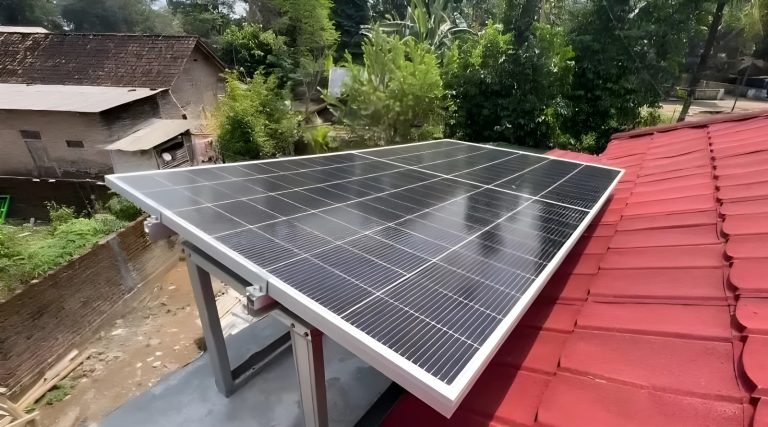
Through the 14th UI Youth Environmental Action (UI YEA) programme, UI students supported access to electricity in Banyuasih Village, Pandeglang, Banten, by installing solar panels at Al-Baraqah Mosque on 14 August 2025. The initiative addressed recurring power outages in the village, which are associated with its remote location and limited access to electricity infrastructure and technical support. The team installed an off-grid monocrystalline solar panel system with a capacity of 710 Wp and a 2.4 kWh LiFePO4 battery, providing an alternative electricity source with a capacity equivalent to 900 VA alongside the existing PLN supply. The electricity generated supports the mosque’s daily activities, including lighting, water pumps, loudspeakers, and fans. Beyond providing an alternative energy source, the initiative introduced the local community to the use of solar energy as a form of clean and renewable energy, helping raise awareness and knowledge of renewable energy technologies and their potential to support more independent and sustainable electricity access.
In another community empowerment initiative, UI introduced renewable energy technology to support access to clean water in Kampung Munjul, Ciampea, Bogor Regency, West Java. The programme involved the installation of a solar-powered water pumping system to improve water availability for residents, particularly during the dry season. The system comprises 800 Wp solar panels, a 4,800 Wh Lithium Iron Phosphate (LFP) battery, a Maximum Power Point Tracking (MPPT)-based Solar Charge Controller, an inverter, and a water pump that had undergone laboratory testing. It supplies water from a natural spring to a storage tank strategically located near the local prayer room (mushola), providing residents with more convenient access to water for daily needs, including bathing, cooking, and drinking.
UI Promotes Pledge Towards 100% Renewable Energy Beyond the University
UI promotes public engagement in the transition towards clean and renewable energy through discussions, public forums, and multi-stakeholder events involving academics, government representatives, industry leaders, and energy practitioners. These initiatives provide platforms to exchange perspectives, discuss renewable energy solutions, and encourage broader participation in advancing sustainable energy transitions.

On 30 October 2025, UI’s Faculty of Engineering (FT) organised Future Energy Talks 2025 under the theme “From Energy Access to Economic Growth in 3T Regions.” The seminar brought together energy practitioners and academics to discuss the role of appropriate energy technologies in expanding electricity access and supporting economic development in Indonesia’s frontier, outermost, and underdeveloped regions (3T). The discussion highlighted the significant potential for renewable energy development in rural areas, including Micro-Hydro Power Plants (PLTMH), Solar Power Plants (PLTS), wind power, biomass, and biogas. The event also emphasised the role of universities in accelerating the energy transition through research, innovation, community service, and technical training.
DECAGRID 2025 International Symposium
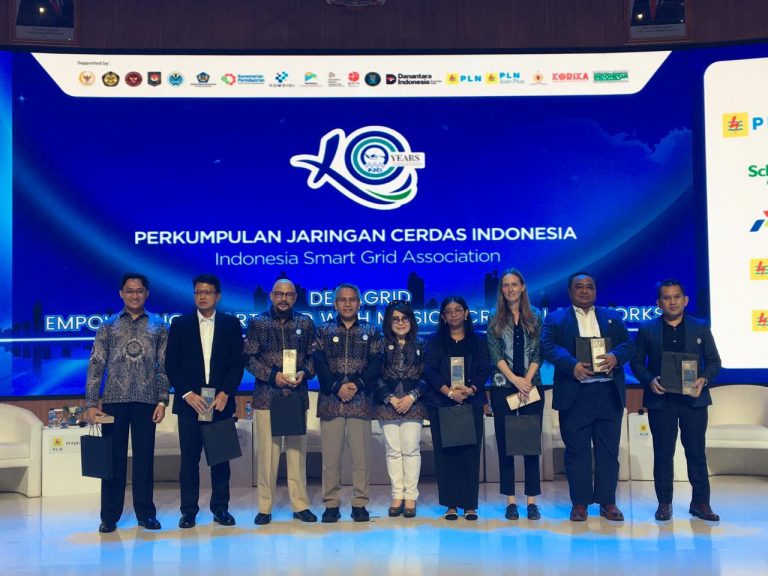
On 20 October 2025, the Director of Innovation and High-Impact Research at Universitas Indonesia (DIRBT UI) participated in the DECAGRID 2025 International Symposium, organised by the Indonesian Smart Grid Network Association (PJCI). The forum brought together government representatives, industry players, academics, research institutions, and private-sector stakeholders from Indonesia and abroad to discuss smart grid innovation, energy policies, and the challenges of transitioning towards sustainable electricity systems. During the symposium, UI highlighted the importance of smart grid development in supporting the integration of renewable energy into the national electricity system, particularly through more efficient, reliable, and interconnected power generation, transmission, and distribution.
Global Network for Advanced Management (GNAM) Week 2025
On 11 March 2025, the Master’s Program in Management at UI’s Faculty of Economics and Business (FEB), hosted GNAM Week 2025, focusing on green mindsets and the energy transition towards Net Zero Emissions. The event brought together industry leaders to discuss sustainability strategies and the transition to cleaner energy. The discussion also highlighted the importance of collaboration among government, businesses, academics, and communities in supporting Indonesia’s energy transition and its Net Zero Emissions target for 2060.
UI Provides Services to the Local Industry for Energy Efficiency and Clean Energy
UI provides direct services to industry through UI Solution, an integrated platform that connects businesses with UI’s laboratory facilities and testing services. Through this platform, industry partners can access laboratory testing, analysis, technology validation, and development services to support product quality improvement, process optimization, and the development of more sustainable technologies.
These services include material characterisation and laboratory testing facilities, such as X-ray Diffraction (XRD) for crystal structure analysis, X-ray Photoelectron Spectroscopy (XPS) for surface characterisation, Particle Size Analysis (PSA), Thermogravimetric Analysis (TGA) and Differential Scanning Calorimetry (DSC) for thermal analysis, CHNS/O elemental analysis, and Brunauer–Emmett–Teller (BET) analysis for surface area and porosity measurement. These facilities can support the development of new materials, industrial process optimisation, and research and innovation related to energy and environmental technologies.
In 2025, UI, through various specialised units, including LPEM, CSGS, CSWM, PPSML, LP2KM, PEBS, UP2M Electrical Engineering, LEMTEK, and UP2M Mechanical Engineering, undertook a total of 28 projects in the renewable energy sector in collaboration with industry partners and local governments. These projects demonstrate UI’s engagement in providing research and technical expertise to support renewable energy development beyond the university campus.
In addition to our testing services, UI also runs an innovation and incubation programme through UI Incubate, which is designed to help startups and innovators accelerate the growth of research- and technology-based businesses. The program aims to foster the development of impactful startups that contribute to strengthening Indonesia’s innovation ecosystem.

UI Supports the Government in Clean Energy and Energy-Efficient Technology Policy Development
UI actively contributes to supporting the Indonesian government in advancing clean energy development and energy-related policies through institutional partnerships, multi-stakeholder engagement, and research-based policy support.
Through DIRBT, UI strengthened our partnership with the Renewable Energy and Energy Conservation Professional Certification Agency (LSP EBTKE) to promote the downstream development of renewable energy innovations and enhance the capacity of a competent workforce in the renewable energy and energy conservation sectors. The partnership was formalised through a Cooperation Agreement between the STP Business Management Unit (UKK STP UI) and LSP EBTKE Indonesia, witnessed by representatives of various industry associations and government institutions, including the Ministry of Energy and Mineral Resources of the Republic of Indonesia and the National Professional Certification Agency (BNSP).
Furthermore, on 30 October 2025, UI, through FT UI, organised Future Energy Talks 2025, bringing together government representatives, academics, and energy practitioners to discuss opportunities and challenges in advancing clean energy development in Indonesia. The forum explored the potential for renewable energy development in rural areas to expand energy access in Indonesia’s frontier, outermost, and underdeveloped (3T) regions. It also served as a platform for knowledge and perspective exchange among stakeholders to explore sustainable energy solutions tailored to the needs of communities.
UI also provides research, education, and specialised services in the energy sector through the Institute for Energy Transition (IET), an interdisciplinary research institute under FT UI. IET focuses on serving as a think tank and providing policy support to the government through research findings addressing energy transition and global climate challenges. The institute comprises the Tropical Renewable Energy Center (TREC) and the Sustainable Energy Systems and Policy (SESP) Research Center, which contribute to advancing research and knowledge in renewable energy and sustainable energy policy.
UI Assists Start-Ups Fostering and Supporting Low-Carbon Technologies and Economy
UI runs an innovation and incubation programme through UI Incubate, which is designed to help startups and innovators accelerate the growth of research- and technology-based businesses. The programme aims to foster the development of impactful startups that contribute to strengthening Indonesia’s innovation ecosystem. In 2025, UI Incubate received an award from the Indonesian Business Incubator Association (AIBI) in recognition of its contributions to nurturing and developing technology-based startups originating from university research. This award reflects UI Incubate’s role in facilitating collaboration among academics, industry, and investors to transform research-based innovations into impactful solutions and business opportunities.

In 2025, UI organised the UI Incubate Hackathon 2025, held from 3 to 5 July. Of the 439 participants who took part in the selection process, which included preparatory sessions, hackathon activities, and pitch presentations, 23 startup teams were selected to receive funding support from UI.
One of the innovations developed by a startup supported by UI Incubate is Jokeen Energy, which introduced the Smart Renewable Energy Wind Turbines Hybrid innovation to address electricity access challenges in rural areas and remote agricultural communities. The system integrates wind turbines, solar panels, and battery storage to support electricity availability under varying weather conditions. It is also equipped with a Smart Energy Management System (EMS) that manages power distribution, energy storage, and load prioritisation according to users needs.

UI's SDG 7 Report