Our actions and goals
Click the SDG Goals to read the initiatives



SDG 15: Life on Land
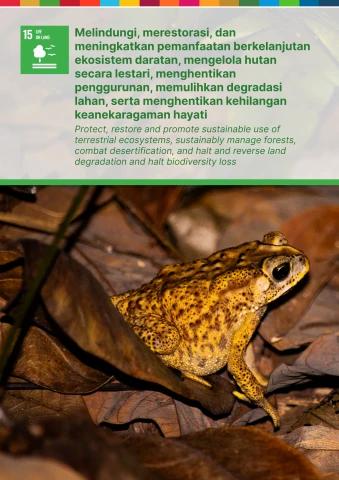
Protect, restore and promote sustainable use of terrestrial ecosystems, sustainably manage forests, combat desertification, and halt and reverse land degradation and halt biodiversity loss
Policies on Sustainably Farmed Food at UI
Universitas Indonesia (UI) has a policy regarding food sourced from sustainable farming practices on campus. This policy is established through UI Rector Regulation Number 4 of 2022 concerning Procedures for the Procurement of Goods/Services. The regulation, developed or reviewed during the 2021–2025 period (and enacted in 2022), mandates that all procurement—including food supplies—must uphold ethical, environmental, and social principles.
Specifically, Article 3, paragraph (1), letter h establishes the objective of “promoting sustainable procurement,” which is reinforced by Article 4, letter h, regarding the policy to “implement sustainable procurement.” Furthermore, Article 23, paragraph (1), letter d mandates that the preparation of technical specifications or Terms of Reference (ToR) must include the “use of environmentally friendly products.” This requirement ensures that food products purchased for campus consumption originate from agricultural produce managed in a sustainable manner.
Quote from Article 3 paragraph (1) letter h of UI Rector Regulation Number 4 of 2022:
“(1) The procurement of goods/services aims to: ………. (h) promote sustainable procurement.”
Quote from Article 4 letter h of UI Rector Regulation Number 4 of 2022:
“The Goods/Services Procurement Policy includes: ……… (h) implementing sustainable procurement.”
Quote from Article 23 paragraph (1) letter d of UI Rector Regulation Number 4 of 2022:
“(1) The preparation of technical specifications/Terms of Reference (TOR) shall, at a minimum, include: ….. (d) the use of environmentally friendly products.”
Complementing this upstream procurement framework, UI Rector Regulation Number 057 of 2017 concerning the Implementation of Occupational Health, Safety, and Environmental (OHSE) Aspects in UI Canteens establishes standards for food quality and safety at the downstream level. Article 2, paragraph (1) sets out a commitment to “implement OHSE aspects across all canteens,” while Article 14, letter b, explicitly mandates that “all ingredients processed into finished food and beverage products must be of good quality, fresh, and not spoiled.” This quality assurance is overseen through Article 33, paragraph (1), letter a—which concerns periodic OHSE inspections/audits—and Article 35, which pertains to hygiene suitability certification.
Quote from Article 2 paragraph (1) letter a of UI Rector Regulation Number 057 of 2017:
“(1) UI and the faculties/schools/programs/directorates/units within UI are committed to: a. Implementing OHS&E (Occupational Health, Safety, and Environment) aspects across all canteens;…..”
Quote from Article 14 letter b of UI Rector Regulation Number 057 of 2017:
“The handling of food and beverages must comply with the following requirements: a. clean water used for preparing beverages must be boiled; b. all ingredients processed into finished food and beverage products must be of good quality, fresh, and not spoiled;…”
Quote from Article 33 paragraph 1 letter a of UI Rector Regulation Number 057 of 2017:
“(1) The UI Occupational Health, Safety, and Environment Technical Implementation Unit (UPT K3L UI), in conjunction with the UI Canteen Occupational Health, Safety, and Environment (K3L) Commission, is tasked with and authorized to: a. conduct periodic inspections and audits of occupational health, safety, and environment (K3L) in the UI canteen;…”
Quote from Article 35 letter c of UI Rector Regulation Number 057 of 2017:
“Every canteen must comply with the following requirements: …….. c. every canteen must meet hygiene standards, as evidenced by a certification issued by the local government’s Health Office; ………”
Pursuant to Article 90, paragraph (2) of UI Rector Regulation No. 4 of 2022, all previous regulations remain in effect, thereby forming an integrated governance framework that ensures an environmentally friendly and sustainable food supply chain at the University of Indonesia.
Quote from Article 35 letter c of UI Rector Regulation Number 057 of 2017:
“(2) At the time this Rector’s Regulation comes into effect, all existing regulations and provisions within the UI environment shall remain in force, provided they do not conflict with the stipulations set forth in this Rector’s Regulation.”
The sustainable procurement policy framework at UI was established in 2022 through the enactment of UI Rector Regulation Number 4 of 2022, dated April 14, 2022. This regulation serves as a review of previous procurement policies while confirming the legal validity of all existing campus operational provisions—including UI Rector Regulation Number 057 of 2017 concerning Occupational Health, Safety, and Environment (OHSE/K3L) for UI canteens—as stipulated in Article 90, paragraph (2). Furthermore, this entire regulatory framework is actively reviewed and implemented through periodic OHSE audits of canteens, the issuance of hygiene compliance certifications, and annual sustainability reporting.
Conservation, Restoration, and Sustainable Use of Terrestrial Ecosystems at UI
As a living laboratory home to the UI Urban Forest, UI upholds an institutional-level governance framework dedicated to the conservation, restoration, and sustainable management of terrestrial ecosystems across our 350 hectare Depok campus, including the 192 hectare UI Urban Forest. The UI Urban Forest functions as the primary lungs of the Greater Jakarta area, as well as a water catchment zone and biodiversity refuge. As such, UI recognizes the importance of responsible stewardship in maintaining this indispensable part of the Greater Jakarta area. Consequently, UI has established a hierarchy of formal rectoral instruments to ensure responsible ecosystem stewardship:
- UI Rector’s Decree No. 084/SK/R/UI/1988, and its operational enactment No. 87/1988), which formally designated the 192-hectare urban forest as a protected area for education, research, germplasm conservation, and water management.
- UI Rector’s Decree No. 2446/SK/R/UI/2016 on the Master Plan of the UI Depok Campus, which establishes spatial zoning, infrastructure thresholds, and green coverage mandates.
- UI Rector’s Regulation No. 25 of 2023 on the Policy for the Conservation of Biodiversity in the UI Area, which consolidates species protection, invasive species mitigation, and ecosystem monitoring.
These policies are translated into concrete restoration and management actions across campus. One prime example is the UI Urban Forest Arboretum project which was launched in 2024 under the guidance of the UI Urban Forest Arboretum Master Plan. In the near future, the UI Urban Forest will become the home to a forest healing program for mental health recovery initiated by the Faculty of Psychology in collaboration with the Directorate for Community Service and Social Innovation, in addition to the scientific research, ecological education, and regulated eco-recreation activities that have actively been conducted by various faculties, student clubs, and the surrounding local community.
In line with UI’s priority of conservation and restoration, any activity destructive to the UI Urban Forest area is strictly prohibited. This includes the usage of motorized vehicles, unauthorized farming and grazing, and any form of fishing in any UI lake whether in or out of the UI Urban Forest area. Bikers and trailwalkers are also obligated to clean up after themselves and leave no litter behind in the UI Urban Forest.
Identification, Monitoring, and Protection of IUCN Red List Species at UI
As detailed in the Master Plan of the UI Depok Campus, the UI Urban Forest is segregated into three main zones:
- Western Sunda Zone (Zona Wales Barat), which is dedicated to flora endemic to Western Indonesia.
- Eastern Sunda Zone (Zona Wales Timur), which preserves flora representative of Eastern Indonesia.
- Native Vegetation Zone (Zona Vegetasi Asli), which focuses exclusively on indigenous species native to the Greater Jakarta ecosystem.
These zones are part of UI’s efforts in the conservation of flora endemic to various parts of Indonesia. The same policies that are the groundwork for UI’s conservation efforts are also the policies behind UI’s initiatives for identifying, monitoring, protecting IUCN Red List species at UI. The following are several species included in the IUCN Red List that is being actively conserved at UI:

Consideration of Local Biodiversity in Planning and Development at UI
As demonstrated in the UI Rector’s Decree No. 2446/SK/R/UI/2016 on the Master Plan of the UI Depok Campus, UI has committed to considering the conservation of local biodiversity in the planning and development of UI. As stated in the UI Depok Campus Master Plan:
“UI is consistently striving to create a green campus. This development is expected to raise awareness among UI academics and residents around the campus to care more about their surroundings and encourage more outdoor activities.”
As such, UI has taken care to base the Master Plan on several values, including:
- Sustainability, in which UI will maintain existing green open space, rare plants, and superior plants selectively; and
- Effectiveness, in which the UI Urban Forest is expected to play a role in addressing environmental problems.
As concrete proof of these values, UI maintains a designated Spice Garden in the landscape within the UI Campus’ core area, in order to preserve the natural wealth of the archipelago, especially in relation to research on herbal plants and spices. Additionally, UI also regulates the renovation of existing buildings and the construction of new buildings to ensure optimal land use so as to not disturb local biodiversity. Several relevant regulations regarding renovation and construction are as follows:
- UI prohibits the expansion of the base area of existing buildings.
- New buildings are required to be constructed according to green building concepts, including energy efficiency, local materials, zero runoff, water harvesting, green replacement, and a minimum footprint.
- New buildings are required to implement land efficiency, which details a building design with a minimum height of 8 stories.
Reduction of Alien Species Impact at UI
As alien species impact reduction is part of UI’s commitment to ecological stewardship, the basis for all initiatives regarding this is formalized through the UI Rector’s Regulation No. 25 of 2023. This regulation manages the prevention of the spreading of alien species as well as control measures. Several initiatives UI has implemented to control the population of alien species among others are the trap-neuter-release (TNR) programs conducted by UI’s Animal Lovers Community (UI Peduli Hewan) and other student organizations, as well as the removal of invasive fish species and restocking of local fish seeds across UI’s lakes.
UI Establishes Water Quality Standards and Guidelines for Domestic Wastewater Discharges
UI maintains an ongoing commitment to preserving the quality of the aquatic environment and ecosystems within its campus grounds by implementing comprehensive quality standards for domestic wastewater treatment. As an operational guide and current legal reference, UI aligns its management practices and guidelines for liquid waste (water discharges) with the Regulation of the Minister of Environment/Environmental Management Agency (Permen LH/BPLH) Number 11 of 2025 concerning Domestic Wastewater Quality Standards.
Minister of Environment Regulation Number 11 of 2025 governs wastewater discharge by categorizing it based on daily discharge volume (𝑥). Key parameters include a neutral pH range of 6–9, alongside maximum Biochemical Oxygen Demand (BOD) limits: 30 mg/L for large-scale discharge (𝑥 > 50 m³/day), 50 mg/L for medium-scale discharge (3 < 𝑥 ≤ 50 m³/day), and 75 mg/L for small-scale discharge (𝑥 ≤ 3 m³/day). This policy is implemented to safeguard human health, preserve the biodiversity of campus lake ecosystems, and ensure the well-being of communities surrounding the university. Consequently, all facilities within the University of Indonesia (UI) are required to meet the water quality parameters stipulated by this regulation.
In its operations, UI separates liquid waste treatment streams based on the source and characteristics of the pollutants:

Laboratory & Workshop-Specific Waste:
UI implements strict waste segregation at the source. Liquid waste classified as Hazardous and Toxic Materials (B3) is handed over entirely to a certified third party that holds official permits for the transport and treatment of such waste. Meanwhile, non-hazardous laboratory wastewater is directed to a Sewage Treatment Plant (STP), where it is treated to meet environmental quality standards—resulting in clear effluent—before being safely discharged into the campus drainage system.
Domestic Wastewater & Water Reuse:
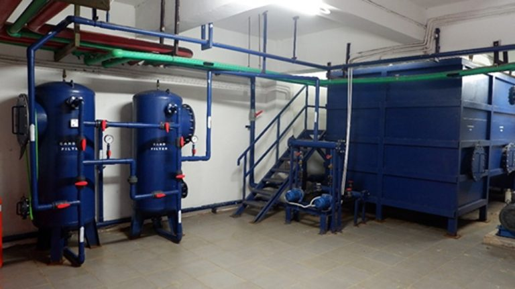
Domestic liquid waste from canteen sinks, restroom sinks, and urinals is channeled to a centralized Sewage Treatment Plant (STP). Within the STP, the wastewater undergoes treatment processes that adhere to established environmental quality standards:
- Pre-treatment & Primary Treatment: Wastewater (blackwater and greywater) is passed through a bar screen to remove coarse solids and through a grease trap to separate vegetable or animal fats, and is then collected in an equalization tank to stabilize the wastewater flow rate.
- Biological Treatment (Secondary Treatment): Wastewater is processed within a biological reactor (utilizing an anaerobic/aerobic combination or an activated sludge system) with the aid of air blowers to break down organic matter and reduce levels of BOD, COD, and ammonia, in accordance with the parameters set forth in the Minister of Environment Regulation Number 11 of 2025.
- Sedimentation & Filtration: The output from the biological treatment process is separated from the activated sludge via a clarifier unit, then passed through an advanced filtration stage—utilizing chlorine and carbon filters—to remove suspended particles and neutralize odors.
- Disinfection & Final Storage: The treated water undergoes a chlorination/disinfection process to eliminate pathogenic bacteria, ensuring it meets safety standards (pH 6–9).
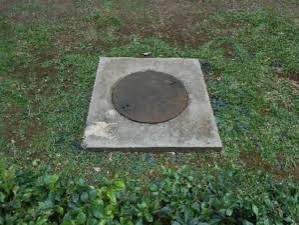
The effluent from the STP (Sewage Treatment Plant) is channeled into a ground storage tank, which also collects overflow water from the *wudu* (ablution) taps. The treated, clear water from this tank is then reused for non-consumptive campus activities—such as watering plants, washing vehicles (cars and motorcycles), and flushing toilets—with the remaining water circulated back into the STP system.


Policy on Reducing Plastic Waste at UI
UI has an institutional policy, binding across the entire university, aimed at reducing and controlling plastic waste to support environmental conservation and realize its “Green Campus” vision. This specific policy was formally established through the UI Rector’s Regulation No. 4 of 2019 concerning the “Zero Plastic” Program at UI.
The regulation outlines the institution’s commitment to minimizing the use of plastic materials—from procurement and distribution to the disposal of domestic plastic waste—within the campus environment. It applies to all members of the UI community, including academic staff, employees, business tenants (such as those in canteens and restaurants), contractors, service providers, as well as guests and visitors.
In practical terms, the regulation prohibits or minimizes the use of single-use plastics—such as plastic bags, straws, cutlery, snack or lunch containers, and plastic-packaged mineral water (in cups or bottles)—during meetings and campus events. Event organizers and campus-based businesses are required to replace these items with non-single-use plastic alternatives, provide refillable water stations, and encourage the use of personal reusable water bottles.
The implementation of this program is coordinated by the UI Occupational Health, Safety, and Environment Unit (UPT K3L UI) in collaboration with relevant departments. The success of the “Zero Plastic” Program is formally integrated into the Key Performance Indicators (KPIs) used to evaluate the performance of all units across the university. For those who violate these provisions, the regulation establishes a tiered enforcement mechanism, ranging from verbal and written warnings to social sanctions, fines, and—in the case of tenants or vendors—the termination of contracts.
As part of a periodic evaluation and review of the effectiveness of its environmental regulations, the University of Indonesia has reinforced its commitment through Rector’s Decree Number 439/SK/R/UI/2024, issued on April 4, 2024. This decree officially revokes and replaces Rector’s Decree Number 1306/SK/R/UI/2011, which concerned restrictions on packaging containing hazardous and toxic substances. In this updated regulation, the university reaffirms the requirement to transition toward the use of environmentally friendly food and beverage packaging—such as leaves, cardboard, boxes, and plastic containers certified as eco-friendly. Furthermore, the new regulation mandates active promotion of packaging recycling initiatives, as well as the continuous dissemination of information to food and beverage vendors operating throughout the campus grounds.
UI's SDG 15 Report