Strengthen the means of implementation and revitalize the Global Partnership for Sustainable Development
UI Collaborates with Ministry of Finance and AFD to Drive Just Energy Transition and Carbon Tax Policy Development in Indonesia
The transition toward sustainable energy presents a multidimensional challenge that encompasses technological, environmental, and socio-economic fairness. As Indonesia works toward its commitment to achieving net-zero emissions by 2060, ensuring an equitable distribution of the benefits and burdens of environmental policies is critical to achieving a Just Transition.
Directly supporting the Indonesian national government in formulating evidence-based SDG policies (specifically SDG 13: Climate Action, SDG 7: Affordable and Clean Energy, and SDG 10: Reduced Inequalities), the Institute for Economic and Social Research, Faculty of Economics and Business (LPEM FEB) of Universitas Indonesia (UI), in strategic partnership with the Ministry of Finance of the Republic of Indonesia (Kemenkeu) and supported by Agence Française de Développement (AFD), officially released a milestone report titled “Distributional Impact of Environmental Policies in Indonesia.”
Through this initiative, UI provided direct analytical input, policy modeling, and strategic recommendations to key government ministries. Using a micro-simulation approach based on the Commitment to Equity (CEQ) framework, LPEM FEB UI researchers modeled the potential socio-economic futures of environmental policy scenarios with and without targeted government interventions across various household income brackets.
Key evidence-based policy inputs and strategic recommendations provided by LPEM FEB UI include:
Phased Carbon Tax Strategy: Recommending that the national government initiate carbon taxation through a fuel-based carbon tax rather than an immediate direct CO2 emissions-based tax. This approach ensures a just energy transition while preventing excessive financial burdens on energy-vulnerable households, particularly in eastern Indonesia.
Targeted Revenue Recycling for Regional Parity: Advising that revenues generated from carbon taxation be explicitly recycled into direct social safety nets and infrastructure programs to improve energy access in underdeveloped regions, directly closing regional inequality gaps.
Protecting MSMEs and Vulnerable Sectors: Highlighting micro-simulation models to help policy makers assess the impact of carbon prices on labor-intensive Micro, Small, and Medium Enterprises (MSMEs), protecting competitiveness during price shifts.
Capacity Building, Adaptive Governance, and Policy Stakeholder Dissemination
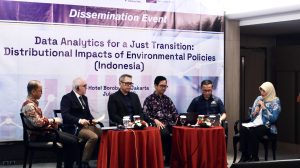
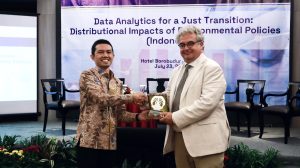
To foster policy-level dialogue and enable adaptive policy management, LPEM FEB UI hosted a high-level policy dissemination forum at Hotel Borobudur Jakarta on July 23, 2025, marking the conclusion of the research study “Data Analytics for a Just Transition: Distributional Impact of Environmental Policies in Indonesia.”
Prior to the dissemination event, LPEM FEB UI conducted an intensive policy microsimulation workshop on July 22, 2025, specifically designed for technical policy staff from the Directorate General of Taxes (DGT), Ministry of Finance, alongside doctoral researchers from UI. The workshop directly enhanced government capacity in applying policy microsimulation tools to continuously monitor, model, and adjust energy tax policies adaptively.
The panel discussion brought university researchers directly into strategic dialogue with key national policy makers and energy sector leaders:
Hendro Gunawan (Ministry of Energy and Mineral Resources / ESDM) highlighted the complexity of carbon pricing, emphasizing household expenditure impacts and consumer behavior shifts.
Irwan Dharmawan (Ministry of Finance / Kemenkeu) underlined the financial policy perspective of phased carbon tax implementation and cross-regional energy readiness.
Adhitya Nugraha (Pertamina Energy Institute) emphasized energy security and affordability as core pillars of human development during the transition.
Through this multi-stakeholder policy partnership, Universitas Indonesia demonstrates its role as a key institutional policy contributor—modelling future policy impacts, delivering evidence-based frameworks to national ministries, building civil service analytical capacity, and shaping national strategies for a just and sustainable future.
LPEM FEB UI & AFD Policy Dissemination
UI and NGO Networks Synergy: Driving SDG Achievements Through Community Outreach, Research, and Education
In an effort to escalate tangible impacts on the SDGs, UI continues to strengthen cross-sectoral collaborations. Across various academic pillars—ranging from student-led volunteering programs and applied research to educational resource development—UI establishes strategic partnerships with non-governmental organizations (NGOs), informal worker unions, and local grassroots communities across Indonesia.
Student Volunteering Programmes: Direct Action for Social Welfare and Environmental Conservation
The student volunteering pillar at Universitas Indonesia consistently delivers direct field actions targeting vulnerable groups and coastal ecosystems:
Protecting Informal Workers (FHUI Social Project 2025 – LENTERA):
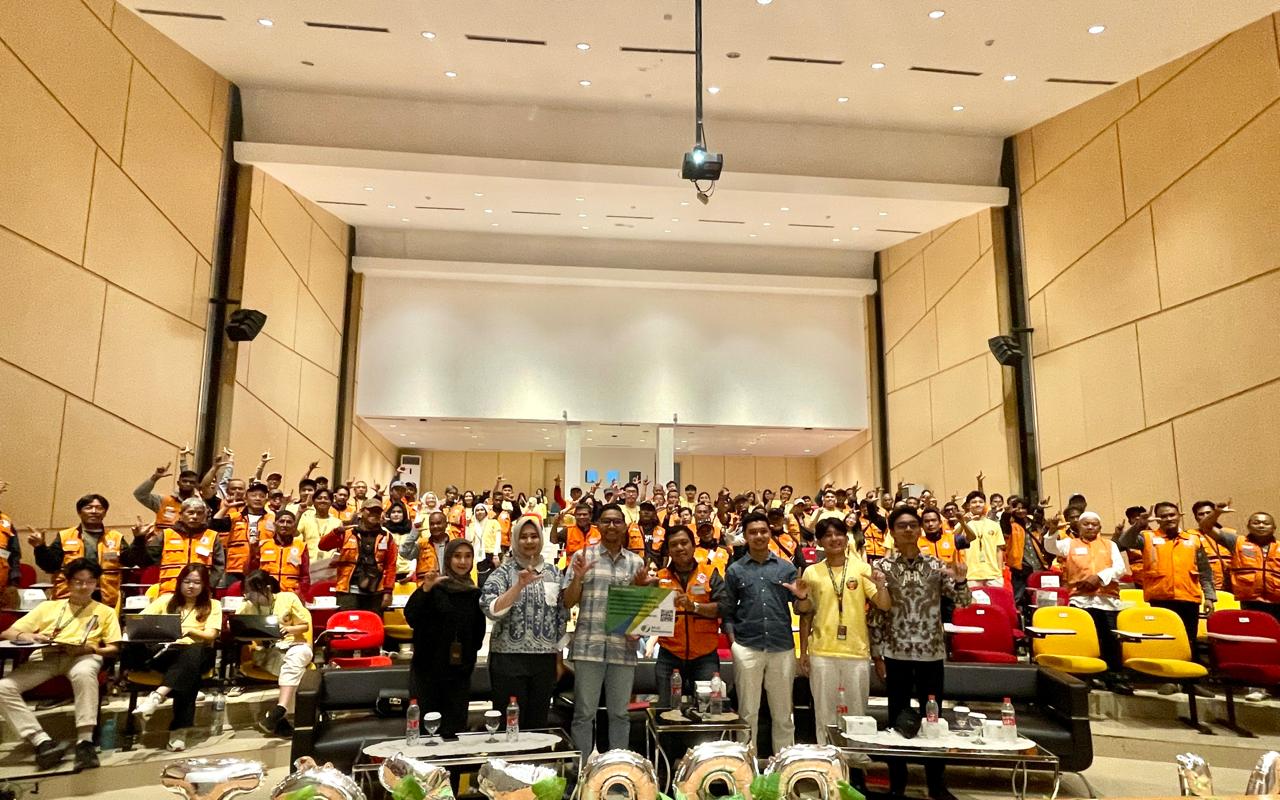
On November 29, 2025, at the Djokosoetono Auditorium FH UI, the Student Executive Board of the Faculty of Law UI (BEM FH) UI partnered with the local informal transport worker union Organisasi Ojek Mitra Kampus (OMK UI) and BPJS Ketenagakerjaan through the LENTERA program. The initiative facilitated social security enrollment, road safety education, basic health screenings for 85 motorcycle taxi drivers, and infrastructure upgrades for four driver base stations (SDG 1, SDG 3, SDG 8).
Community Health Education (Pharmacy Care 2025):
In September 2025, Faculty of Pharmacy UI (FF UI) student volunteers deployed to Cipinang Village, West Java, partnering with local youth NGO Karang Taruna Desa Cipinang. The program focused on Acute Respiratory Tract Infection (ISPA) prevention, hygiene education, and free health screenings for local residents (SDG 3).
Coastal and Marine Restoration (FIA Green Festival 2025):On September 13, 2025, on Pari Island, Thousand Islands, BEM FIA UI collaborated with local environmental NGO Kelompok Tani Mangrove & Masyarakat Peduli Pesisir Pulau Pari along with corporate partners. Guided by local community NGO leaders, student volunteers planted 1,500 mangrove seedlings along Pasir Perawan Beach and restored 30 coral reef units to preserve marine biodiversity (SDG 13, SDG 14).
Research Programmes: Formulating Sustainable Cities and Circular Food-Energy Systems
Under the research pillar, UI integrates international research networks with local community advocacy NGOs to design contextual solutions for urban sustainability challenges:
Circular Sustainable City Research (SPPB UI & Community Partners):
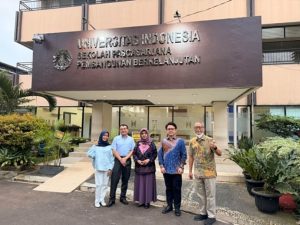
On October 22–23, 2025, a research team from the Graduate School of Sustainable Development (SPPB UI), led by Assoc. Dr. Palupi Lindiasari Samputra, collaborated with Dr. Norihisa Shima, Associate (Professor at Department of Regional Development Studies, Toyo University, Japan), Prof. Dr. Agr.Sc. Ernoiz Antriyandarti (Professor from Universitas Sebelas Maret), urban advocacy NGO Konsorsium Masyarakat / Komunitas Peduli Perkotaan Jakarta Utara, and Himpunan Kerukunan Tani Indonesia (HKTI). Focusing on North Jakarta slum areas, the joint research models circular food-energy urban systems—converting organic waste into energy, strengthening food security through urban farming, and mitigating socio-economic vulnerabilities (SDG 2, SDG 7, SDG 11).
Environmental Law Enforcement Research & Advocacy (CELCJ FH UI x ClientEarth & ICEL):
On November 13–14, 2025, at the Senior Professors’ Room FH UI, the Center for Environmental Law and Climate Justice (CELCJ FH UI) partnered with international environmental law advocacy NGO ClientEarth and the Indonesian Center for Environmental Law (ICEL) to hold the Workshop on Green Legal Clinics in Indonesia. This collaborative research and advocacy initiative focuses on expanding climate justice research, strengthening environmental law enforcement capacity through green legal clinics, and defending the rights of climate crisis-affected communities (SDG 13, SDG 16, SDG 17).
Green Legal Clinics Workshop Participants
Discussion between Dr. Palupi, Dr. Norihisa, and Prof. Ernoiz at Toyo University
Educational Resources Development: Innovation in Executive Education and Open Science
UI’s educational resource development pillar is realized through strategic synergies with educational technology providers and open-science coalitions:
Executive Education in Digital Leadership (LM FEB UI x Binar Academy):
From October to December 2025 at the M. Sadli Building, LM FEB UI, Salemba, the Institute for Management FEB UI launched the Mini Master of Digital Business Administration (MDBA): Digital Leadership & Strategy Program in strategic partnership with Binar Academy (an edtech provider). The hybrid program delivers adaptive learning modules for executives to foster inclusive and sustainable digital business strategies (SDG 4, SDG 8, SDG 9, SDG 17).
Advancing Open Research and Education Practices (SPPB UI x UNIMELB x IOSC):
On December 29, 2025, SPPB UI, in collaboration with the University of Melbourne and open-science advocacy NGO Indonesia Open Science Coalition (IOSC) / Aliansi Pendidikan Terbuka Indonesia, hosted a national open education workshop. The collaboration produced open-access teaching modules and open data repositories to expand sustainable development education across Indonesia (SDG 4, SDG 17).
Overview of the Mini Master of Digital Business Administration (MDBA) Program
Atmosphere of the Workshop "Open Movement in Indonesia: Research and Practice Update"
Through the integration of these three pillars, Universitas Indonesia reinforces its position not only as an academic center of excellence but also as a vital engine for social and environmental transformation in close partnership with all societal stakeholders.
UI Reaffirms Institutional Commitment to University-Wide SDG Curriculum Integration at UI GreenMetric World University Rankings 2025
At the UI GreenMetric World University Rankings 2025 Results and Award Ceremony held on December 5, 2025, at National Chi Nan University, Taiwan, UI presented our comprehensive institutional roadmap for embedding the SDGs across our full academic ecosystem. The presentation, titled “How UI Works SDGs into Academics,” showcased quantitative evidence demonstrating UI’s commitment to meaningful, relevant, and applicable SDG education for all students across all faculties.
Systemic SDG Integration Across Curriculum and Digital Learning
UI’s academic integration strategy spans foundational degree programs, course-level offerings, and open-access digital education resources, ensuring every student engages with sustainability principles regardless of their discipline:
170 Majors Addressing SDGs: Sustainability competencies are systematically mapped across 170 academic major degree programs university-wide. The top SDG representations across majors include SDG 3: Good Health and Well-being (28%), SDG 9: Industry, Innovation, and Infrastructure (11%), SDG 16: Peace, Justice, and Strong Institutions (9%), SDG 10: Reduced Inequalities (8%), and SDG 13: Climate Action (6%).
3,840 SDG-Related Courses: UI offers 3,840 distinct courses explicitly aligned with specific SDG targets within its formal university curriculum. The curriculum coverage is heavily led by SDG 1: No Poverty (34.2%), SDG 3: Good Health and Well-being (22.7%), SDG 4: Quality Education (10.4%), and SDG 9: Industry, Innovation, and Infrastructure (9.6%).
115 Free Online SDG Courses: To extend flexible, inclusive learning access across and beyond campus, UI provides 115 free online courses (via Massive Open Online Courses / MOOC platforms) dedicated to sustainability education. These open-access modules prioritize SDG 8: Decent Work and Economic Growth (26%), SDG 4: Quality Education (24%), SDG 11: Sustainable Cities and Communities (14%), SDG 3: Good Health and Well-being (11%), and SDG 9: Industry, Innovation, and Infrastructure (10%).
UI Launches Dedicated Sustainability and SDG Degree Programs: From Integrated Graduate Studies to Non-Degree Innovations
Responding to the urgent challenges of climate change, socio-economic inequality, and global environmental degradation, UI has reinforced our academic commitment by offering a comprehensive suite of dedicated programs focused on sustainability. By delivering specialized full-degree programs across Master’s and Doctoral levels as well as professional non-degree certifications, UI equips future leaders with targeted expertise to advance the SDGs both nationally and internationally.
Graduate School of Sustainable Development (SPPB UI): The Hub of Sustainability Education
UI formally established the Graduate School of Sustainable Development (SPPB) on October 22, 2025, to serve as our flagship institution for dedicated sustainability education and interdisciplinary SDG research. By integrating advanced degree programs—including the Master and Doctor of Environmental Science—SPPB UI systematically delivers specialized curricula in Sustainable Development Planning, Industrial Environmental Management, and Environmental Protection, thereby reinforcing UI’s institution-wide commitment to producing action-oriented solutions for national and global sustainability challenges.
UI SPPB Building
The institution serves as a dedicated academic home for interdisciplinary research and scientific innovation aligned with the 17 SDG targets:
Master of Environmental Science (M.Si.) – Specialization in Sustainable Development Planning (PPB): This full-degree Master’s program trains planning experts capable of balancing economic growth, social equity, and ecological preservation. Alongside PPB, the program offers specializations in Industrial Environmental Management (MLI) and Environmental Protection (PL) to address green industrial transitions.
Doctor of Environmental Science (Dr.): At the highest academic level, doctoral candidates engage in deep research to produce scientific novelty, formulate actionable policy frameworks, and pioneer solutions for national and global environmental crises.
Cross-Faculty Integration: Corporate ESG Governance and Global Security UI ensures that sustainability education extends beyond environmental science, embedding SDG competencies into business governance and macro-policy across faculties:
Ph.D. in Accounting – FEB UI (Focus on Governance and Sustainability): The Faculty of Economics and Business (FEB UI) offers a specialized doctoral research track examining how business ecosystems transition toward sustainability reporting, Environmental, Social, and Governance (ESG) investing, and corporate environmental accounting.
Ph.D. in Strategic and Global Studies – SKSG UI: The School of Strategic and Global Studies (SKSG UI) conducts doctoral research on energy security, geopolitical stability, and social equity directly influencing international SDG progress.
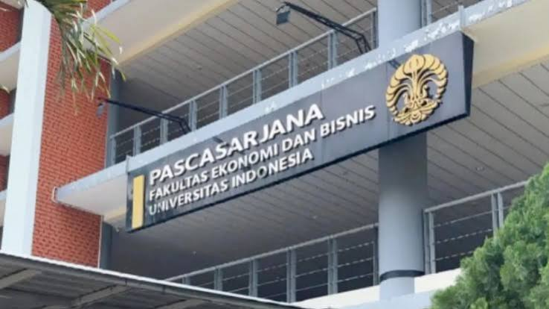
FEB UI Postgraduate Building
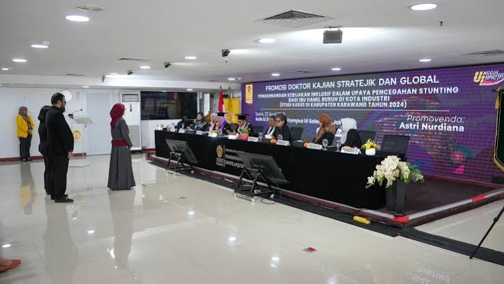
SKSG UI Doctoral Promotion Open Session
Bridging Theory and Practice via Non-Degree Initiatives
To support rapid professional upskilling, the Faculty of Social and Political Sciences (FISIP UI) established the School of Social Sustainability & Innovation (SSSI). This non-degree platform delivers intensive training, professional certifications, and collaborative forums focused on the social dimensions of sustainability, inclusive social innovation, and community empowerment.
Launch of the School of Social Sustainability & Innovation (SSSI)
By establishing dedicated degree and non-degree pathways across multiple faculties, Universitas Indonesia demonstrates a comprehensive, institution-wide commitment to delivering meaningful education that safeguards People, Prosperity, and the Planet.
UI Strengthens Commitment to Inclusive Education and Community Outreach for Alumni, Local Residents, Displaced Persons, and the Wider Public
UI reinforces our role as a globally impactful institution by delivering inclusive, sustainable, and open educational access to all segments of society. Through synergies across faculties, the alumni association (ILUNI UI), student organizations, and digital technology platforms, UI consistently provides non-formal educational programs, applied research, and specialized skills training for alumni, underprivileged local residents, the general public, and displaced persons (displaced people).
Open Digital Learning for the Wider Community (Wider Community Access via MOOCs)
Universitas Indonesia expands academic access to the general public without geographical boundaries or student status requirements:
UI Massive Open Online Courses / UI Skill Up (Year-Round 2025–2026):
Delivered through IDOLS UI / IDOLS 2 UI and accessible via the Center for Independent Learning (CIL UI), UI runs the UI Skill Up (Open Online Course) program, which is 100% open to the public on a self-paced basis throughout the year. The platform offers free non-credit courses (AI/Technology, Programming, Business, Sign Language, Occupational Health) as well as credit-earning courses.
Open Content 2025 Fasilkom UI (Year-Round Open Repository):
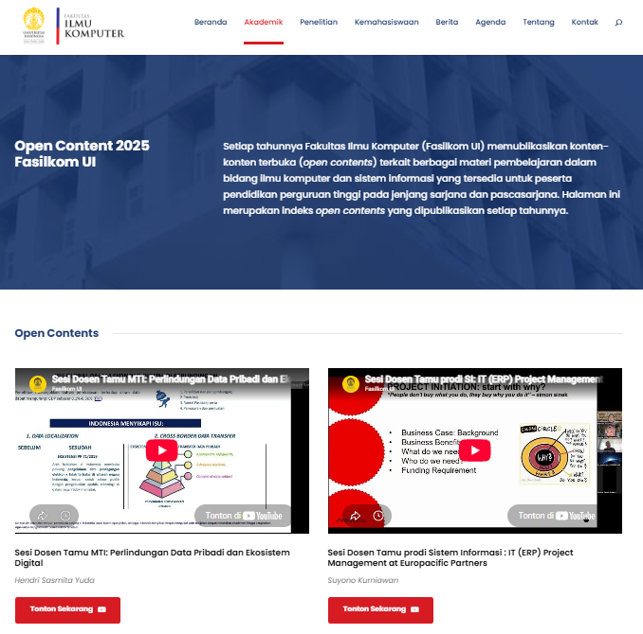
The Faculty of Computer Science (Fasilkom UI) publishes its annual Open Content index, providing open-access digital learning materials in computer science and information systems for undergraduate, postgraduate, and self-directed learners nationwide.
Various courses available on the UI MOOCs website[
Open Content 2025 Showcase – Faculty of Computer Science, UI[
Alumni Engagement & Continuous Education
UI maintains continuous capacity building for alumni and professionals through interactive career fairs and public forums:
Engineering Career and Internship Fair (ECIF FTUI 2025):
In September 2025, UI’s Faculty of Engineering (FT) hosted ECIF 2025 in a hybrid format, connecting over 2,000 UI students and alumni with national and international industry leaders.
ILUNI UI Webinar and Workshop Series (Year-Round 2025–2026):
The Universitas Indonesia Alumni Association (ILUNI UI) regularly organizes public webinars, interactive workshops, and national policy forums accessible via its official event portal (iluniui.org/events).
Engineering Career and Internship Fair (ECIF) 2025
Various events published on the ILUNI UI website
Local & Underprivileged Community Outreach
UI delivers community-based outreach programs targeting local residents and underprivileged children:
Rumah Belajar (Rumbel) BEM UI:
A 17-year-old non-profit initiative that provides free tutoring, non-formal education, and Paket B/C equivalency schooling every Saturday at Pusgiwa UI Depok. Faculty of Medicine (FK UI) students serve as volunteer educators while delivering basic health education (hygiene, dental care, nutrition). BEM IKM FK UI also conducts independent Community Development outreach in Kampung Lio, Depok.
Community First Aid Training – FIK UI (November 30, 2025):
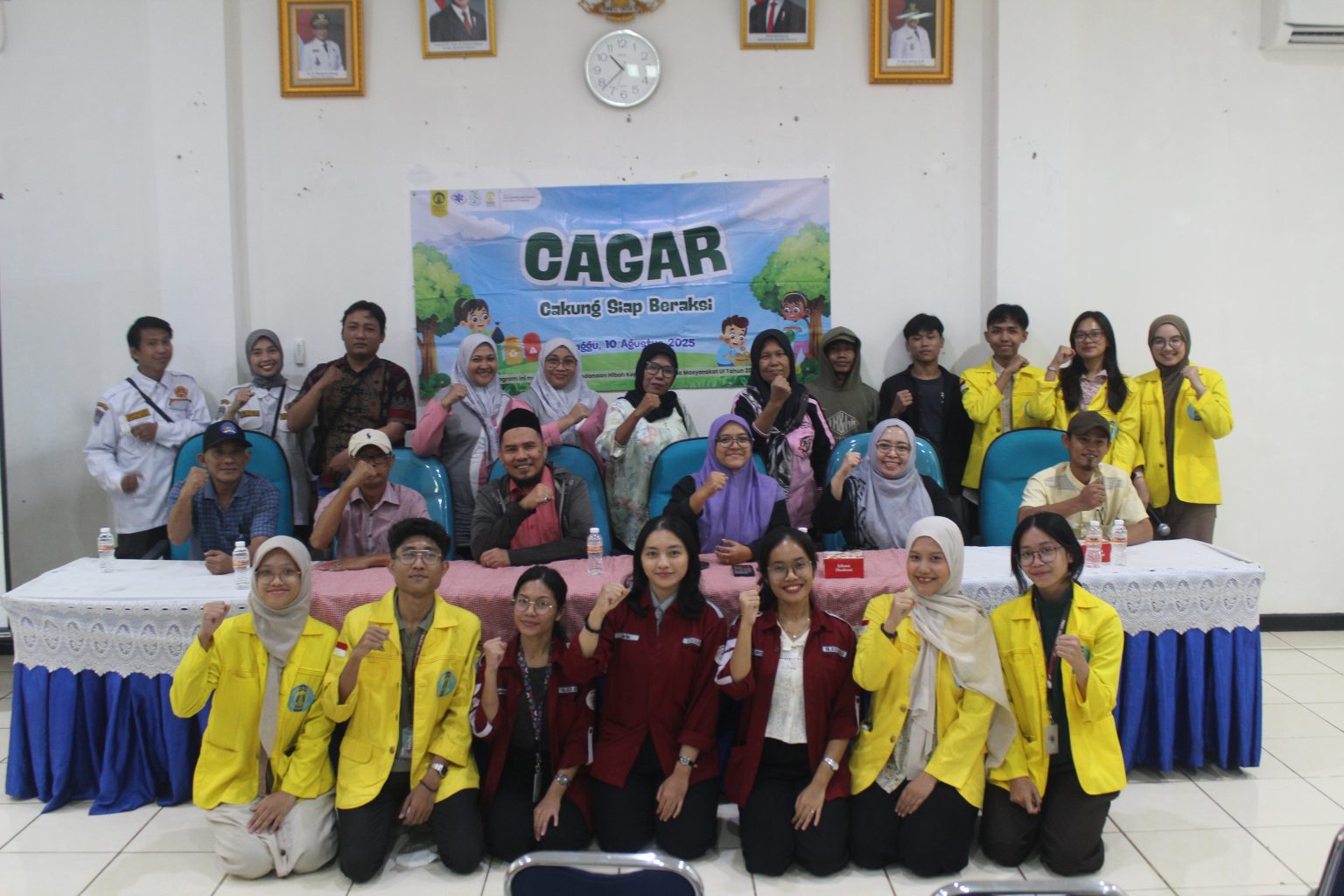
The Faculty of Nursing UI (FIK UI) strengthened community emergency resilience in Cakung, East Jakarta, through community-based first aid training under the CAGAR Program.
Drug & Cosmetic Safety Cadre Training – FF UI x BPOM (September 13, 2025):
The Faculty of Pharmacy UI (FF UI), in partnership with BPOM, trained local community cadres on safe medication and cosmetics usage (OBASKK) during the 2025 PPAA program.
Fasilkom UI Open House (November 22, 2025):
Fasilkom UI hosted its annual Open House 2025 on November 22, 2025, offering prospective students and the wider public a firsthand experience of academic life and computer science innovations.
Psychosocial Support for Displaced Persons (Displaced People & Disaster Relief)
UI actively deploys expert teams and student volunteers to disaster-affected regions to assist displaced populations in temporary shelters:
Sumatra Flood Humanitarian & Psychosocial Relief Mission – FPsi UI & UI Expert Team (December 15, 2025):
In response to the severe flooding in Sumatra, the Faculty of Psychology UI (FPsi UI) and UI Senior Professors/Experts deployed psychosocial and medical teams to evacuation shelters on December 15, 2025, providing trauma healing, emergency supplies, and environmental health recovery for displaced survivors.
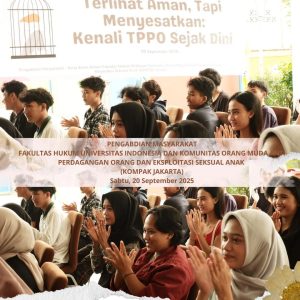
Anti-Human Trafficking & At-Risk Youth Protection – FH UI x KOMPAK Jakarta (September 20, 2025):
On September 20, 2025, at RPTRA Bahari, South Jakarta, the Faculty of Law UI (FH UI) partnered with youth NGO KOMPAK Jakarta (ECPAT Indonesia) to deliver an interactive workshop titled “Seems Safe But Misleading: Recognizing Human Trafficking Early”. Led by Dr. Febby Mutiara Nelson, the initiative empowered 50 vulnerable job-seeking youth and at-risk individuals with legal literacy, roleplay simulations, and preventative strategies against Human Trafficking (TPPO) and child sexual exploitation.
Participants in the campaign entitled "Seems Safe But Misleading: Recognizing Human Trafficking Early"
Psychological First Aid (PFA) Training for UI Peduli Psychosocial Volunteers